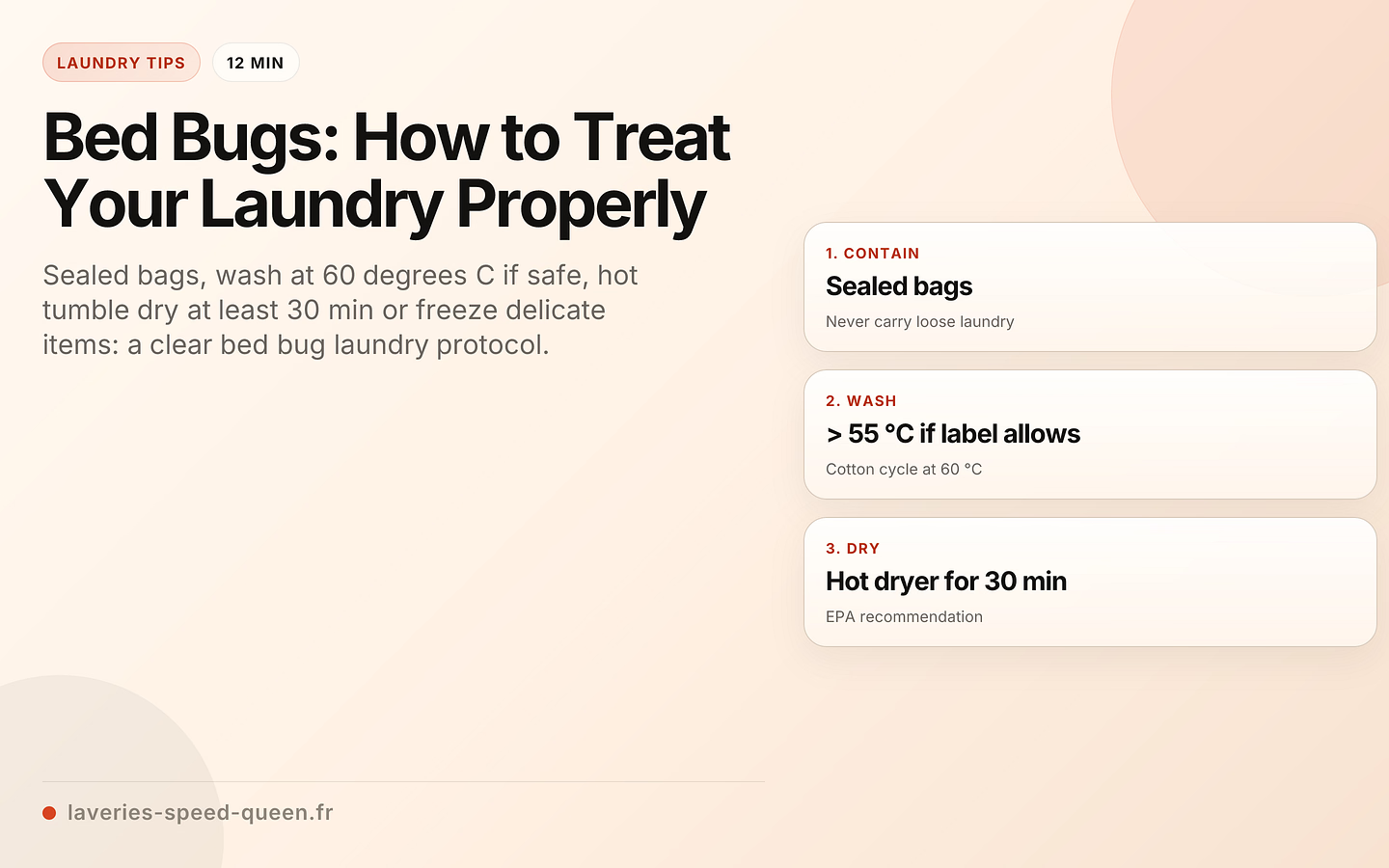
In short: if you have bed bugs, the right response is neither to panic nor to shake all your laundry around. Contain textiles in sealed bags, wash at 60 °C when the care label allows, and most importantly tumble dry on high heat for at least 30 minutes for compatible items. On some textiles, the dryer alone can be enough. A laundromat is useful when you need to treat large volumes of laundry or bedding quickly, but it does not replace a full home treatment protocol.
At a Glance
Sealed bags before transport — never carry exposed laundry loose.
Wash at 60 °C if the fabric can handle it — the simplest practical benchmark for compatible laundry.
Hot tumble dryer for at least 30 minutes if compatible — EPA operational benchmark; do not rely on a programme number alone.
Washing alone is not always enough — drying is part of the protocol.
Short Answer: Can You Treat Bed Bug Laundry at a Laundromat?
Yes, provided you follow a strict protocol of containment, label-appropriate washing/drying, and repackaging of clean laundry.
The laundromat is not a magic fix for an entire infestation. However, it becomes very useful when you need to treat quickly:
- sheets, mattress covers, pillowcases, and towels;
- a large quantity of clothing after a trip;
- bulky items that home machines handle poorly, such as blankets and covers.
What the Public Health Sources Say
heavy-duty bin bags↗ — France’s Anses agency recommends prioritising non-chemical methods first. For laundry, it specifically mentions:
- washing clothing and household linen at above 55 °C;
- freezing at -17 °C for at least 72 hours if washing is not possible;
- thorough vacuuming of all surfaces in the home.
The EPA adds a key operational point for compatible laundry: 30 minutes in a hot tumble dryer for clothes, sheets, and other textiles that can withstand the heat, noting that washing alone may not be enough.
The Honest Angle for a Laundromat
A sufficiently hot domestic dryer can also work for some items. So the advantage of a laundromat is not claiming to be the only solution — it is offering a faster, easier way to treat large volumes, especially bedding or a full suitcase of laundry after travel.
The Complete Heat Treatment Protocol
Heat is the most effective weapon against bed bugs and their eggs. Here is the full heat treatment protocol, step by step.
The Right Practical Benchmark: Real Heat Plus Enough Time
Adult bed bugs die within minutes at temperatures above 55 °C. But eggs are more resistant and need enough heat exposure. In practice, the simplest benchmark for households is therefore: wash at 60 °C if the care label allows, or use a hot tumble dryer for at least 30 minutes on compatible textiles. Do not think in terms of programme numbers, but in terms of actual heat reached, enough time, and a drum that is not packed too tightly.
Hot Washing: The First Treatment
For all textiles that can handle it, set the machine to 60 °C minimum. This temperature greatly reduces the risk from adult bed bugs, nymphs, and part of the eggs during the wash cycle. Check our washing temperature guide and our guide to washing at 60 °C to find out which textiles can handle this temperature.
What safely goes at 60 °C:
- White cotton sheets
- Bath towels
- Cotton pillowcases
- Tea towels
- Cotton underwear
- Mattress protectors
What generally cannot handle 60 °C:
- Synthetic clothing (polyester, acrylic)
- Delicate coloured textiles
- Silk, wool, cashmere
- Clothing with elastane
For textiles that cannot handle 60 °C, the hot tumble dryer takes over.
Hot Drying for 30 Minutes: The Essential Complementary Treatment
The EPA makes this clear: washing alone may not be enough. A hot tumble dryer cycle of at least 30 minutes is an essential complement. The continuous dry heat of the dryer helps heat the whole textile, including folds and thicker areas where eggs may be hiding.
Important point: for items that cannot handle hot washing but can go in the dryer, you can use only the hot tumble dryer for at least 30 minutes without a prior high-temperature wash. This applies to many synthetic garments that can tolerate dryer heat but not 60 °C water. The customer-facing rule is simple: choose the hottest setting allowed by the care label, without overloading the drum.
Why the Laundromat Is the Safest Option for This Protocol
Professional laundromat dryers often make this protocol easier thanks to their capacity, airflow, and heat settings. A sufficiently hot home dryer can also work, but it quickly becomes limiting on bulky loads. At a laundromat:
- 18 kg machines allow you to treat duvets, covers, and large blankets that a domestic machine cannot accommodate.
- Professional dryers guarantee a rapid temperature rise and consistent heat throughout the entire cycle.
- Parallel processing (multiple machines at once) lets you treat all contaminated laundry in a single session, reducing handling and therefore the risk of spreading.
Transporting Contaminated Laundry: The Critical Step
The biggest mistake is not choosing the wrong cycle — it is spreading exposed laundry between the bedroom, the car, the laundromat, and the return trip.
The Transport Protocol
- At home: put the laundry directly into heavy-duty bin bags, sealed tightly (double knot or adhesive tape). One bag per batch (bedding, clothing, towels) so you do not have to rummage on-site.
- In the car: place the bags in the boot, not on fabric seats. If possible, double-bag for extra security.
- At the laundromat: open the bag as close to the drum as possible and tip the contents directly into the machine. Do not shake anything, do not set anything on the work surfaces.
- The contaminated bag: dispose of it immediately in a bin, or reseal and isolate it if you need to reuse it for the return trip (remaining dirty laundry).
- Do not transport anything in the open — use sealed bags, separate from clean laundry.
- Never shake sheets or clothing — this encourages spreading.
- Only open the bag right at the drum — machine or dryer.
- Do not put treated laundry back into the dirty bag — use fresh, clean bags.
- Do not place contaminated laundry on laundromat surfaces — from bag to drum, no intermediate step.
What Cannot Go in the Machine
Some items exposed to bed bugs cannot be treated in a washing machine or tumble dryer. Here are the alternatives.
Shoes
Fabric shoes (trainers, espadrilles) can sometimes go in a hot dryer for 30 minutes if they can take the heat — see our shoe washing guide. Leather shoes cannot go in the machine or dryer: isolate them in a sealed bag and treat with a certified bed bug spray or by freezing (-17 °C, 72 hours minimum).
Bags and Luggage
Suitcases and travel bags do not go in the machine. Vacuum thoroughly along all seams, pockets, and crevices. Small fabric bags (toiletry bags, pouches) can sometimes go in a hot dryer. For backpacks, see our backpack washing guide.
Mattresses and Bed Frames
The mattress is often the main hub of the infestation, but it obviously cannot go in a machine. Mattress treatment falls under the home protocol: vacuum seams and crevices, use a certified bed bug mattress encasement, and if necessary call a professional. In the meantime, a mattress protector washed at 60 °C provides an additional barrier — see our dust mite guide for the same textile barrier principles.
Pillows and Non-Removable-Cover Cushions
Some pillows with synthetic filling can handle machine washing at 60 °C and tumble drying — see our pillow washing guide. Memory foam pillows cannot go in the machine or dryer: freeze or replace them.
Which Protocol for Which Textile?
| Textile Type | Possible Treatment | Key Consideration |
|---|---|---|
| Sheets, pillowcases, cotton towels | Wash at 60 °C + hot tumble dry 30 min | Do not overload the drum |
| Everyday cotton/polyester clothing | Hot tumble dry 30 min if allowed, then appropriate wash | Check the care label before increasing heat |
| Delicate textiles (silk, wool, cashmere) | Freeze at -17 °C for 72 hours | Do not improvise heat that the fabric cannot take |
| Duvets and large blankets | Wash at 60 °C in an 18 kg machine + hot dry | Volume makes home machines impractical |
| Fabric shoes | Hot tumble dry 30 min if compatible | Check heat resistance |
| Bags and luggage | Thorough vacuuming + certified spray or freezing | Generally cannot go in the machine |
The Practical Laundromat Protocol
The safest approach is to think in two streams: potentially exposed dirty laundry on one side, treated and repackaged laundry on the other.
1. Sealed Bags From the Start
Prepare the laundry at home in airtight or tightly sealed bags. One bag per batch if needed, to avoid rummaging on-site.
2. Direct Loading
Open the bag right in front of the drum. Place the laundry in without shaking, then dispose of or isolate the contaminated bag.
3. Treatment Appropriate to the Care Label
Choose heat or hot washing only if the fabric allows it. Do not think in terms of a programme number: what matters is actual heat, enough time, and a drum that is not packed too tightly. If in doubt, reduce the textile risk and make sure to treat the rest of the home protocol seriously.
4. Clean Bags on the Way Out
Treated laundry must go into a clean container, not back into the original bag.
After Treatment: Checking and Prevention
certified bed-bug mattress cover↗ — treating the laundry is only one part of the protocol. Here is what to do once the laundry is treated.
Check the Results
Before putting treated laundry back in wardrobes, visually inspect a few items as they come out of the dryer. Dead adult bed bugs are visible to the naked eye (brown, flat, 4-7 mm). Finding them is a good sign — the treatment worked. If you find live bed bugs, the cycle was not hot enough or long enough: run the items through the hot dryer again.
Do Not Recontaminate Clean Laundry
Treated laundry must be stored in sealed bags until the home is fully treated. Putting clean laundry back into a wardrobe in a room that is still infested means starting the whole process over.
Prevent Recurrence
- Certified bed bug encasement on the mattress and pillows — it traps remaining bugs and stops new ones from settling in.
- Regular vacuuming of mattress seams, skirting boards, electrical sockets, and crevices around the bed.
- Inspection after travel — check your luggage before bringing it into the bedroom. Place the suitcase in the bathroom (smooth tiles, no fabric) while you inspect it.
- Systematic washing of travel laundry at 60 °C as soon as you return, before putting it away.
When the Laundromat Helps Most
Bedding and Large Volumes
Sheets, covers, blankets, and other bed textiles quickly take up too much space at home. The laundromat makes it easy to treat several batches without tying up the whole house.
After Travel
When the risk comes from a suitcase or accommodation, treating a large amount of laundry quickly is often more realistic at a laundromat than at home.
Need to Act Fast
Washing and drying on-site avoids spreading the protocol over several half-days, which also reduces unnecessary handling.
What the Laundromat Does Not Do for You
Treating laundry is not enough to resolve a home infestation.
You also need to:
- vacuum surfaces and crevices thoroughly;
- treat or isolate the mattress, bed frame, and sleeping areas;
- avoid moving infested objects without precaution;
- contact a pest control professional if the infestation persists.
Do Not Increase the Risk With Improvised Chemicals
France’s Anses agency clearly recommends prioritising non-chemical methods first. Poisoning incidents from misused insecticides are real. The laundromat treats the laundry — it is no reason to improvise the rest of the protocol with uncontrolled products.
Where This Page Stops
This page covers laundry. If your concern is routine sheet maintenance, see our guide on how often to wash sheets. If you mainly need to manage drying a large load, also see the tumble dryer guide. For the right temperature for each textile, check our washing temperature guide.
Methodology and Sources
- Anses, Punaises de lit : utiliser les produits chimiques en dernier recours, 29 April 2024, accessed 15 March 2026
- EPA, Preparing for Treatment Against Bed Bugs, updated 10 July 2025, accessed 15 March 2026
Sources and References
- Anses - Bed bugs: use chemicals as a last resort (external link)
- EPA - Preparing for Treatment Against Bed Bugs (external link)
- Tumble dryer guide
- How often to wash sheets
- Washing temperature guide
- What clothes to wash at 60 °C
- Wash a backpack
- Washing shoes guide
- Wash a pillow
- Dust mite allergy and laundry
Related articles
For more depth, see also:
As an Amazon Associate, we earn from qualifying purchases through the affiliate links in this article — at no extra cost to you. This helps us maintain this site and produce free guides.
If you need to treat a large amount of laundry compatible with hot washing or drying, visit our laundromats in Blagnac and Croix-Daurade to run through batches quickly in 18 kg machines with professional high-temperature drying. Payment contactless card or cash. But keep the right priorities: home protocol + properly treated laundry, not one without the other.