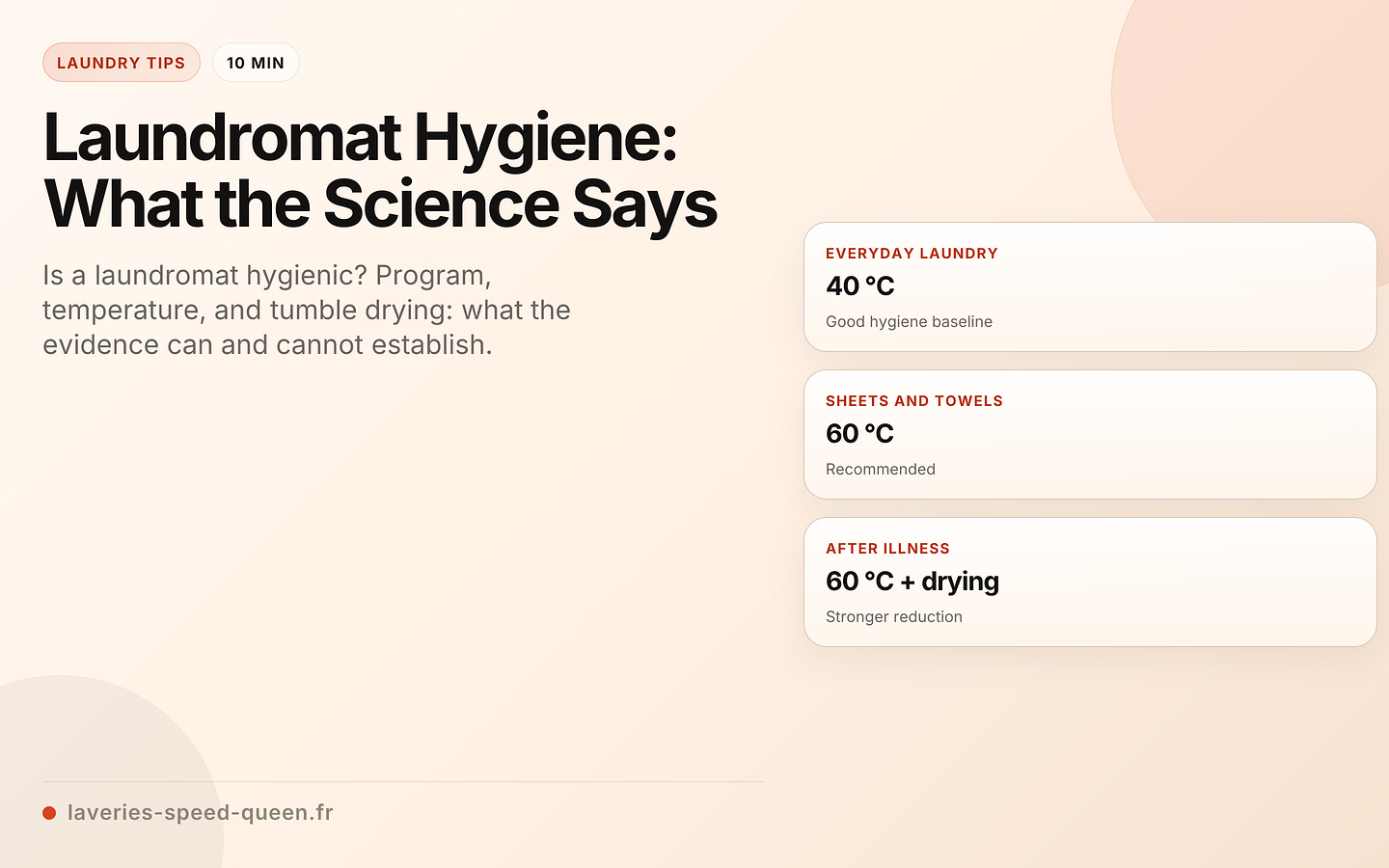
In a nutshell: detergent, mechanical action, a temperature compatible with the textile and complete drying work together to improve laundry hygiene. A laundromat makes it easy to wash and tumble-dry in one visit.
Is It Actually Clean to Wash Laundry at a Laundromat?
Yes, when you choose a program that matches the care label and suitable drying. A laundromat lets you wash and tumble-dry on site, with 9 kg (20 lb), 11 kg (24 lb), or 18 kg (40 lb) capacity depending on the location. The studies below describe specific protocols; they do not guarantee disinfection for every load. For the final drying step, also see our
laundromat tumble dryer guide.
Biofilm and Washing Machines: An Underestimated Phenomenon
Research on household washing machines has documented biofilms and bacterial communities in several damp areas of the machine.
A biofilm is a community of micro-organisms (bacteria, yeasts) that aggregate on a surface by secreting a polysaccharide matrix. In a warm, moist environment, this matrix adheres to seals, the detergent drawer, and the drain filter of washing machines. It is this biological layer that is responsible for the characteristic “smelly machine” odour and some of the recontamination of clean laundry.
How Biofilm Forms in a Machine
Three conditions promote biofilm growth: residual moisture, moderate temperature (20-40 °C), and the presence of organic residue (fibres, sweat, unrinsed detergent). In a home machine, these conditions are frequently met:
- Low-temperature cycles: the displayed temperature alone does not establish a microbiological reduction; results vary with the program, detergent, fabric, and organism.
- Extended inactivity: between uses, the drum stays damp for hours, sometimes days.
- Residue and moisture: unsuitable dosing, a poorly chosen program, or leaving a machine damp can contribute to deposits in some areas.
A 2015 study published in Frontiers in Microbiology compared samples of influent water, greywater, and cotton before and after household laundering.
What the Laundromat Adds to the Process
A laundromat brings together practical tools for following a fabric-appropriate process:
| Need | Laundromat option |
|---|---|
| Match capacity to the load | 9 kg (20 lb), 11 kg (24 lb), or 18 kg (40 lb) washers depending on the location |
| Choose the program | High-temperature option on compatible machines and programs |
| Avoid a long damp phase | 14 kg (31 lb) or 16 kg (35 lb) dryers depending on the location, billed in roughly 10-minute increments |
| Use the intended products | Detergent and softener included with every wash |
These options make it practical to wash and then dry on site. They do not establish a universal bacterial reduction: results depend on the program, fabric, detergent, and protocol used.
How to Prevent Biofilm at Home
For a complete home cleaning protocol, see our guide to cleaning your washing machine.
If you use a home machine between laundromat visits:
- Run an empty cycle at 90 °C once a month — the heat dissolves the biofilm matrix
- Leave the door and detergent drawer open after each cycle to ventilate the drum
- Clean the door seal with white vinegar↗ every two weeks
For more on recommended washing temperatures and causes of laundry odours.
At a Glance
Household-laundry samples — study PMC4672060 compares influent water, greywater, and cotton before and after laundering; it does not sample machine surfaces.
Precisely scoped manufacturer test — Speed Queen reports a 99.9 % reduction for three tested strains on a dedicated 75-min high-temperature cycle; this does not describe every cycle.
Washing followed by complete drying — hospital study PMC4229498 found an additional benefit from tumble drying in the professional protocol tested.
An eco cycle at 30 °C (86 °F) is not a guaranteed disinfection protocol — results depend on the full program, detergent, fabric, and organism (review PMC8231443).
Verified laundromat capacities — 9 kg (20 lb), 11 kg (24 lb), or 18 kg (40 lb) washers and 14 kg (31 lb) or 16 kg (35 lb) dryers depending on the location.
The Factors That Influence Washing Hygiene
Results depend on the full program, detergent, fabric, organism, and drying conditions.
These parameters interact: the displayed temperature alone cannot predict a microbiological reduction.
Temperature: Factor #1
The most comprehensive scientific review on laundry hygiene, published in Applied and Environmental Microbiology (PMC8231443 (external link)), clearly establishes the impact of temperature:
| Temperature | Bacterial reduction | Effectiveness |
|---|---|---|
| 30 °C (eco cycle) | Varies by programme | Removes visible dirt, freshens laundry |
| 40 °C | Varies with program, duration, and detergent | Choose according to the care label and use |
| 60 °C | Thermal action depends on the protocol | High-temperature option when the care label allows it |
| 60 °C + tumble drying | Numerical result only in the cited hospital protocol | Not automatically transferable to a self-service cycle |
Choose the program from the care label and the actual need. A high-temperature option is available on compatible machines and programs, without being a universal disinfection guarantee.
What “Clean” Means in Microbiology
A logarithmic reduction describes a result measured in a particular protocol; the displayed temperature alone cannot predict that result.
When you take your laundry out of the machine and it smells fresh, you consider it clean. In microbiology, scientists measure washing effectiveness in “logarithmic reduction” — the number of decimal places of bacteria eliminated.
3 log₁₀ = 99.9 %
Out of 1,000,000 bacteria, 1,000 remain in the measured test. This is a mathematical definition, not a promise attached to a washing temperature.
5 log₁₀ = 99.999 %
Out of 1,000,000 bacteria, 10 remain in the measured test. The real result depends on the programme, detergent, textile and organism.
7 log₁₀ = 99.99999 %
Purely mathematical example: out of 10,000,000 bacteria, 1 would remain. This is not a measured result from the cited hospital-laundry protocol.
The good news: at a laundromat, you can choose a care-label-compatible programme and then dry the load completely on site. This simple sequence adds a useful hygiene step without promising sterilisation.
A word of context
The data in this article come from scientific research. A 30-40 °C (86-104 °F) wash covers many everyday needs. For bedding, towels or laundry from someone who is ill, follow the care label and health guidance; being able to wash and then dry completely at the laundromat is a practical advantage.
Loading and Program Choice
Choose a 9 kg (20 lb), 11 kg (24 lb), or 18 kg (40 lb) washer depending on the location and load size, without packing the drum tightly. Then select a care-label-compatible program; detergent and softener are included with every wash.
Biofilm: What the Study Can Establish
A study published in Frontiers in Microbiology (PMC4672060 (external link)) sampled influent water, greywater, and cotton before and after household laundering. It did not sample machine surfaces or establish that water-related biofilm constituents transferred to washed cotton.
What the study cannot establish
A biofilm is a community of micro-organisms that develops on damp surfaces — door seal, detergent drawer, internal pipes. It forms under several environmental and use conditions. The cited study concerns home machines and does not establish the contamination level of any particular laundromat machine. Check that the drum and seal look clean before loading.
Drying: The Often Forgotten Hygiene Step
Tumble drying helps avoid leaving a load damp for too long; its microbiological effect depends on the protocol studied.
Hospital Data
A hospital-laundry study (PMC4229498 (external link)) used Enterococcus faecium as an indicator and measured the impact of tumble drying after a professional 60 °C protocol:
- Washing in this specific 60 °C protocol: 4 to 5 log₁₀ reduction
- Tumble drying in the same protocol: additional 3 to 4 log₁₀ reduction
- Specific 60 °C protocol + tumble drying: total reduction of up to 9 log₁₀
These values belong to the hospital protocol studied. They show the value of drying, but are not a numerical guarantee for every self-service laundromat cycle.
Air drying has its limits
Slow air drying can prolong the damp phase, especially indoors or in a poorly ventilated room, and contributes to indoor humidity. An on-site tumble dryer helps shorten that phase without guaranteeing a particular level of decontamination on its own.
Speed Queen Data
A manufacturer page describes a laboratory test on Speed Queen equipment using a dedicated 75-minute high-temperature cycle and three bacterial strains:
- Staphylococcus aureus (skin infections)
- Pseudomonas aeruginosa (skin and pulmonary infections)
- Klebsiella pneumoniae (urinary and pulmonary infections)
According to Speed Queen, the laboratory measured a 99.9 % reduction across the three tested strains with that dedicated cycle. The tested model is not matched here to the dryers installed in our laundromats: the result applies only to the test equipment and protocol, not every drying program. (Manufacturer source: Speed Queen (external link))
At the laundromat, a dryer is available immediately after washing, making it practical to avoid a long damp phase and dry the load completely.
What the Professional Laundromat Adds
A laundromat brings together large capacities, included wash products, and on-site tumble drying without promising universal disinfection.
| Need | Laundromat option |
|---|---|
| Large loads | 9 kg (20 lb), 11 kg (24 lb), or 18 kg (40 lb) washers depending on the location |
| Program choice | High-temperature option on compatible machines and programs |
| On-site drying | 14 kg (31 lb) or 16 kg (35 lb) dryers depending on the location |
| Drying time | Roughly 10-minute increments; total varies with the load and fabric |
| Wash products | Detergent and softener included with every wash |
French Regulatory Framework
French regulation covers consumer information, price display and the safety of self-service machines. No systematic disinfection requirement between customers applies to consumer self-service laundromats.
Three main legal texts govern self-service laundromats in France:
- DGCCRF practical sheet — Self-service laundromat (external link): requires visible and legible display of services (interior + exterior), safety warnings, a reachable phone number, and weekly verification of safety devices.
- Decree no. 2012-412 of 23 March 2012 (external link): direct regulatory basis for self-service laundromats — at least weekly safety checks, per-machine logbook, declaration of conformity, parental supervision pictogram.
- Order of 27 March 1987 (external link): VAT-inclusive prices visible from outside, conditions of service and liability.
Note — standards NF EN 14065 (external link) (RABC biocontamination) and NF EN 16616 (external link) (thermochemical disinfection) apply to industrial laundries and healthcare facilities, not to consumer self-service laundromats. Self-service laundromat hygiene therefore relies on the scientific parameters described above (temperature, contact time, drying), not on a specific certification.
5 Situations Where the Laundromat Makes a Difference
mesh laundry bag↗ — For bedding, baby laundry, post-illness laundry, sportswear, and bath linen, follow the care label, choose an appropriate program, and avoid a prolonged damp phase.
Bedding and allergies
Sheets, pillowcases and duvet covers: when the care label allows it, a 60 °C (140 °F) wash followed by complete drying adds a useful hygiene step. The 18 kg (40 lb) laundromat machine handles a duvet + sheets in a single cycle. See our anti dust mite protocol and our anti-pollen protocol .
Baby laundry
For baby laundry, follow the care label and health guidance for your situation. A high-temperature option is available on compatible machines and programs; detergent and softener are included. See our baby laundry guide .
After an illness
After an illness, follow health guidance and the care label. Review PMC8231443 explains why the displayed temperature alone cannot predict the result for each organism; on-site drying mainly helps avoid leaving laundry damp.
Sportswear
Synthetic textiles can retain odour-causing compounds. Choose a compatible program, avoid packing the drum tightly, and dry according to the care label; the 18 kg (40 lb) washer handles bulky loads. See our sportswear care guide .
Towels and bath linen
For towels, follow the care label and choose a high-temperature option only when compatible. An on-site tumble dryer helps avoid storing them while they are still damp. See our towel guide .
For the environmental impact of washing synthetic textiles, see our study on microplastics and washing.
A Few Simple Habits at the Laundromat
A practical sequence is: choose a care-label-compatible program, transfer without needless delay, then dry to suit the load and fabric.
Choose the temperature from the care label and intended use. A high-temperature option is available on compatible machines and programs. See our temperature guide for details by fabric.
After washing, transfer the laundry to the tumble dryer without needless delay to avoid a prolonged damp phase.
Check seams and thick areas, then add roughly 10-minute drying increments if needed. Total time varies with the load and fabric. See our drying guide.
As an Amazon Associate, we earn from qualifying purchases through the affiliate links in this article — at no extra cost to you. This helps us maintain this site and produce free guides.
At our laundromats in Blagnac and Croix-Daurade, you can choose an appropriate program and then dry your laundry on site. Speed Queen washers with 9 kg (20 lb), 11 kg (24 lb), or 18 kg (40 lb) capacity are available depending on the location, with detergent and softener included, plus 14 kg (31 lb) or 16 kg (35 lb) tumble dryers. Open 7 days a week from 7am to 10pm, free parking. See our pricing. Questions about laundry hygiene? Contact us for personalised advice.
Methodology and Sources
- Microbiological data come from five publications indexed in PubMed (National Library of Medicine database, United States), all subject to scientific peer review.
- Speed Queen describes an independent test on three bacterial strains (S. aureus, P. aeruginosa, K. pneumoniae) using dedicated equipment and a dedicated cycle. The tested model is not matched to the dryers installed in our laundromats.
- Capacities published here come from the laundromats’ business data. Product-sheet values not tied to an installed model are not transferred.
- Data on domestic washing practices in France are based on the ADEME “Domestic Washing Usage” study (external link).
Sources and References
- Bacterial Exchange in Household Washing Machines (PMC4672060) (external link) — Frontiers in Microbiology, 2015
- Laundry Hygiene and Odor Control: State of the Science (PMC8231443) (external link) — Applied and Environmental Microbiology, 2021
- Level of decontamination after washing textiles at 60°C or 70°C followed by tumble drying (PMC4229498) (external link) — Infection Control & Hospital Epidemiology, 2014
- Quantifying pathogen infection risks from household laundry practices (PMC9290578) (external link) — Journal of Applied Microbiology, 2022
- Speed Queen Dryers Proven to Sanitize Loads (external link) — Speed Queen (manufacturer)
- Hardmount Washer-Extractor specifications (external link) — Speed Queen Commercial
- Domestic Washing Usage study (external link) — ADEME
- Anti dust mite protocol at the laundromat
- Anti-pollen protocol at the laundromat
- Washing temperature guide
- Laundromat drying guide