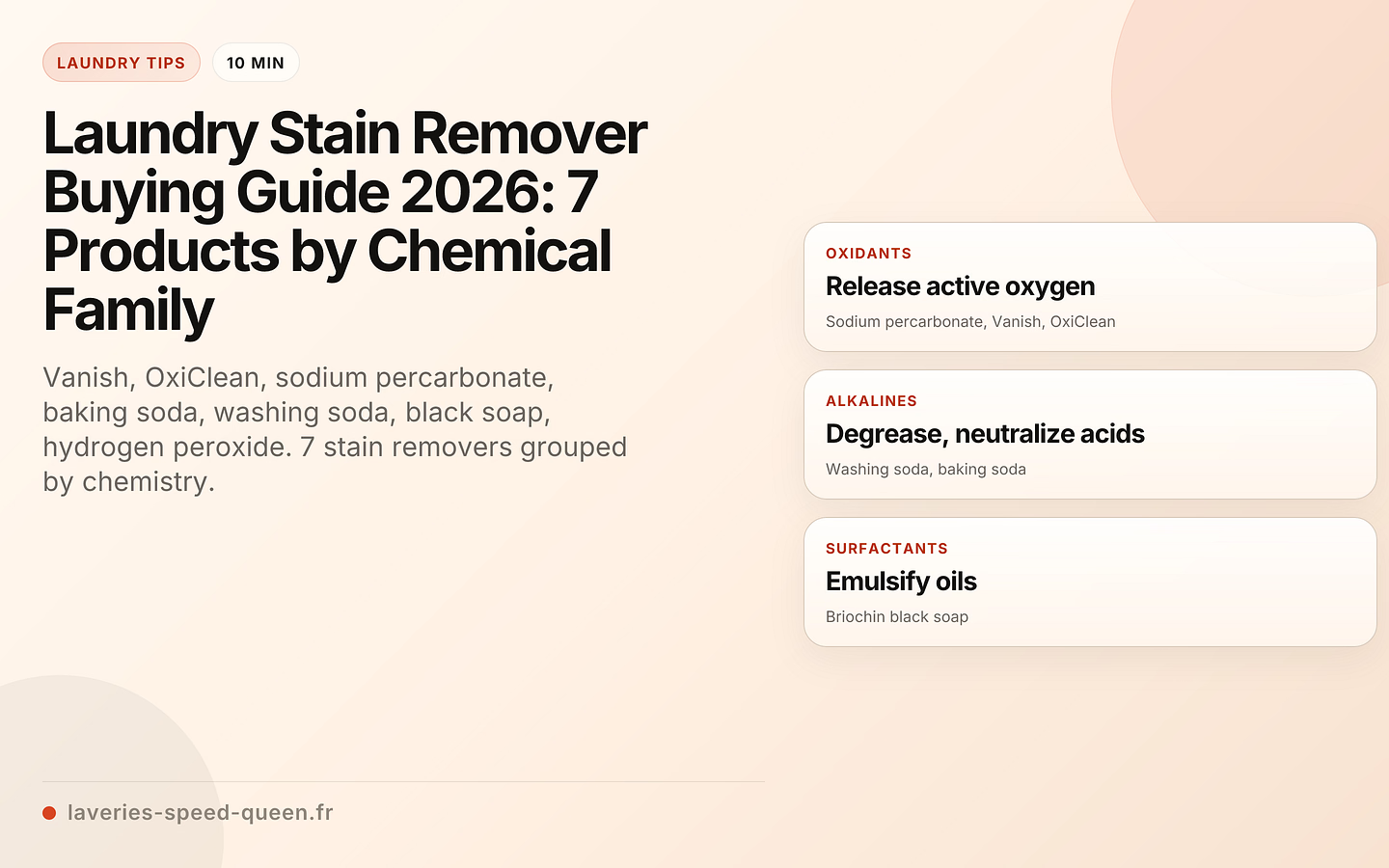
Quick answer: on the shelf, seven stain removers compete for your attention —
Vanish↗, OxiClean↗, sodium percarbonate↗, baking soda↗, washing soda↗, Le Briochin black soap↗ and hydrogen peroxide↗
. This guide groups them by chemical family (oxidizers, alkaline products, surfactants, specialized products), with what each manufacturer or reference source (official websites, Wikipedia, ANSES, GINETEX) claims for its product, and where each product reaches its limits. No subjective ranking, no “best of the year” — just a family-by-family description based on official sources.
In 30 seconds: the 4 chemical families
Active oxygen oxidizers — sodium percarbonate (releases hydrogen peroxide when it contacts water according to Wikipedia), Vanish (“Oxi Action” according to the manufacturer), OxiClean Versatile Stain Remover (chlorine-free according to Church & Dwight), 3% hydrogen peroxide (alternative to chlorine bleaches according to Wikipedia).
Alkaline products — washing soda (Na₂CO₃, degreaser and water softener according to Wikipedia, classified as “Irritant”), baking soda (NaHCO₃, mildly alkaline according to Wikipedia).
Surfactants — Le Briochin liquid black soap: linseed-oil-based recipe according to Le Briochin, advertised uses “cleans, degreases, removes stains and makes surfaces shine.”
Specialized products — 3% hydrogen peroxide for fresh blood stains (according to Wikipedia, hydrogen peroxide reacts with blood and acts as a bleaching agent).
Family 1: active oxygen oxidizers
This family brings together four products with consistent manufacturer positioning or Wikipedia sources:
- Sodium percarbonate↗: according to Wikipedia, it is an addition compound of sodium carbonate and hydrogen peroxide↗ (formula 2 Na₂CO₃·3 H₂O₂) that releases hydrogen peroxide↗ when it contacts water.
- Vanish↗: its manufacturer highlights “Oxi Action” technology based on active oxygen.
- OxiClean↗ Versatile Stain Remover: positioned by Church & Dwight as a chlorine-free alternative to chlorine bleach↗.
- 3% hydrogen peroxide↗: according to Wikipedia, an oxidizer in diluted solution presented as an alternative to chlorine bleaches.
Sodium percarbonate
Sodium percarbonate↗ is an addition compound of sodium carbonate and hydrogen peroxide↗ (formula 2 Na₂CO₃·3 H₂O₂) that releases hydrogen peroxide↗ when it contacts water. When it contacts water, it releases hydrogen peroxide↗, which acts as a bleaching oxidizer.
According to Wikipedia:
- Addition compound of sodium carbonate and hydrogen peroxide↗ (formula 2 Na₂CO₃·3 H₂O₂)
- Releases hydrogen peroxide↗ when it contacts water (bleaching oxidizing mechanism)
Practical note:
- It remains an oxidizer: test on a hidden area before first use (general care rule)
To go deeper: our full guide to sodium percarbonate for laundry explains dosing, temperature and exact uses.
Vanish (Oxi Action)
Vanish↗ highlights its “Oxi Action” technology based on active oxygen to boost washing and whiteness. Vanish↗ offers several formats on its official website: powder booster, gel, pre-wash spray, anti-color-transfer sheets.
According to Vanish↗ (official website):
- Several listed formats: powder booster, gel, pre-wash spray, anti-color-transfer sheets
- “Oxi Action” technology based on active oxygen
Practical note:
- Like any active oxygen product, test on a hidden area before use on delicate colors (general care rule)
OxiClean (Versatile Stain Remover)
OxiClean↗ is a brand of oxygen stain removers produced by Church & Dwight, whose official products page lists several ranges (powder, liquid, spray, gel, foam, paks). OxiClean↗ Versatile Stain Remover is positioned by its manufacturer as a chlorine-free alternative to chlorine bleach↗ (chlorine-free).
OxiClean↗ strengths:
- Range listed by Church & Dwight on its official products page: powder, liquid, spray, gel, foam and paks
- OxiClean↗ Versatile Stain Remover is positioned by its manufacturer as a chlorine-free alternative to chlorine bleach↗
OxiClean↗ limits:
- Like any active oxygen product, test on a hidden area before use on delicate colors
- Vanish↗ claims “Oxi Action” technology based on active oxygen; OxiClean↗ is positioned as a chlorine-free alternative to chlorine bleach↗. Both manufacturers present consistent chemistry on their respective official pages.
3% hydrogen peroxide
Hydrogen peroxide↗ in a diluted 3% solution is an oxidizer that breaks down into water and oxygen, presented as an alternative to chlorine bleaches (Wikipedia).
Strengths of 3% hydrogen peroxide↗:
- On a fresh blood stain, hydrogen peroxide↗ reacts with the blood and acts as a bleaching agent according to general chemistry (Wikipedia)
Limits of 3% hydrogen peroxide↗:
- Test on a hidden area before use on bright colors (general care rule)
For exact protocols: blood stain guide.
Vanish, OxiClean, percarbonate: what should you remember about oxidizers?
The three products in this family share active-oxygen positioning in their respective sources:
- Sodium percarbonate↗: according to Wikipedia, an addition compound of sodium carbonate and hydrogen peroxide↗ (formula 2 Na₂CO₃·3 H₂O₂), releases hydrogen peroxide↗ when it contacts water.
- Vanish↗: according to the manufacturer, “Oxi Action” technology based on active oxygen, several formats (powder booster, gel, pre-wash spray, anti-color-transfer sheets).
- OxiClean↗: according to Church & Dwight, several listed ranges (powder, liquid, spray, gel, foam, paks). OxiClean↗ Versatile Stain Remover is specifically positioned as a chlorine-free alternative to chlorine bleach↗ by its manufacturer.
- 3% hydrogen peroxide↗: according to Wikipedia, an oxidizer in diluted solution presented as an alternative to chlorine bleaches.
Vanish↗ highlights its “Oxi Action” technology based on active oxygen on its official website. OxiClean↗ Versatile Stain Remover is positioned by Church & Dwight as a chlorine-free alternative to chlorine bleach↗ on its official products page.
Family 2: alkaline products
This family includes two products with different chemical profiles according to Wikipedia: sodium carbonate (washing soda↗, Na₂CO₃) is an alkaline compound used as a degreaser and water softener; baking soda↗ (NaHCO₃) is mildly alkaline.
Washing soda (sodium carbonate)
Sodium carbonate (washing soda↗, Na₂CO₃) is an alkaline compound used as a degreaser and as a water softener (it precipitates calcium and magnesium). Wikipedia also lists “Irritant” as the main hazard associated with this compound (GHS codes H313+H333, H319).
According to Wikipedia:
- Alkaline compound used as a degreaser and water softener (precipitation of calcium and magnesium)
- “Irritant” classification, GHS codes H313+H333, H319
For broader context on alkaline cleaners for laundry, see our spoke articles.
Baking soda
Baking soda↗ (NaHCO₃) is mildly alkaline. It is the gentle alkaline product in this family — useful for everyday use, but it should be dosed with a clear head.
Baking soda↗ strengths:
- Mildly alkaline according to Wikipedia: gentle chemical profile for regular use
- Suitable for everyday uses alongside detergent
Baking soda↗ limits:
- Baking soda↗ has limited properties as a deodorizer: its effectiveness beyond musty odors is poorly documented scientifically (Wikipedia). It does not “wash” laundry (no surfactant) and is not technically a stain remover.
- Different chemical formula from washing soda↗ (NaHCO₃ for baking soda↗, Na₂CO₃ for washing soda↗)
- Use alongside detergent, not as a replacement
To go further: our baking soda and laundry guide.
Family 3: surfactants
One representative product is included here, sourced from its official manufacturer product sheet: Le Briochin liquid black soap↗.
Le Briochin black soap
Le Briochin describes its large-format Ecocert liquid black soap↗ as “traditional black soap↗ made with linseed oil” that “cleans, degreases, removes stains and makes surfaces shine” (literal quote from the official product sheet).
Strengths of Le Briochin black soap↗:
- Linseed-oil-based recipe according to Le Briochin (literal quote from the official large-format Ecocert product sheet)
- Uses advertised by Le Briochin: “cleans, degreases, removes stains and makes surfaces shine”
Family 4: specialized products (and what is not a stain remover)
This family groups products sourced for a specific use or presented in contrast with the main stain removers.
Bleach: separate, by contrast
This guide intentionally does not include bleach↗ in the recommended stain remover selection — for two reasons documented by official sources.
ANSES warning on mixtures
Mixing bleach↗ with an acid (vinegar, descaler) releases toxic chlorine gas (Cl₂); ANSES reports a marked increase in poisoning cases linked to these mixtures since 2019.
OxiClean↗ Versatile Stain Remover is positioned by Church & Dwight as a chlorine-free alternative to chlorine bleach↗; according to Wikipedia, 3% hydrogen peroxide↗ is also presented as an alternative to chlorine bleaches.
Also, the crossed-out triangle on the label prohibits all bleaching, whether chlorine or oxygen. For these fabrics, go back to surfactants (black soap↗) and gentle alkaline products (baking soda↗).
For more on this specific point: our guide on when to use bleach.
White vinegar: safety warning
White vinegar↗ does not appear in the selection of seven stain removers above because it is not covered by the manufacturer and Wikipedia sources used for this article.
The central safety point from ANSES: mixing bleach↗ with an acid (vinegar, descaler) releases toxic chlorine gas (Cl₂); poisoning cases linked to these mixtures have risen sharply since 2019.
Summary table of the 4 families
| Family | Chemistry according to sources | Products |
|---|---|---|
| Oxidizers | Positioned as active oxygen in their sources: percarbonate (Wikipedia, releases hydrogen peroxide↗ when it contacts water), Vanish↗ (“ Oxi Action ” according to the manufacturer), OxiClean↗ (chlorine-free according to Church & Dwight), 3% hydrogen peroxide↗ (alternative to chlorine bleaches according to Wikipedia) | Percarbonate, 3% hydrogen peroxide↗, Vanish↗, OxiClean↗ |
| Alkaline products | According to Wikipedia: sodium carbonate (Na₂CO₃) = alkaline compound used as a degreaser and water softener, classified as “ Irritant ”; baking soda↗ (NaHCO₃) = mildly alkaline | Washing soda↗, baking soda↗ |
| Surfactants | According to Le Briochin: large-format Ecocert liquid black soap↗ described as “ traditional black soap↗ made with linseed oil ” that “ cleans, degreases, removes stains and makes surfaces shine ” | Le Briochin black soap↗ |
| Specialized products | According to Wikipedia: 3% hydrogen peroxide↗ = oxidizer in diluted solution that reacts with fresh blood and acts as a bleaching agent | 3% hydrogen peroxide ↗ |
Go deeper: dedicated guides by stain
For more detail on specific stains, see the site’s spoke guides:
- Red wine stain guide
- Blood stain guide — where 3% hydrogen peroxide↗ plays its targeted role according to Wikipedia (which describes the reaction of hydrogen peroxide↗ with fresh blood as a bleaching agent)
- Grease stain guide
- Coffee stain guide — to go deeper on the use of active oxygen oxidizers such as OxiClean↗
- Sweat ring guide
- Yellowed white laundry guide
Read the label first
The open triangle on the label allows any type of bleaching, the triangle with two diagonal lines allows oxygen bleaching only, and the crossed-out triangle prohibits all bleaching (GINETEX ISO 3758 standard). That is the first reflex before applying any oxidizing stain remover.
Common mistakes to avoid
- Mixing bleach and vinegar (or another acid) — ANSES states that this mixture releases toxic chlorine gas (Cl₂) and that associated poisoning cases have risen sharply since 2019.
- Putting laundry in the dryer without checking that the stain is gone — check right after washing before any drying step. If the stain remains, treat it again and restart the cycle.
- Ignoring the “Irritant” classification of washing soda — Wikipedia lists “Irritant” as the main hazard of sodium carbonate (GHS codes H313+H333, H319).
- Believing baking soda is universal — Wikipedia describes it as mildly alkaline, with limited effectiveness as a deodorizer beyond musty odors. It is not technically a stain remover.
- Buying three different products when one from the right family is enough — identify your stain chemistry, choose a product from that family, and dose it correctly. Better than stacking three brands.
Where the laundromat changes the equation
Pre-treatment still happens at home: a stain remover is applied to the stain before transport. The full laundromat cycle, however, changes what happens next.
60 °C (140 °F) and 90 °C washes available
High-temperature wash (60 °C (140 °F), 90 °C) available at Speed Queen laundromats, to choose according to the fabric (check the care label).
18 kg (40 lb) capacity for bulky loads
18 kg (40 lb) washer available at Speed Queen laundromats (duvet, bedding, large load).
Detergent and softener included
Detergent and softener included in the wash price at Speed Queen laundromats.
Standard wash cycle ~30 min
Standard wash cycle ~30 min at a Speed Queen laundromat.
In practice, treat the stain at home with the right product (see the spoke guides by stain), then bring the laundry to the laundromat: our laundromats in Toulouse and Blagnac are equipped according to the canonical claims cited above. To choose the right machine size for your load, see the which machine tool.
Once the stain is treated, the wash itself happens at our two open laundromats: Blagnac Andromède and Toulouse Croix-Daurade. 9 kg (20 lb) and 18 kg (40 lb) washers at both sites, the 11 kg (24 lb) only at Croix-Daurade, 60 °C (140 °F) and 90 °C programmes, detergent and softener included, standard cycle ~30 min. See our prices.
Key takeaways
Seven stain removers, four chemical families described according to official sources: active oxygen oxidizers (percarbonate, Vanish↗, OxiClean↗, 3% hydrogen peroxide↗), alkaline products (washing soda↗, baking soda↗), surfactants (Le Briochin black soap↗), specialized products (3% hydrogen peroxide↗ on fresh blood according to Wikipedia). For each product, see the manufacturer or Wikipedia sources and the spoke guides by stain.
On safety, ANSES reminds readers never to mix bleach↗ with an acid (vinegar, descaler): this mixture releases toxic chlorine gas.
For bulky loads, the cycle at a Speed Queen laundromat is a practical option according to the available canonical claims: 18 kg (40 lb) washer available, 60 °C (140 °F) or 90 °C wash available, detergent and softener included, standard wash cycle ~30 min.