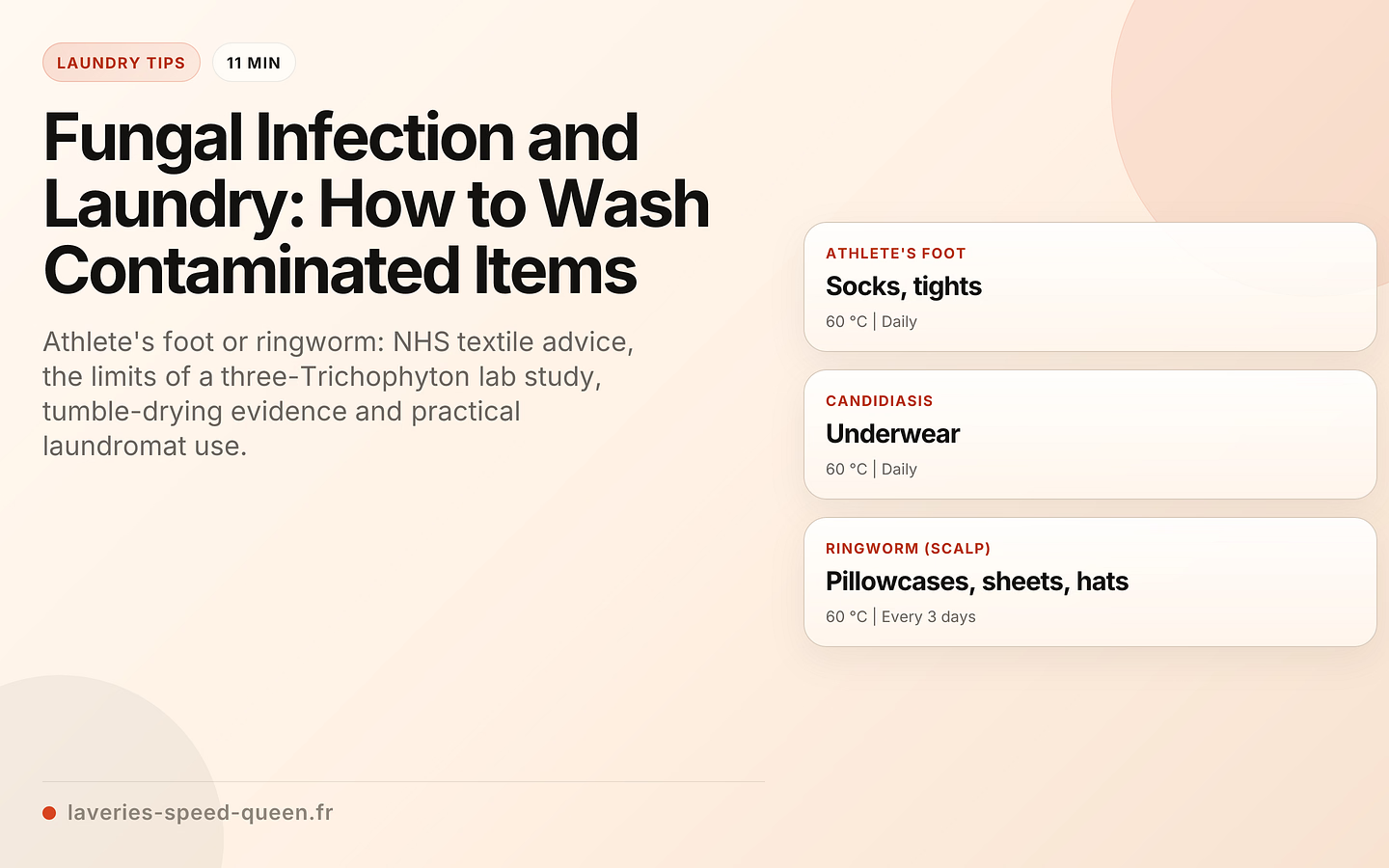
In short: laundering supports fungal-infection treatment but does not replace diagnosis or medicine. The NHS advises a separate foot towel, clean socks daily and no sharing of towels, socks or shoes. One laboratory study provides 40 and 60 degrees C results after 100 minutes for three Trichophyton species, but does not establish a rule for Candida, every textile or every programme.
At a Glance
Care label and clinical advice first — there is no universal threshold for every fungal infection.
Separate contaminated laundry — socks, underwear, towels washed apart.
Dry to the care label — obtain dry laundry without treating the dryer as proven decontamination.
Duration comes from the clinician — continue textile precautions for the period actually advised.
Quick Answer: Why Laundry Matters During a Fungal Infection
Because textiles touching the affected area are part of the hygiene measures to manage during treatment, according to the diagnosis and clinical advice.
Socks, underwear, towels and sheets can contact the affected area. Washing them regularly, avoiding sharing and following each label limits avoidable transfer. Laundry cannot identify the organism or explain a recurrence on its own.
What Science Says About Fungal Resistance to Washing
The available study has a narrow scope: three dermatophytes inoculated onto cotton gauze, not every fungal infection.
Dermatophytes
The Akhoundi study tested only Trichophyton rubrum, T. tonsurans, and T. interdigitale under defined protocols:
- After the 40 degrees C (104 degrees F) protocol for 100 minutes, cultures of all three tested species remained positive.
- After the 60 degrees C (140 degrees F) protocol for 100 minutes, no growth of those three species was observed.
- A standard laundromat wash takes about 30 minutes. The 100-minute experimental protocol answers a different research question, and the study does not support transferring its result directly between the two processes.
- Drying provides dry laundry ready to use. Because cultures remained positive after the tested drying trials, the study does not establish antifungal action through those trials.
Candida Yeasts
The Akhoundi study did not include Candida, so it establishes neither a heat threshold nor a universal textile protocol for candidiasis:
- ask the clinician or pharmacist which items to treat and for how long;
- obey the maximum temperature and drying method on each care label;
- do not extrapolate results for three Trichophyton species to Candida.
A study result, not a universal threshold
No growth after the 60 degrees C, 100-minute protocol does not mean universal sterilisation. The study validates neither Candida, every textile nor a roughly 30-minute laundromat cycle. Follow the care label and the professional treating the infection.
Complete Washing Protocol by Infection Type
Athlete’s Foot
A peeling or itchy foot is not automatically athlete’s foot. The NHS recommends asking a pharmacist and seeking medical advice in certain situations. Once the diagnosis is established, contact items can be organised simply.
Critical items: socks, tights, foot towels, bath mats, slippers.
NHS textile advice:
- Use a separate foot towel and wash it regularly.
- Wear clean socks every day.
- Do not share towels, socks or shoes.
- Wash each item according to its label and dry it before storage.
The NHS page does not set a laundry temperature. If another instruction is given, keep it tied to the individual situation and compatible with the textile.
Shoes: care depends on their construction and instructions. Consider baking soda↗ only for a labelled care use; it does not treat the foot and is not shown here to be an antifungal product. See our shoe-washing guide for model-specific methods.
Candidiasis (Vulvar, Cutaneous)
Candidiasis can affect different areas, but the laundry study discussed above did not test Candida. Persistent or recurrent symptoms need a diagnosis, not an improvised textile protocol.
Critical items: underwear, panties, boxers, bath towels, washcloths, sheets if the affected area contacts the bedding.
Cautious organisation: follow professional advice on which items to change and for how long. Choose comfortable underwear, wash it at the temperature on its label and dry it completely. This page prescribes neither cotton, a fixed towel or sheet schedule, nor an extension after treatment.
For more detail, see our underwear-washing guide.
Ringworm (Scalp, Body)
Ringworm can affect skin or the scalp and requires suitable treatment. The NHS recommends confirming the situation with a pharmacist or doctor and gives non-sharing advice that directly concerns laundry.
Critical items: pillowcases, sheets, hats, scarves, combs, brushes and bath towels.
NHS textile advice:
- Wash towels and bedding regularly.
- Do not share towels, bedding or combs with the affected person.
- Continue treatment for the stated duration, even if the skin’s appearance changes.
- Choose an authorised programme for each textile; the NHS page does not set a universal temperature.
Which Items to Wash at Which Temperature
There is no universal safe floor for every fungal diagnosis. Use our washing temperature guide to read care limits and washing at 60 degrees C only when that setting is compatible and clinically relevant.
| Item | Temperature | Change frequency |
|---|---|---|
| Socks, tights | Label + clinical advice | Clean socks daily per NHS |
| Underwear (cotton) | Label + clinical advice | As advised |
| Underwear (lace, silk) | Care label; optional compatible product only | As advised |
| Bath towels | Label + clinical advice | Regularly, without sharing |
| Washcloths | Label + clinical advice | As advised |
| Sheets, pillowcases | Label + clinical advice | Regularly for ringworm per NHS |
| Bath mat | Label + clinical advice | By use and advice |
| Pajamas | Label + clinical advice | As advised |
Drying: The Step Everyone Underestimates
Drying fully avoids storing damp laundry. That practical benefit is not an antifungal promise: cultures of all three tested species remained positive after every mechanical-drying trial in the cited study. Our tumble dryer guide explains label-compatible drying.
Drying Rules During a Fungal Infection
Tumble dryer: only when the label allows
Use it to obtain the required dryness. The study's 100- and 150-minute domestic trials and 10-minute laundromat trial remained positive for all three tested species.
Air drying
Space items in a ventilated place and wait until they are dry at the surface and through thicker areas. Do not present this method as an antifungal treatment.
Before storage
Unfold thick items and check for damp areas. Restart or extend only a drying method permitted by the label.
Speed is convenience
Moving directly from washing to drying avoids transporting or leaving a wet load waiting. It is a logistical benefit, not evidence of decontamination.
Do Not Share: The Most Important Rule
For athlete’s foot, the NHS says not to share towels, socks or shoes; for ringworm, it says not to share towels or bedding.
- Separate foot towel — NHS advice for athlete's foot; wash it regularly according to its label.
- Do not share socks or shoes — NHS advice to use alongside the stated treatment.
- Ringworm — wash towels and bedding regularly and do not share them with the affected person.
- Head-contact items — for ringworm, do not share combs; care for each item according to its own instructions.
- Hamper — separation may simplify organisation, but the study does not establish a universal requirement for a separate wash load.
The Bathroom: Primary Transmission Zone
In a shared bathroom, clearly assigning towels and letting them dry avoids confusion. For surface cleaning, follow the product label rather than a textile recipe.
- Bath mat: wash it according to its label when its use calls for it and dry it completely.
- Towels: hang them separately and identify the dedicated foot towel.
- Flip-flops or slides: follow NHS advice for shared spaces and care for them according to their material.
- Surfaces: use only a product compatible with the surface and its label; never mix household cleaners.
Protocol Duration
The duration of treatment cannot be inferred from how the laundry looks. Follow the prescription, medicine directions or advice from the pharmacist or doctor.
During Medical Treatment
- Apply the non-sharing advice that corresponds to the diagnosis.
- Wash contact items according to their labels and at the frequency stated by the professional.
- Use clean socks each day for athlete’s foot, as the NHS advises.
- Dry items before returning them to use.
After Symptoms Disappear
- This guide sets no fixed two-week extension for textile precautions.
- Continue treatment for the stated duration even if symptoms appear to improve.
- Ask when to return to the ordinary routine if the professional prescribed additional measures.
When to See Your Doctor Again
If symptoms do not improve, spread, become painful or return, ask the pharmacist or doctor for another assessment. They can review the diagnosis, consider another cause or adjust treatment.
Laundry does not replace medical treatment
Laundry neither diagnoses the infection nor treats the skin. The choice of a cream, powder or oral medicine belongs to the pharmacist or doctor for the individual situation. Textile care can be organised alongside treatment, without promising to prevent recurrence or guarantee recovery.
Items That Cannot Handle the Intended Programme
Some delicate textiles exclude a temperature or product. Use the alternatives permitted by their labels and the clinical advice received:
Lace, Silk, Fine Lingerie
- Wash at the temperature permitted by the label with an authorised delicate programme.
- Consider sodium percarbonate↗ only for a care use allowed by both product and textile directions; do not assign it a clinical antifungal effect.
- Dry completely using the permitted method.
- If clinical advice cannot be applied to the item, ask the professional for an alternative.
Wool, Cashmere
- Follow the wool programme and temperature on the label.
- Check compatibility before any sodium percarbonate↗; it replaces neither treatment nor specialist textile advice.
- Dry flat if the label requires it, in a ventilated place.
Shoes
Shoes vary widely in construction. Check their instructions and our shoe-washing guide before wetting them. The Akhoundi study did not test shoes.
- Alternate pairs if that helps them dry between uses.
- Consider baking soda↗ only for a labelled care use, without claiming it treats or decontaminates the shoe.
- Choose a comfortable pair and follow NHS advice not to share shoes during athlete’s foot.
The Laundromat Protocol
A laundromat is practical for a large quantity of sheets, towels or clothing. Its capacities help avoid packing the load, and on-site drying avoids leaving with damp laundry when the care label permits it.
1. Organise the load
Transport items in a closed bag and group them by compatible care labels. Separation can help organise different programmes.
2. Select an authorised programme
Use the temperature and programme permitted for each textile, grouping only compatible items.
3. Run a complete drying cycle
Move compatible items to the dryer, check thick areas and extend the time if they remain damp.
4. Leave with laundry ready to put away
Once each item is dry, place it in a clean bag or dry closet to complete the session on site.
This laundromat organisation remains separate from diagnosis and treatment, which belong to the pharmacist or doctor. The 100-minute laboratory protocol cannot be transferred to a commercial cycle, and on-site drying is not evidence of fungal decontamination.
Preventing Recurrence
Prevention depends on the diagnosis and advice received. These NHS-based habits remain distinct from promises of an outcome:
- Clean socks each day for athlete’s foot, following NHS advice.
- A separate foot towel, washed regularly according to its label.
- Do not share towels, socks or shoes in that situation.
- Dry feet carefully, especially between the toes, following NHS advice.
- Wash towels and bedding regularly and do not share them for ringworm.
- Choose temperature by the care label, using the washing-temperature guide as textile help, not a prescription.
Where This Guide Stops
This guide covers laundry contaminated by fungal infections. If your concern is laundry from a person with a viral or bacterial illness, see our guide on sick person’s laundry. For the right temperatures for each textile type, see a wash temperature guide.
Methodology and Sources
- NHS UK, Ringworm, nhs.uk/conditions/ringworm (external link), accessed 20 March 2026
- NHS UK, Athlete’s foot — Prevention, nhs.uk/conditions/athletes-foot (external link), updated 2025, accessed 20 March 2026
- American Academy of Dermatology, Ringworm: Overview, aad.org/public/diseases/a-z/ringworm-overview (external link), accessed 20 March 2026
- Akhoundi M, Nasrallah J, Marteau A, Chebbah D, Izri A, Brun S., Effect of Household Laundering, Heat Drying, and Freezing on the Survival of Dermatophyte Conidia, Journal of Fungi (Basel), 2022, 8(5):546 (PMID 35628801, PMC9143173 (external link))
As an Amazon Associate, we earn from qualifying purchases through the affiliate links in this article — at no extra cost to you. This helps us maintain this site and produce free guides.
If the care label allows it, a high-temperature option is available on compatible machines and programmes. When tumble drying is also permitted, it is billed in roughly 10-minute increments and total drying time remains variable. Plan your visit at our Blagnac laundromat or our Croix-Daurade laundromat.