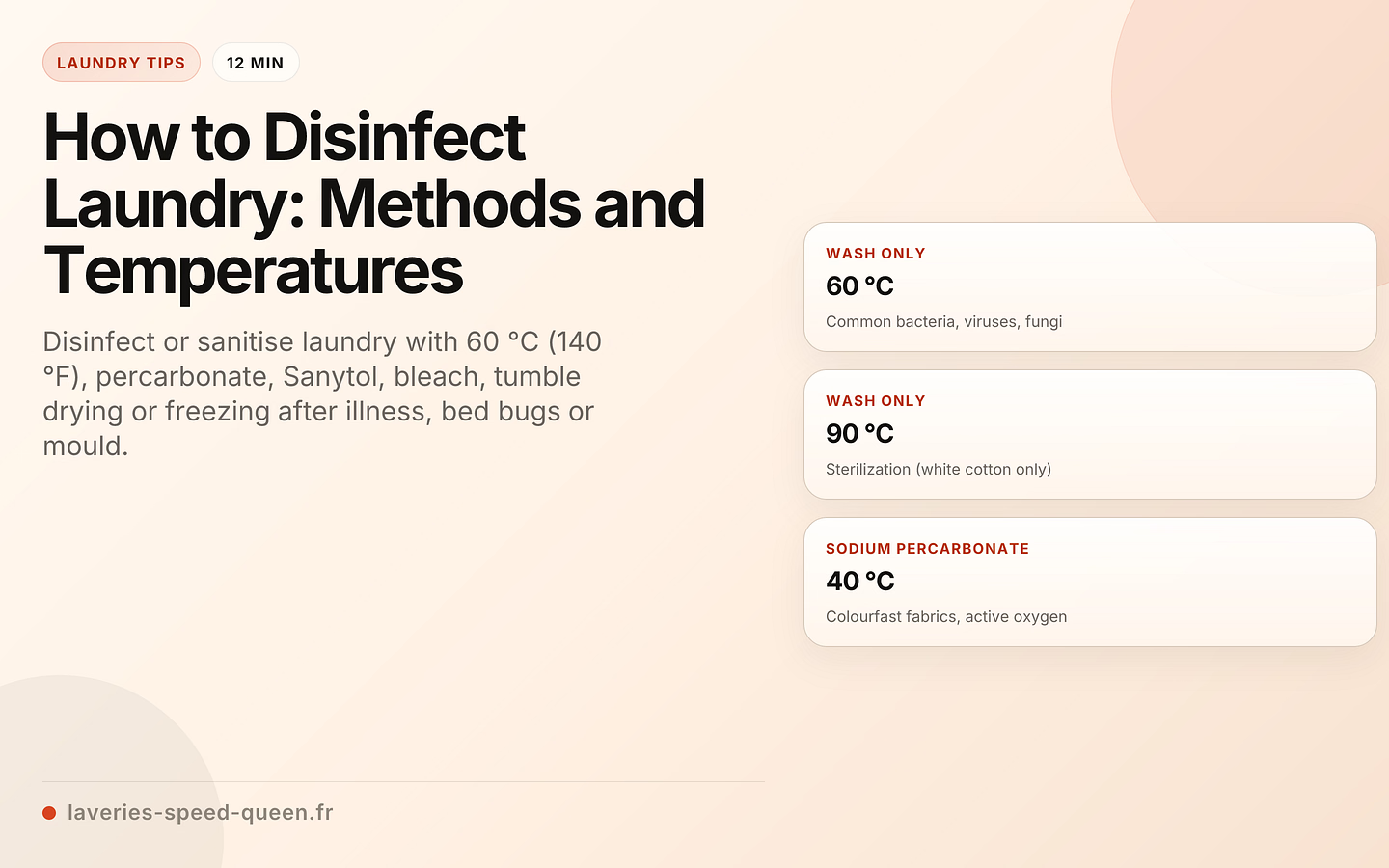
In short: washing laundry does not automatically disinfect it. For laundry hygiene, the main benchmark is 60 °C (140 °F) for 30 minutes or a suitable textile disinfectant (percarbonate, Sanytol↗, bleach↗ on white cotton). For bed bugs, the protocol changes: wash at 60 °C if the label allows it, or hot tumble dry for 30 minutes on compatible items; otherwise use freezing or dry cleaning depending on the fabric.
At a glance
60 °C (140 °F) for 30 minutes = the main hygiene benchmark -- useful against common bacteria, many fungi and many enveloped viruses.
Bed bugs -- on compatible textiles, hot tumble drying for at least 30 minutes can be enough; washing alone may be insufficient.
Sodium percarbonate -- disinfects through oxygenation from 40 °C (104 °F). 2 tbsp in the drum. Colour-safe.
Delicate textiles -- if heat is not allowed, freezing for 72 hours at -18/-20 °C or declared dry cleaning is safer.
Dry quickly -- bacteria multiply in moisture. Tumble dryer or airy outdoor drying, never in a ball in the drum.
How to disinfect laundry in the washing machine
To disinfect laundry in the washing machine, wash at 60 °C for at least 30 minutes (the thermal threshold that kills most bacteria and enveloped viruses), or add sodium percarbonate↗ (2 tablespoons) which works from 40 °C by releasing active oxygen. For white cotton, diluted bleach↗ reinforces the action. Dry immediately and fully to prevent regrowth.
- Sort out the laundry to disinfect (sick-room garments, underwear, kitchen linen).
- Pick 60 °C minimum (90 °C for heavily contaminated white cotton).
- Add a textile disinfectant: percarbonate (colour-safe) or Sanytol↗ (all fabrics).
- Run a long cycle with maximum spin (bacteria thrive in residual moisture).
- Tumble-dry immediately — no damp pause between wash and dry.
A high-temperature wash option is available on compatible machines and programs. Convenient for handling a sick-room load or a bed-bug protocol in a single trip.
Cleaning and disinfecting: two different things
A common confusion: many people think that washing laundry automatically disinfects it. It does not.
Cleaning means removing visible dirt — stains, sweat, skin residue, odours. A 30-40 °C (86-104 °F) wash with detergent accomplishes this. Detergent surfactants lift dirt from fibres, and rinsing flushes it away.
Disinfecting means strongly reducing or eliminating biological agents on laundry — mainly bacteria, viruses and fungi. For dust mites or bed bugs, it is more accurate to think in terms of thermal treatment of the textile. This requires either sufficient temperature (60 °C (140 °F)+), a biocide product (percarbonate↗, Sanytol↗, bleach↗), or both.
A 30-40 °C wash reduces the bacterial population (bacteria are diluted and partially dislodged by detergent), but it does not kill them. Studies show that after a 30 °C wash, between 10 and 30% of bacteria remain viable on the fabric. For everyday use (t-shirt, jeans, shirt), this is not a problem — your immune system handles it. But in certain situations (illness, infestation, immunosuppression), genuine disinfection is necessary.
Disinfection temperatures
Heat is the simplest and most reliable disinfectant. No chemicals, no dosing — just sufficient temperature for sufficient time.
30-40 °C (86-104 °F) -- cleaning, no disinfection
Bacteria survive. Detergent dislodges and dilutes micro-organisms but does not kill them. Sufficient for everyday laundry in good health. Not sufficient for illness laundry, sanitary towels, kitchen towels.
60 °C (140 °F) for 30 min -- standard disinfection
Strongly reduces common bacteria (E. coli, staphylococci, salmonella), many fungi (Candida, dermatophytes) and many enveloped viruses such as flu or SARS-CoV-2. This is the most useful benchmark for domestic laundry hygiene.
Bed bugs -- real heat + enough time
The key benchmark is not a program number: wash at 60 °C (140 °F) if the label allows it, or use a hot tumble dryer for at least 30 minutes on compatible items. Washing alone may be insufficient, and the load must tumble freely.
90 °C (194 °F) -- very hot wash reserved for robust white cotton
Useful for some sheets, tea towels and white towels specifically designed for it. Reserve it for clearly compatible fabrics; it is not the same thing as medical sterilisation.
Contact time matters as much as temperature
Disinfection is not instant — it requires sufficient contact time between the micro-organism and the lethal temperature. At 60 °C, 30 minutes are a practical benchmark for stronger laundry hygiene. A 15-minute express programme at 60 °C does not disinfect reliably.
This is why the standard cotton programme (long cycle, 1.5-2 h) is preferable to the quick programme for disinfection. The long cycle maintains the target temperature throughout the wash phase. For bed bugs, the same logic applies in the dryer: actual heat, enough time, and no overloaded drum. See our detailed guide on washing at 60 °C and washing at 90 °C.
Eco programme: watch the actual temperature
Modern eco programmes reduce water temperature to save energy. A 60 °C (140 °F) eco programme may only heat to 45-50 °C (122 °F) — insufficient for disinfection. For reliable disinfection, select the standard cotton programme (non-eco) which maintains the displayed temperature throughout the wash phase.
Textile disinfectants
When the textile cannot withstand 60 °C (synthetics, delicate colours, elastane), a disinfectant product compensates for the insufficient temperature.
Sodium percarbonate (recommended)
Sodium percarbonate is a white granule that decomposes in water into sodium carbonate (detergent) and hydrogen peroxide↗ (the active disinfectant). The released active oxygen destroys bacteria, fungi and certain viruses by oxidising their cell membranes.
- Activation: percarbonate begins releasing active oxygen from 40 °C. Below that, the action is slow and incomplete.
- Disinfectant dosage: 2 tbsp directly in the drum (not in the detergent tray).
- Compatible: white cotton and colour-fast fabrics. Not recommended for silk, wool or fragile colours.
- Advantage: biodegradable, no toxic residue, no odour.
Sanytol textile disinfectant
Sanytol↗ is a commercial product containing didecyldimethylammonium chloride, a quaternary ammonium biocide. It destroys bacteria, fungi and enveloped viruses.
- Activation: active from 20 °C — this is its main strength over percarbonate.
- Dosage: 1 cap (approximately 60 ml) in the softener tray (acts during the final rinse).
- Compatible: all textiles, all colours.
- Disadvantage: synthetic product, less eco-friendly than percarbonate.
Bleach
Bleach↗ (sodium hypochlorite) is the most powerful disinfectant available at home. It destroys all micro-organisms — bacteria, viruses (enveloped and non-enveloped), fungi, spores.
- Use: white cotton only. Bleach↗ destroys pigments (irreversible discolouration), attacks synthetics and degrades elastane.
- Dosage: 100 ml of 2.6% bleach↗ in the detergent tray. 40-60 °C cycle.
- Precaution: never mix bleach↗ and white vinegar↗ — the mixture produces chlorine gas, toxic for the respiratory system.
White vinegar (mild action)
White vinegar (8-14% acetic acid) has moderate antibacterial action. It does not destroy viruses or spores, but it reduces the population of common bacteria and neutralises odours.
- Dosage: 200 ml in the softener tray (acts during the rinse).
- Use: supplement to a standard wash for everyday textiles. Insufficient alone for genuine disinfection after illness.
When to disinfect your laundry
Disinfection is not needed for every wash. Here are the situations that justify it.
After a contagious illness
Gastroenteritis, flu, covid, throat infection, bronchitis: wash the sheets, bath towels, face cloths, pyjamas and underwear of the sick person at 60 °C minimum. Wash the sick person’s laundry separately from the rest of the family’s. If the laundry cannot withstand 60 °C, add percarbonate (40 °C) or Sanytol↗ (30 °C).
Bed bugs
Bed bugs require a different protocol from standard laundry hygiene. Public guidance converges on three useful points: isolate the laundry in sealed bags, wash at 60 °C when the label allows it, and above all use a hot tumble dryer for at least 30 minutes on compatible textiles. The EPA also states that washing alone might not do the job.
In practice:
- if the textile can take 60 °C, washing at 60 °C plus hot tumble drying is the most robust option;
- if it cannot take a hot wash but can go in the dryer, hot tumble drying alone for at least 30 minutes can be enough;
- do not overload the drum: the whole load must be able to tumble so that all items heat properly.
If the textile cannot take heat
Wool, silk, cashmere, some elastane-rich garments, coated items, foam-filled items or glued pieces should not be forced through a hot treatment.
- Freezing: for bed bugs, ANSES recommends freezing at -17 °C for at least 72 hours when washing is not possible. In practice, aiming for -18/-20 °C for 72 hours gives a more comfortable margin.
- Dry cleaning: suitable for some delicate garments; clearly tell the cleaner that the item may have been exposed to bed bugs.
- Dry steam: for non-washable upholstery, high-temperature dry steam (at least 120 °C at the outlet) can help on seams and exposed areas. It does not replace a full-home bed bug protocol on its own.
Mould on laundry
Mould (green, black or grey spots, musty smell) is a fungus. Sodium percarbonate↗ is particularly effective: it kills the fungus AND bleaches mould stains through oxygenation. Soak mouldy laundry in a percarbonate solution (2 tbsp per litre at 40 °C) for 2 hours, then machine wash at 60 °C. See our guide on mould stains.
Bedwetting
Urine is a breeding ground for bacteria. After a nighttime accident, rinse sheets and pyjamas in cold water to remove the excess, then wash at 60 °C with percarbonate. If the odour persists, add 100 ml of white vinegar↗ to the rinse. See our guide on urine stains.
Mistakes to avoid
- Mixing bleach and vinegar -- the mixture produces chlorine gas, a toxic gas. NEVER use them in the same wash cycle.
- Bleach on colours or synthetics -- irreversible discolouration and fibre degradation. Bleach is reserved for white cotton.
- Eco programme for disinfection -- actual temperature is often lower than displayed. Use the standard cotton programme.
- Leaving wet laundry in the drum -- bacteria multiply in moisture. Remove laundry immediately after the cycle.
- Thinking detergent disinfects -- detergent cleans (removes dirt) but does not disinfect. Surfactants dislodge bacteria but do not kill them.
- Relying on a dryer program number -- a "program 3" has no universal meaning. What matters is textile compatibility, actual heat and duration.
- Overloading the dryer against bed bugs -- if the load cannot tumble properly, the whole batch does not reach the same heat.
- Overdosing percarbonate -- excess can leave irritating residue on fabric. Stick to the dosage (2 tbsp per machine).
Disinfection at the laundromat
The laundromat is not a magic fix, but it is very practical when you need to treat a lot of compatible laundry quickly: sheets, towels, covers, everyday clothing, some duvets.
Why it helps
The laundromat makes it easier to access 60 °C programmes, larger drums and dryers better suited to bulky loads. For large amounts of bed linen, that can make treatment much easier.
What the laundromat does not change
You still need to:
- read the care label before increasing heat;
- transport potentially infested laundry in sealed bags;
- avoid shaking out the textiles on site;
- re-bag treated laundry in clean bags;
- avoid promising that one numbered setting will suit every textile.
For more on laundromat hygiene, see our article on the science of laundromat hygiene.
Immunosuppression and laundry
If a family member is immunosuppressed (chemotherapy, immunosuppressant treatment, HIV), laundry disinfection is not optional — it is medically recommended. Wash all laundry in contact with the person at 60 °C (140 °F) minimum. Tumble dry (additional heat). Consult the treating doctor for specific recommendations.
Recommended disinfection frequency
There is no need to disinfect every wash — systematic disinfection wears textiles (high temperatures degrade fibres faster) and uses more energy. Reserve disinfection for situations that justify it:
- Kitchen towels: 60 °C every week (regular wash)
- Bath towels: 60 °C every 3 uses
- Sheets: 60 °C every 2 weeks
- Underwear: 60 °C if possible, otherwise 40 °C + percarbonate
- Illness laundry: 60 °C every wash during the illness + 1 week after
- Bed bugs: 60 °C wash if compatible, or hot tumble drying for 30 minutes; freezing if heat is not allowed
- Mould: percarbonate soak + 60 °C, then investigate the cause (humidity, ventilation)
For everyday laundry (t-shirts, jeans, shirts, jumpers), a 30-40 °C wash is sufficient if the person is healthy. See our guide to washing machine programmes for choosing the right cycle.
As an Amazon Associate, we earn from qualifying purchases through the affiliate links in this article — at no extra cost to you. This helps us maintain this site and produce free guides.
Special case: for laundry contaminated by rodent droppings or urine (mice, rats), the pre-wash protocol is more demanding (wet-down with diluted bleach↗, gloves, appropriate respirator). Full details in rodent-contaminated laundry: wash, discard, hantavirus.
After illness, or when you need to treat a lot of compatible laundry in one session, the laundromat is mainly useful for practicality: large drums and dryers suited to bulky loads. Our laundromats in Blagnac and Croix-Daurade let you handle sheets, towels, covers and everyday clothing without multiplying cycles at home. Payment contactless card or cash. Check our prices.
Sources and references
- Washing at 60 °C: which clothes?
- Washing at 90 °C: when to use?
- Sodium percarbonate: usage guide
- Bed bugs and laundromat laundry
- Dust mite allergy and washing
- Removing mould stains
- White vinegar and laundry: uses and limits
- Laundromat hygiene: what the science says
- ANSES — Bed bugs: use chemical products only as a last resort (external link)
- ANSES — 2023 report on bed bugs (external link)
- EPA — Preparing for Treatment Against Bed Bugs (external link)
- CDC — Laundry and Bedding (external link)
- GINETEX / ISO 3758 — Textile care symbols (external link)