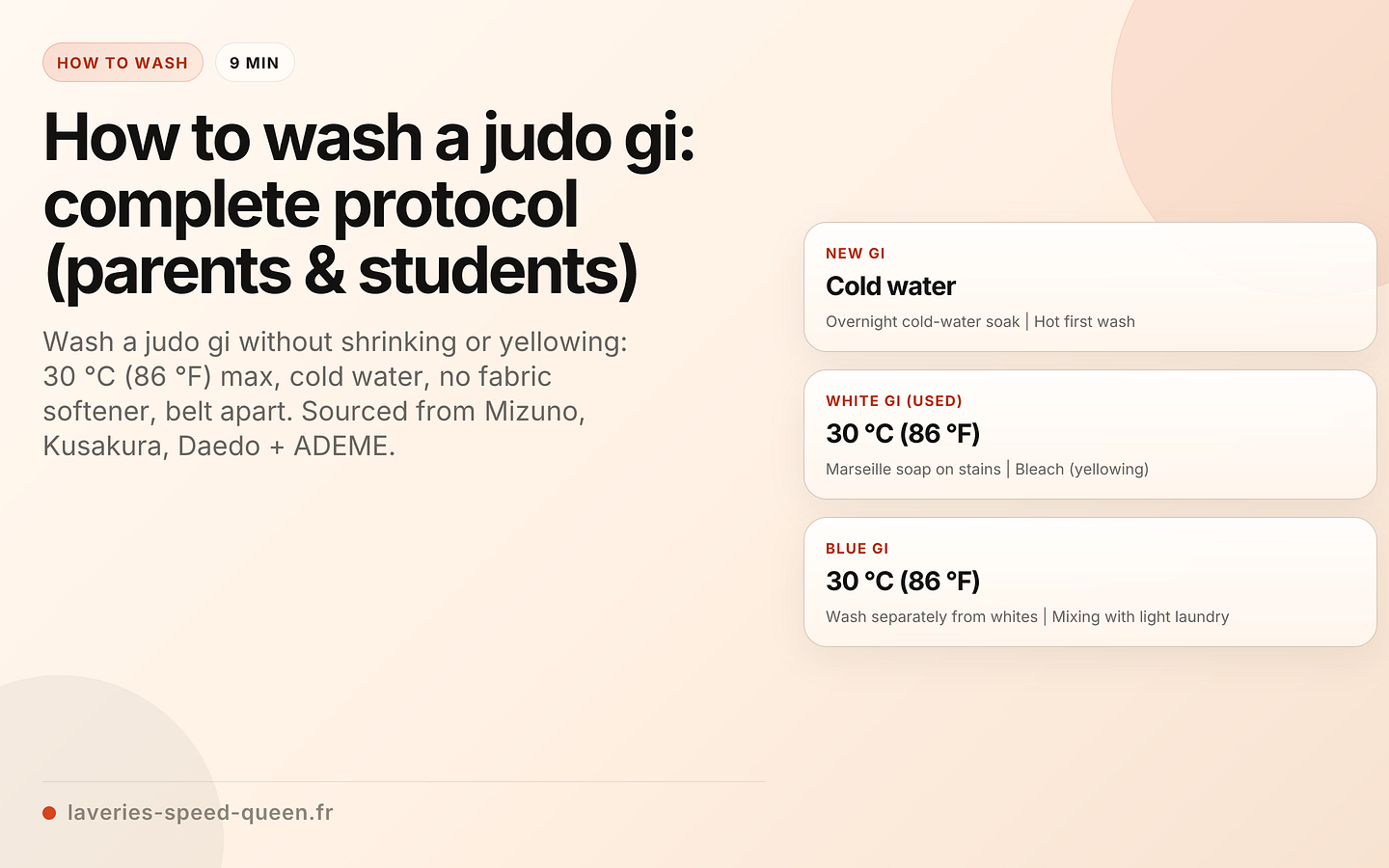
In short: a judo gi (judogi) machine-washes at 30 °C (86 °F) max, no bleach↗, no fabric softener↗, never the tumble dryer. For a new gi, Mizuno recommends cold water; the blog C’est quoi ton Kim suggests an additional overnight soak to remove the starch. The belt never goes in the machine: hand-wash if needed. Air-dry in the shade on a hanger.
Quick answer
To wash a judo gi without shrinking or yellowing: machine 30 °C (86 °F) max (Kusakura, Daedo, Decathlon Outshock), no bleach↗ (Mizuno), no fabric softener↗ (Mizuno, ADEME), no tumble dryer (Kusakura). Soak a new gi overnight in cold water before the first wash to remove starch (C’est quoi ton Kim). The belt washes apart — hand-wash if very dirty (Daedo), otherwise air it. Air-dry on a hanger, in the shade (Mizuno). Do not overdose detergent (ADEME).
In brief
30 °C (86 °F) max — the limit recommended by Kusakura, Daedo and Decathlon Outshock for a cotton judo gi.
Cold water for the first wash — Mizuno recommends it to preserve the fabric over time.
No bleach or fabric softener — bleach weakens fibres (Mizuno), softener degrades fabric integrity (Mizuno) and ADEME advises against softener in general.
No tumble dryer — shrinkage risk (Kusakura). Air-dry in the shade on a hanger.
Belt apart — never in the machine; hand-wash if needed (Decathlon, Daedo). A belt can shrink by up to 10 cm (4 in) but returns to length once tied.
As an Amazon Associate, we earn from qualifying purchases through the affiliate links in this article — at no extra cost to you. This helps us maintain the site and produce free guides.
Decision table
The right protocol depends on the scenario: new gi, used white, blue, kids, yellowing or mouldy. All temperatures below are sourced (manufacturers + ADEME).
| Scenario | Temperature | Pre-treatment | Mistake to avoid |
|---|---|---|---|
| New gi | Cold water (first wash, Mizuno) | Overnight cold-water soak (C’est quoi ton Kim) | Hot water on the first wash |
| White gi (used) | 30 °C / 86 °F (Kusakura) | Marseille soap↗ on local stains | Bleach↗ (Mizuno: discolouration) |
| Blue gi | 30 °C / 86 °F (Daedo) | Wash apart from whites (Decathlon) | Mixing with light laundry |
| Kids gi | 30 °C / 86 °F (Kusakura) | Close drawstrings (Kimono-Judo.fr) | Tumble dryer (Kusakura: shrinkage risk) |
| Yellowing gi | 30 °C / 86 °F (Kusakura) | Baking soda↗ in the drum (Kimono-Judo.fr) | Direct sun or radiator (shade only) |
| Mouldy-smelling gi | 30 °C / 86 °F (Kusakura) | Cold-water pre-soak + baking soda↗ + vinegar (myKarateStore) | Overdosing detergent (ADEME: don’t overdose) |
Step-by-step method
The standard method covers regular use. Specific scenarios (belt, new gi, mould) are handled below under Edge cases.
Sort and prepare
Separate the gi from the rest of the laundry. White only with other whites (Decathlon Outshock). A blue gi washes apart to avoid bleeding onto light laundry (Decathlon Outshock). Tie the trouser drawstrings before the machine (Kimono-Judo.fr) — it prevents tangling or knotting in the drum.
Pre-treat stains
For local stains, dab the spot with damp Marseille soap (Kimono-Judo.fr). No vigorous rubbing: Royal Judo Club La Hulpe / Kalisport recommends patting without mechanical force. Local pre-treatment avoids raising the temperature on the entire gi.
Wash at 30 °C (86 °F) max
30 °C (86 °F) max (Kusakura, Decathlon Outshock, Daedo). ADEME also confirms that the vast majority of laundry doesn't need to be washed above 30 °C. Follow the manufacturer's label for cycle choice. For first washes of a new gi, Mizuno advises cold water. Do not overdose detergent (ADEME, myKarateStore). No bleach (Mizuno), no fabric softener (Mizuno, ADEME).
Air-dry in the shade
Hang the gi on a sturdy hanger, in a ventilated spot, in the shade (Mizuno, Royal Judo Club La Hulpe / Kalisport). Never use the tumble dryer: Kusakura warns of shrinkage risk. Also avoid direct sun and radiators (Royal Judo Club La Hulpe).
Iron (optional)
Ironing is optional. If you do iron — grading sessions, competition, group photo — medium-heat ironing per Kusakura.
Air the gi between training sessions
Take the gi out of the sports bag as soon as you get home. The blog C’est quoi ton Kim recommends this. Spread it on a hanger or hang it open. For a beginner training twice a week, Decathlon Outshock advises a wash at the end of the week, airing the gi between sessions. Airing doesn’t replace washing, but it stays recommended by the manufacturers between classes.
Edge cases
The belt: a case apart
The belt (obi) never goes in the machine: Decathlon Outshock says so, Daedo confirms. Kusakura notes a belt can shrink by up to 10 cm (4 in), but usually returns to length once tied. Daedo adds that a separate hand-wash preserves the colour.
If the belt is very dirty or smells strongly, opt for a separate cold-water hand-wash (Daedo) and lay-flat drying in the shade (Mizuno). Day-to-day, airing it between classes is enough.
A new gi: remove the starch before the first wash
A new gi comes out of the factory stiff, treated with starch or a sizing agent to keep its shape for sale. Before the first wash, the blog C’est quoi ton Kim recommends an overnight cold-water soak to remove that starch and limit shrinkage.
After the soak, gently wring out (without twisting) and run the first wash in cold water (Mizuno) or 30 °C (Kusakura), without overdosing detergent (ADEME).
- No hot water on a new gi — Mizuno recommends cold water to preserve the fabric.
- No bleach or fabric softener on the first wash — Mizuno: bleach weakens fibres and causes discolouration; softener degrades fabric integrity and affects the grip.
- No tumble dryer afterwards — air-dry only, on a hanger, in the shade.
A yellowing gi
Several factors play a role: bleach↗ (avoid — Mizuno) and direct sun or radiator drying (avoid — Royal Judo Club La Hulpe / Kalisport).
The fix: return to the base protocol (30 °C, shade drying), add a little baking soda↗ in the drum as a mild whitener (Kimono-Judo.fr) and a splash of white vinegar↗ in the softener compartment to neutralise accumulated odours. No miracle numbers — this is a recognised traditional use, not a chemical stain remover.
The best fix is prevention: 30 °C, shade drying, from day one.
A mouldy-smelling gi
A gi stored damp in a closed bag, or put away still slightly wet after a quick dry, can develop a characteristic mouldy smell. myKarateStore proposes a simple protocol:
- Cold-water pre-soak in a basin or the bathtub, with baking soda↗ and white vinegar↗ (myKarateStore).
- Rinse briefly, then run a 30 °C machine wash (Kusakura) without overdosing detergent (ADEME, myKarateStore).
- Air-dry, in the shade, on a hanger (Mizuno, Royal Judo Club La Hulpe).
The baking soda↗ + vinegar protocol targets odours and mould (myKarateStore). If the smell persists, run another cycle; if that fails, the gi may need replacing.
A blue gi
A blue gi washes apart to avoid bleeding onto light laundry. Decathlon Outshock recommends not mixing it with light colours.
After a few washes, you can group it with other blues or darks. 30 °C max, never bleach↗ (Mizuno), shade drying always (Mizuno, Royal Judo Club La Hulpe).
A kids gi
Same protocol as adults — 30 °C max (Kusakura, Daedo, Decathlon), no tumble dryer (Kusakura), hanger drying in the shade (Mizuno). A mesh wash bag↗ can be used in addition for small sizes.
IJF standards (competition)
For reference: IJF-approved gis weigh 650 to 750 g/m² in Sashiko weave, with sleeves reaching the wrist (1 cm / 0.4 in tolerance) per the Kusakura synthesis of the IJF rules. Even an IJF gi remains limited to 30 °C in the machine per the manufacturers (Kusakura, Daedo). The manufacturer’s label prevails over everything: for a competition gi, follow the brand’s instructions to the letter.
Mistakes to avoid
- Quick tumble dry — Kusakura: shrinkage risk. Mizuno instead recommends air-drying in the shade.
- Bleach to whiten — Mizuno: bleach weakens fibres and causes discolouration.
- Belt in the machine — Decathlon, Daedo and Kusakura: no machine. Separate hand-wash if needed (Daedo).
- Direct sun or radiator drying — Royal Judo Club La Hulpe: in the shade, never near a direct heat source.
- Overdosing detergent — ADEME and myKarateStore explicitly recommend not overdosing.
The laundromat for washing a judo gi
For a family or club batch, the laundromat offers three concrete advantages for washing a judo gi:
Family load in one cycle
9 kg (20 lb) washer available (standard family load). 18 kg (40 lb) washer available for large loads (duvet, family batch). Standard wash cycle ~30 min.
Detergent included
Detergent and softener included in the wash price — for the gi, simply skip the softener compartment (Mizuno, ADEME).
Open daily 07:00-22:00
Open every day, 07:00–22:00. Handy for fitting in a wash before or after training. Loyalty card: up to -20% on washing and drying.
Important: no tumble dryer for the judo gi
Even at the laundromat, avoid the tumble dryer on a cotton gi (Kusakura: shrinkage risk). Wash at 30 °C at the laundromat, then bring the gi home damp and hang it on a hanger to air-dry in the shade (Mizuno, Royal Judo Club La Hulpe).
FAQ
What temperature should you wash a judo gi?
30 °C (86 °F) maximum. This is the limit recommended by Kusakura, Decathlon Outshock, Daedo and ADEME. Daedo caps mixed cotton at 40 °C (104 °F), but for pure cotton (most gis) stay at 30 °C. Mizuno even advises cold water to preserve the Sashiko weave over time.
Can the belt go in the machine?
No. Decathlon, Daedo and Kusakura all advise against machine-washing the belt. Kusakura states a belt can shrink by up to 10 cm (4 in) but usually returns to length once tied. Hand-wash separately if very dirty (Daedo); day-to-day, airing it is enough.
Why is my white gi yellowing?
Several factors play a role: bleach↗ (which weakens fibres and causes discolouration per Mizuno) and direct sun or radiator drying (Royal Judo Club La Hulpe / Kalisport). The fix: wash at 30 °C, dry in the shade, and add baking soda↗ in the drum as a mild whitener (Kimono-Judo.fr).
What if the gi smells mouldy?
myKarateStore recommends a cold-water pre-soak with baking soda↗ and white vinegar↗ before a 30 °C machine wash. This helps neutralise odours and treat a gi stored damp. Don’t overdose detergent afterwards — ADEME and myKarateStore both advise against it.
How often should you wash a judo gi?
For a beginner training twice a week, Decathlon Outshock advises a wash at the end of the week, airing the gi between sessions. For a regular practitioner or competitor, Kusakura recommends an immediate cold-water rinse after class and a 30 °C wash at least once a week, every 3-4 classes.
How do you prevent a new gi from shrinking?
Soak the new gi overnight in cold water before the first wash to remove the starch/sizing that makes the fabric stiff. The blog C’est quoi ton Kim recommends this step, which helps limit shrinkage. Then wash at 30 °C max, air-dry — never use the tumble dryer.
Related articles
For more depth, see also:
Sources
- Mizuno Martial Arts, Caring for Your Mizuno Judo Gi (external link) (judo gi manufacturer).
- Kusakura, How to Take Care of Your Judo Equipment (external link) (Japanese manufacturer, IJF reference).
- Daedo, Complete Guide to Caring for Your Judogi (external link) (IJF-approved manufacturer).
- Kusakura, International Judo Federation Regulation (external link) (synthesis of IJF standards).
- Decathlon Outshock, Comment choisir et entretenir son kimono (external link) (retailer own-brand guide).
- Kimono-Judo.fr, Comment laver son kimono de judo — guide entretien (external link) (FR specialist shop).
- C’est quoi ton Kim, 10 conseils pour entretenir son kimono (external link) (judo specialist blog).
- ADEME, Entretien du linge : conseils santé et environnement (external link) (French public agency).
- myKarateStore, Caring for Your Judo Gi (external link) (martial arts specialist retailer).
- Royal Judo Club La Hulpe, Entretien du kimono (external link) (official judo club).
Several judo gis to wash after a club competition weekend? Our 9 kg (20 lb) and 18 kg (40 lb) machines are available, detergent included, standard wash cycle ~30 min. Laundromats in Blagnac (Andromède) and Toulouse Croix-Daurade, open every day from 07:00 to 22:00. Loyalty card up to -20% on washing and drying. Check our prices.
Related reading
- Cluster: sportswear care guide — why synthetic clothing smells and how to treat it.
- Yellowed whites: whiten yellowed laundry.
- Shoes: wash sports shoes in the machine.
- Our laundromats: Blagnac Andromède and Toulouse Croix-Daurade.