The short version: in a private medical practice, France’s HAS recommends clean attire changed daily — a scrub coat is not mandatory by default. Wash according to the textile care label (60°C / 140°F covers most poly-cotton, 65°C / 149°F is the HAS benchmark for hospital linens, 90°C / 194°F only on robust pure cotton). Separate professional laundry from family laundry (INRS), transport in a closed bag, use single-use protection for high-risk care, and apply the GERES protocol in case of blood exposure. The laundromat mostly solves the problem of work/personal separation and capacity (weekly loads of scrubs + office linens in an 18 kg machine).
At a glance
Clean attire is the rule in private practice per HAS — a scrub coat is not standard; cleanliness is what matters.
Daily change + immediately if visibly soiled.
Check the care label (GINETEX/ISO 3758) before going to 60-90°C (140-194°F) — many poly-cotton fabrics are capped at 60°C (140°F).
Keep separate from family laundry — INRS recommendation for work clothing with biological risk.
Single-use protection for high-risk care (wound, spatter, MDRO) rather than reusable scrubs.
Blood exposure = emergency: follow the GERES protocol (wash, report, rapid medical follow-up).
What the guidelines actually say for private practice
Since 2007, France’s HAS has published a thorough guide titled “Hygiene and prevention of infection risk in medical or paramedical offices.” Three things tend to surprise practitioners:
- A scrub coat is not mandatory by default. HAS recommends clean attire changed daily; a private-practice scrub coat is not on the list of mandatory equipment. Cleanliness is what counts, not the scrub coat itself.
- Changing between every patient is not a recommendation. The rule is: change daily + as soon as the garment is visibly soiled. If a procedure carries risk (large wound, complex dressing change, possible spatter), HAS recommends a single-use protection (apron or gown) rather than a reusable scrub change.
- The 65°C (149°F) figure refers to hospital linens, not a private-practice obligation. For healthcare laundry in community or home-care settings, HAS states that commercial detergent + machine wash/dry is enough.
For salaried healthcare workers (group practices, medical centers), the French Labor Code (articles R4321-1 to R4321-5) requires the employer to supply necessary personal protective equipment and work clothing. For self-employed practitioners, the responsibility is personal.
What temperature to wash medical scrubs at
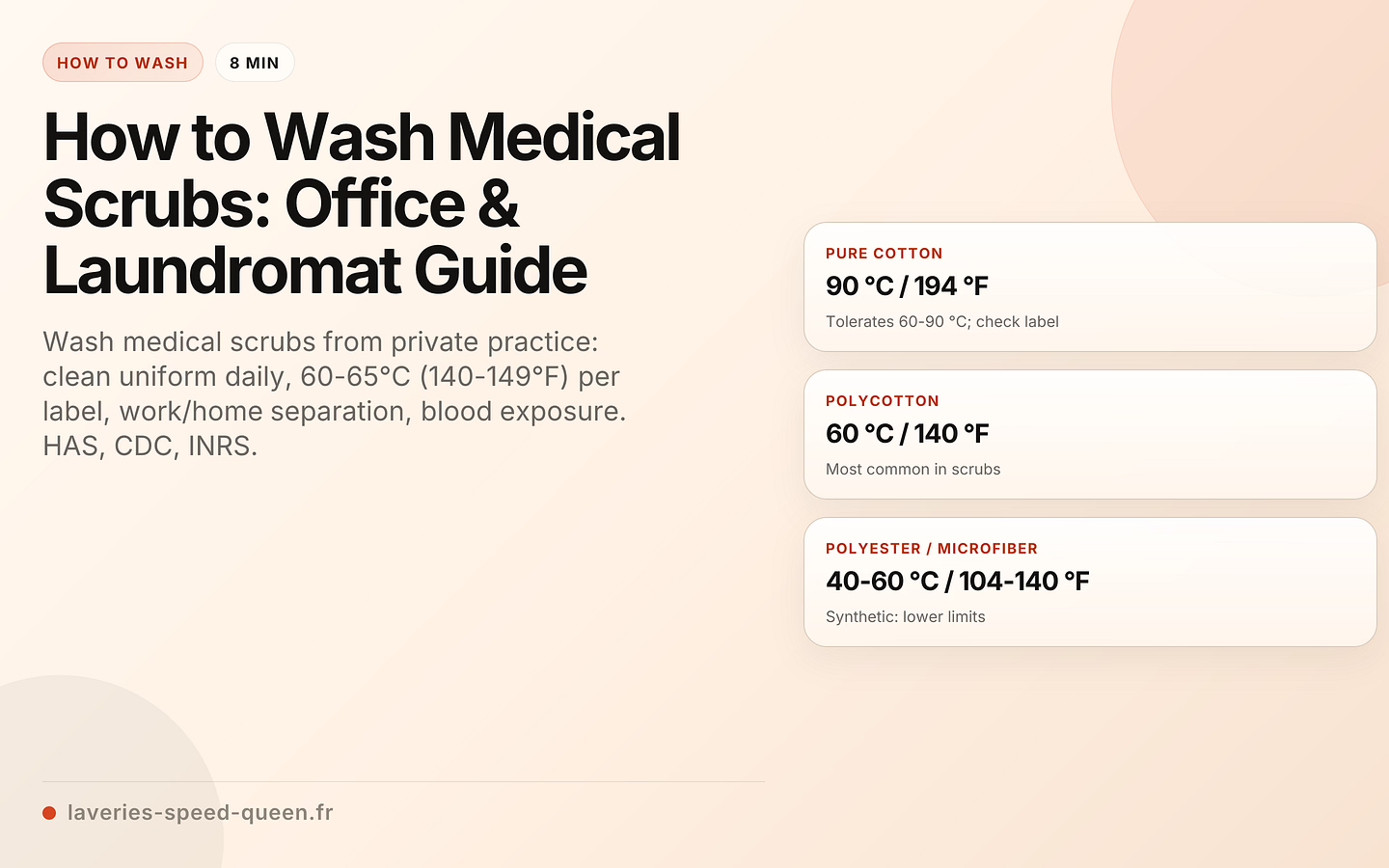
The honest answer: it depends on the fabric. The GINETEX wash symbol (standard ISO 3758) on the care label shows the maximum temperature not to exceed. Always check before launching a 60°C or 90°C cycle.
| Fabric | Common max temperature | Note |
|---|---|---|
| Pure cotton | 90°C (194°F) | Tolerates 60-90°C (140-194°F); check the label |
| Poly-cotton (standard blend) | 60°C (140°F) | Most common professional scrub fabric |
| Medical polyester / microfiber | 40-60°C (104-140°F) | The CDC notes lower constraints for synthetics |
| Stretch technical wear (elastane) | 30-40°C (86-104°F) | Risk of degradation above this |
Institutional benchmarks:
- HAS (France): 65°C (149°F) is the cited threshold for hospital linens. For private practice, it’s a useful target but not a requirement.
- CDC (United States): for healthcare laundry in a hospital environment, hot-water washing at a minimum of 71°C (160°F) for 25 minutes is the cited benchmark.
- Our practical advice for private practice: aim for at least 60°C (140°F) if the care label allows — that’s the best balance between efficacy and fabric preservation.
Washed healthcare laundry is hygienically clean — not sterile
According to the CDC, properly washed healthcare laundry is hygienically clean, but not sterile. No home washer and no non-RABC-certified laundromat can promise sterility. Standards like NF EN 14065 cover certified industrial laundries — our laundromat does not claim that certification.
Do you need to disinfect before washing?
Not as a routine. HAS and the CDC are clear on this point: for soiled laundry in community or home-care settings, detergent + machine wash/dry is sufficient. Systematic bleach↗ soaking is neither recommended nor useful as a routine — it needlessly damages textiles.
Cases where a disinfectant supplement may make sense:
- Robust white cotton scrubs: a bleach↗ supplement diluted per the manufacturer’s directions can reinforce the wash (the CDC notes that bleach↗/chlorine can reinforce a wash but is not suitable for all textiles).
- Colored poly-cotton: prefer sodium percarbonate, which releases active oxygen without bleaching colors.
- Medical polyester: a dedicated textile disinfectant detergent (e.g., Sanytol↗) active from 20°C (68°F) can complement the wash without damaging the fiber.
For a full breakdown of textile disinfection methods by product and temperature, see our complete guide to disinfecting laundry.
Transporting soiled scrubs without contaminating personal laundry
This is the practical point that changes everything for traveling practitioners: scrubs often pass through your car, your home, and your laundry room. INRS recommends separating work clothing from street clothing, and changing before leaving the workplace.
Practical protocol:
- Dedicated closed bag: a sealed plastic bag or a washable textile bag reserved for professional laundry. No open hamper.
- Water-soluble bag for heavily soiled scrubs (blood, vomit, biological spatter): it goes straight into the machine without further handling.
- Disposable gloves (nitrile, latex, vinyl, or rubber) for handling contaminated laundry.
- No shaking during transfer: avoid releasing aerosols, especially with laundry soiled by blood or body fluid.
- Separate wash: a machine load dedicated to professional laundry, never mixed with family laundry.
Specific cases
Blood or body fluid: occupational exposure protocol
Blood and body fluid exposure refers to any contact with blood or body fluid involving a skin breach (needlestick, cut) or a mucous-membrane spatter (eye, mouth). It is a medical emergency.
- Immediate washing of the exposed area (water + soap, do not scrub).
- Antisepsis for 5 minutes with povidone-iodine or Dakin's solution (or diluted bleach per the GERES protocol).
- Report to the employer (salaried workers) or seek immediate medical follow-up (self-employed).
- Rapid medical evaluation (< 4 h) to decide on post-exposure prophylaxis for HIV/HBV/HCV.
- Contaminated laundry: transport in a sealed leak-proof bag, wash at the maximum temperature the fabric supports.
The full protocol is available on the GERES website (French group on bloodborne exposure risk): geres.org/que-faire-en-cas-daes (external link).
Patient carrying an MDRO (multidrug-resistant organism)
For wet care or care with spatter for a known MDRO/CRE patient (MRSA, ESBL, VRE, CPE), HAS and SF2H recommend a single-use protection (apron or gown) instead of reusable scrubs. If the scrubs were in contact anyway, treat them as soiled laundry: transport in a closed bag, wash separately at the maximum temperature allowed by the label (ideally at least 60°C / 140°F).
Fungal infection, gastro, respiratory infection in the patient
- Fungal infection (candidiasis, dermatophytes): see our dedicated article washing laundry with a fungal infection.
- Gastroenteritis (norovirus, rotavirus) in the patient: blood/body-fluid protocol applies, see laundry for someone sick with gastro, flu, or Covid.
- Respiratory contagion (Covid, flu): standard practice protocol + surgical mask for the practitioner; scrubs in direct contact are handled as healthcare laundry.
Pregnant healthcare worker
For a healthcare worker who is herself pregnant, SF2H recommends reinforced precautions against certain agents (CMV, rubella, parvovirus B19, toxoplasma, listeria). Separating professional laundry from personal laundry becomes even more important. Consult your occupational physician or hygiene specialist for a personalized protocol.
Why (and when) to use the laundromat for your scrubs
Let’s be honest: the laundromat does not sterilize healthcare laundry. No home washer or non-RABC-certified self-service laundromat can promise that (NF EN 14065 standard). The value is elsewhere.
Full separation of work and family laundry
The main reason: soiled scrubs never go in your home washer shared with your kids' laundry. Recommended by INRS and HAS to limit contamination at home.
18 kg capacity for the weekly load
A traveling nurse easily carries 5-7 scrub coats + office sheets + clean towels + missing single-use aprons. The 18 kg machine handles it in one cycle.
Reliable 60-90°C (140-194°F) cycles
Home machines in eco mode may not reach the displayed temperature. Professional laundromat machines deliver the actual temperature (per the chosen program).
Professional dryer included
Our 14 kg high-temperature dryer completes the chain in under an hour total. No hanging in the waiting room, no return to dampness.
When should you come? The weekly load (5-10 scrub coats + office linens) is the typical use case. Detergent and softener are included in the wash price. The full cycle (~30 min wash + ~30 min dry) fits inside a lunch break.
Mistakes to avoid
Mixing with family laundry
INRS recommends separation. A dedicated cycle is required, even if the machine isn't full.
Air-drying in the waiting room
Recontamination is likely. Tumble dryer or ventilated space outside the care area, full stop.
Exceeding the label temperature
Poly-cotton at 90°C (194°F) shrinks, fades, and warps. The ISO 3758 symbol shows the maximum, not the optimum.
Systematic bleach soaking
Unnecessary as a routine per HAS/CDC, and damaging to colored and synthetic textiles.
Promising 99.9% sterile
No home wash or non-RABC-certified laundromat can promise that. Laundry is hygienically clean, not sterile (CDC).
Relying on scrubs for high-risk care
HAS recommends single-use protection (apron/gown) for high-risk care, not reusable scrubs.
As an Amazon Associate, we earn from qualifying purchases through the affiliate links in this article — at no extra cost to you. It helps us maintain this site and produce free guides.
For your weekly load of scrubs, office sheets, and professional linens, our laundromats in Blagnac and Croix-Daurade offer 18 kg machines with 60°C and 90°C (140°F and 194°F) programs, detergent included, and professional dryers. Ideal for keeping work laundry fully separate from family laundry. Check our pricing.
Related reading: how to disinfect your laundry, laundry from a sick person (Covid/flu/gastro), laundry with a fungal infection, bleach for laundry — when to use it.