Quick answer
To clean a fabric cat tree without damaging it, work material by material: removable covers and cushions go in the machine on a gentle cycle if the label allows it (often 30 °C (86 °F), mild detergent), sisal is cleaned dry (brush + vacuum) with a barely damp sponge only as a fallback, and the wood or MDF structure is wiped in place with a damp cloth. Urine stains are treated with an enzymatic cleaner (never bleach↗ or ammonia↗). For large loads (covers + cushions + pet bed together), an 18 kg (40 lb) machine is available at the laundromat.
In brief
- Take it apart first: only removable items go in the machine. The structure is not machine washable.
- Read each cover label: no label or crossed-out symbol = hand wash in lukewarm water + mild soap; gentle 30 °C cycle allowed = machine wash.
- Dry-clean sisal: stiff brush + vacuum. A barely damp sponge is acceptable only for lightly soiled areas (Griffe d’Amour).
- Urine: blot → enzymatic cleaner → rinse → dry. Never use bleach↗: risk of toxic chloramines on contact with ammonia↗ according to ANSES.
- Cat allergy in the household: wash covers at the highest temperature the label allows (up to 60 °C at the laundromat if the cover can take it).
Why not bleach↗? ANSES notes that sodium hypochlorite presents inhalation, skin irritation, and textile corrosion risks, and that mixing it with ammonia↗ releases toxic chloramines. For urine stains on cat covers, specialist guides therefore point to enzymatic cleaner; baking soda↗ remains useful as a deodorizer after vacuuming.
Decision table
Each cat tree is a mix of materials: removable fabric covers, removable cushions, sisal ropes, wood or MDF structure, and sometimes small fabric beds. Here is the permitted action by material.
| Material | Permitted action | Frequency | Mistake to avoid |
|---|---|---|---|
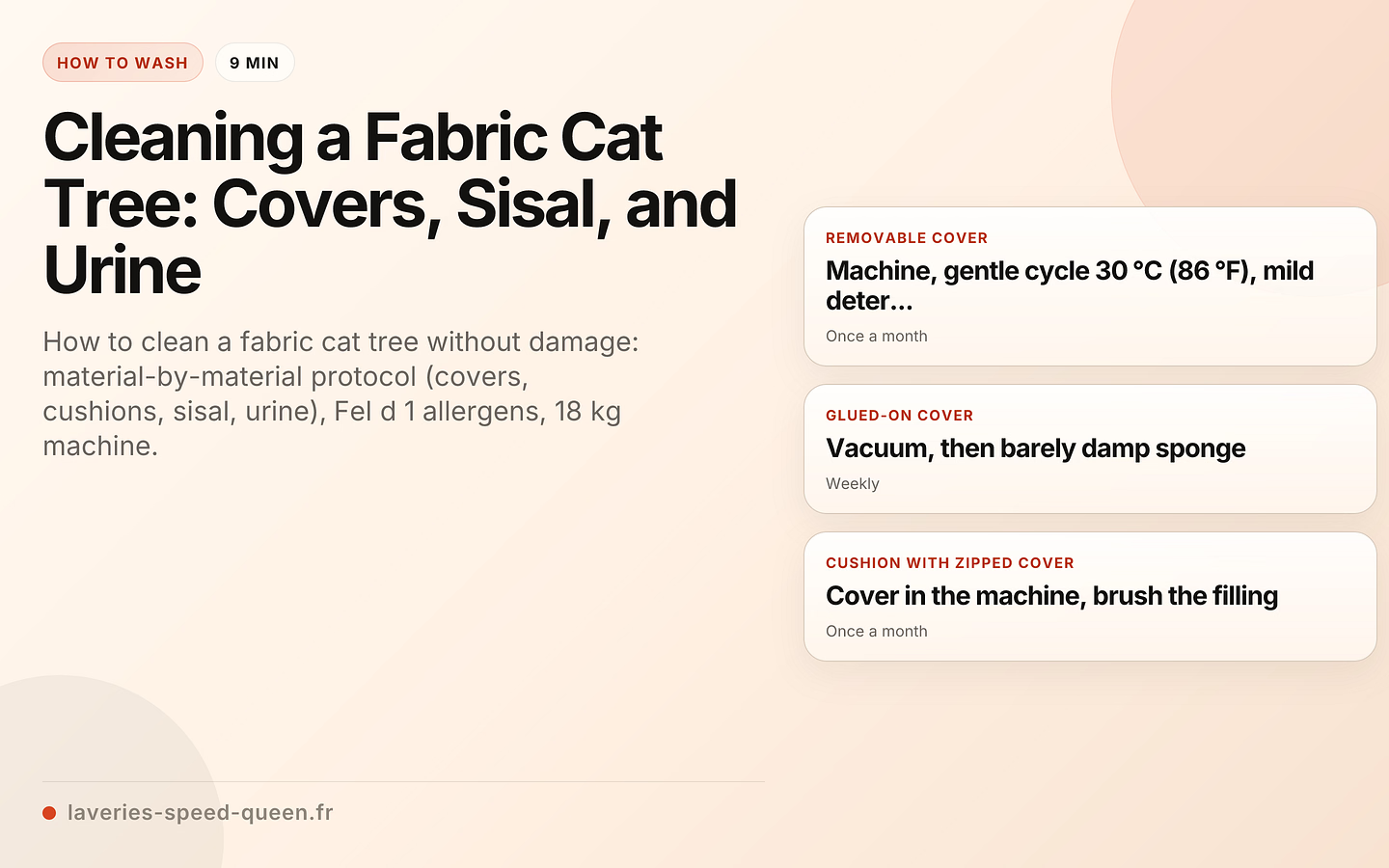
| Washable removable fabric cover | Gentle machine cycle 30 °C (86 °F) + mild detergent (if label OK) | At least once a month (deep clean) | Washing without reading the label; drying in full sun |
| Glued / non-removable fabric covering | Vacuum with soft brush attachment + barely damp sponge + diluted mild soap | Weekly | Soaking with water; trying to pull it off by force |
| Removable cushion with zippered cover | Remove the cover → machine wash; the filling stays out of the machine, to be brushed and aired | At least once a month | Putting the filling in the machine |
| Sisal rope | Dry: stiff brush → vacuum. Very lightly damp sponge + diluted Marseille soap↗ possible occasionally | Weekly (brushing); replace if frayed | Soaking with water; putting in the machine |
| Wood / MDF / plastic structure | Damp cloth + diluted mild soap (Jardiland recommends lukewarm water + mild soap for non-washable areas) | At least once a month | Bleach↗ spray; scented products; immersion |
| Small fabric bed / hammock | Gentle machine cycle according to label | At least once a month | Washing it while still attached to the structure |
Why use fragrance-free detergent↗ for cat covers? A cat rubs against the covers and then licks itself: a mild or pet-safe detergent limits residues that the cat’s skin may tolerate poorly, according to Jardiland and arbreachat.pro. A fragrance-free hypoallergenic baby detergent↗ follows the same logic: no fragrance ingested through grooming.
Step-by-step method
1. Remove and sort the parts
Remove every detachable item: zippered covers, cushions, throws, beds. Lay them side by side on the floor to see the total load. The structure (wood, MDF, plastic, sisal ropes) stays in the room.
2. Read the label on each cover
Look for the machine symbol or explicit wording. Three cases:
- Gentle 30 °C cycle allowed: machine wash.
- Hand wash only: lukewarm water, mild soap, never boiling water.
- No label or crossed-out symbol: do not force it. Hand wash in lukewarm water + mild soap; if the cover is very dirty, treat it like a non-removable surface (vacuum + sponge).
Covers attached to the structure by stitching or glue (typical of entry-level models) do not go in the machine. For these trees, cleaning stays in place: weekly vacuuming with a soft brush attachment, a barely damp sponge for stained areas, and replacement of the tree when the carpet is too embedded with dirt.
3. Vacuum and dry-brush before any wash
Before the machine, do a dry pass:
- Vacuum covers and cushions with a soft brush attachment.
- Use a stiff brush on sisal, then vacuum the loosened debris.
- Run a damp rubber glove over areas where hair is embedded (fabric and sisal). The glove picks up hair the vacuum leaves behind.
This step saves time in the machine and helps keep hair from clogging the filter.
Is vacuuming enough for allergens? Not on cotton. A European study (Liccardi 2007) measured that consumer vacuuming does not remove significant amounts of Fel d 1 (the major cat allergen) from exposed cotton fabrics. Mechanical washing with detergent is what actually reduces the allergen, according to the PubMed Central review used as the reference here.
4. Wash the washable covers
For a rotation where you want to wash covers + cushions + small beds in one go, the Speed Queen 18 kg laundromat machine is available for large loads: standard wash cycle ~30 min, detergent and softener included in the price.
Before the machine, remove as much hair as possible. The lint roller↗ complements the vacuum and stiff brush listed above by catching hair left on the fabric. Limit: on heavily loaded covers (long-haired cat + several weeks without maintenance), also plan a damp rubber glove pass in addition to the roller (Griffe d’Amour).
5. Cycle and detergent
- Cycle: gentle cycle.
- Temperature: 30 °C if the label allows it (arbreachat.pro). If someone in the household has a cat allergy, 60 °C is available at the laundromat if the cover can take it (Assurance Maladie recommends 60 °C for bedding in allergic households).
- Detergent: mild or pet-safe (Jardiland) — prefer fragrance-free versions to limit residue.
- No scented fabric softener↗: Griffe d’Amour advises against heavily scented deodorizers in a cat’s environment.
6. Careful rinsing and flat drying
Set a thorough rinse: according to arbreachat.pro, rinsing is needed to remove detergent residue that can irritate the cat’s skin when it rubs against the clean cover.
For drying: flat in a ventilated room, or outdoors in the shade. Direct sunlight fades fabric (arbreachat.pro). A gentle tumble-dry program can be used only if the manufacturer’s label explicitly allows it.
7. Sisal: dry-only protocol
Sisal is a braided plant fiber. Too much water weakens it; specialist guides (Griffe d’Amour, Jardiland) recommend dry maintenance. Protocol:
- Stiff brush to loosen hair and debris.
- Vacuum the residue immediately.
- If the area is lightly soiled: barely damp sponge + highly diluted Marseille soap↗. Blot without rubbing. Fast, complete drying is mandatory.
- If the rope is worn or frayed: replace it rather than trying to wash it (Jardiland).
Traditional Marseille soap↗ is the usual neutral ally for these occasional treatments on sisal or non-removable areas, in line with the unscented-product approach specialist guides (Griffe d’Amour) recommend for a cat’s environment.
Edge cases
Urine stain: the protocol recommended by specialist guides
The concrete risk with a urine stain and household product is this: according to ANSES, mixing bleach↗ and ammonia↗ releases toxic chloramines. That is why specialist guides (Griffe d’Amour) exclude bleach↗ and ammonia↗ from a cat’s environment and point to enzymatic cleaner for urine stains.
Correct protocol:
- Blot immediately with a clean cloth to absorb the excess. Do not rub; you will spread it.
- Apply enzymatic cleaner according to the manufacturer’s instructions. The enzymatic format is what Griffe d’Amour recommends for cat urine stains. Buy it in a pet store or supermarket; no specific brand is required.
- Let it work strictly according to the manufacturer’s instructions on the bottle.
- Rinse lightly with cold water.
- Dry completely flat in a ventilated room.
The ready-to-use format is the handiest one here: an enzymatic odor eliminator↗ sprays straight onto the blotted area and lets the enzymes digest the urine residue during the dwell time, rather than covering it with a fragrance the cat then swallows while grooming.
If the odor returns after drying, the stain is deeper than the surface: repeat once. If it comes back again, the module probably needs replacing (the filling is soaked).
Allergic household: reinforced routine
The major cat allergen is the Fel d 1 protein, and the science is clear:
- Consumer vacuuming on cotton is not enough (Liccardi 2007).
- Mechanical washing with detergent reduces the allergen on fabrics.
- After a cat leaves, levels can take up to 20 weeks to fall back to those of a home without a cat (PubMed Central review).
If someone in the household is allergic, Assurance Maladie recommends washing bedding often at 60 °C. Applied to the cat tree: wash the covers at the highest temperature the label allows, and do it regularly rather than occasionally. At Speed Queen laundromats, 60 °C is available on high-temperature programs if the cover can take it.
Several cats or a long-haired cat
More cats means more hair, more odors, and more chances of accidents. The reasonable qualitative benchmark (without a regulatory figure):
- Keep the weekly baseline: brush and vacuum at least once a week, deep clean at least once a month.
- With several cats or long-haired cats, the damp rubber glove in addition to the vacuum remains useful for loosening embedded hair.
- If there is an allergy in the household, do not wait for the monthly rhythm for covers: wash as soon as hair visibly builds up.
Non-removable cat tree (entry-level)
Many inexpensive trees have fabric carpet glued to the structure and cannot be removed. For these:
- Weekly vacuuming is mandatory.
- Barely damp sponge + highly diluted Marseille soap↗ on stained areas.
- Air dry, with a fan if possible.
- No spray, no immersion.
- If the carpet stays embedded with odors despite everything: replace the tree, do not keep forcing it.
Frayed sisal: replace rather than save
Worn sisal rope cannot be rescued. Jardiland reminds readers that it is better to replace it than to leave it fraying.
Mistakes to avoid
- Putting the whole structure in the machine: impossible and destructive. Only removable parts go in the machine.
- Using bleach↗ on colored covers: it fades the fabric and corrodes fibers according to ANSES, plus there is a chloramine risk with old urine (bleach↗ + ammonia↗ mixture).
- Spraying essential oils for fragrance: VCA Animal Hospitals notes that cats have fewer liver enzymes to metabolize essential oils, and both skin exposure and ingestion can be toxic. Cinnamon, citrus, peppermint, pine, birch, tea tree, wintergreen, and ylang-ylang are among the oils reported toxic.
- Soaking sisal rope: too much water weakens it. Specialist guides (Griffe d’Amour, Jardiland) recommend dry maintenance.
- Drying in direct sunlight: it fades fabric and degrades fibers. Always dry in the shade, flat, in a ventilated room.
- Ignoring the Fel d 1 allergen: the protein persists for up to 20 weeks after a cat leaves. If someone at home is allergic, regular maintenance is non-negotiable.
- Thinking baking soda↗ disinfects: it deodorizes (sprinkled on, left to work, then vacuumed according to arbreachat.pro), nothing more. To neutralize deep urine contamination, enzymatic cleaner remains the correct route — never bleach↗ in the presence of urine.
- Using scented fabric softener↗: it leaves fragrance residues the cat ingests by licking itself after contact.
FAQ
Can you put a whole cat tree in the washing machine?
No. Only removable cushions and covers go in the machine, and only if the manufacturer’s label allows it. The structure (wood, MDF, plastic, sisal ropes) must never be machine washed.
What temperature should you use to wash cat tree covers?
If the label allows machine washing, a gentle 30 °C cycle with a mild detergent is suitable for routine care. If someone in the household has a cat allergy, France’s Assurance Maladie recommends washing bedding often at 60 °C — applicable to covers if their label allows it.
How do you clean sisal rope without damaging it?
Dry only: use a stiff brush to loosen hair and debris, then vacuum. If the rope is very dirty, you can occasionally use a barely damp sponge with highly diluted Marseille soap↗, followed by fast, complete drying. Sisal that is soaked with too much water weakens.
How do you remove a cat urine stain from a cover?
Blot first to absorb the excess, then apply an enzymatic cleaner according to the instructions, let it work, rinse lightly, and dry completely (Griffe d’Amour). Bleach↗ and ammonia↗ should be avoided in a cat’s environment; according to ANSES, mixing them releases toxic chloramines.
Is vacuuming enough to reduce cat allergen?
No, not on cotton fabrics. A study (Liccardi 2007) shows that consumer vacuuming does not remove significant amounts of Fel d 1 from cotton. Mechanical washing with detergent remains the most useful action for reducing allergen on washable covers.
How long does the Fel d 1 allergen persist after a cat leaves?
Up to 20 weeks according to a PubMed Central review, for levels to fall back to those of a home without a cat. That is why covers need to be washed regularly as soon as a household member is allergic.
Related articles
For more depth, see also:
Sources
- PubMed Central (NIH), “Minimizing indoor allergen exposure: What works?” (scientific review, Choi et al. 2022 cited) — pmc.ncbi.nlm.nih.gov/articles/PMC12379700 (external link) (accessed 2026-05-18)
- Liccardi G et al., “Effectiveness of vacuum-cleaning in removing Fel d 1 allergen from cotton fabrics exposed to cats”, European Annals of Allergy and Clinical Immunology 2007 — pubmed.ncbi.nlm.nih.gov/17626332 (external link)
- Ameli (Assurance Maladie), “Vivre au quotidien avec une allergie” — ameli.fr/assure/sante/themes/allergie/vivre-allergique (external link) (accessed 2026-05-18)
- VCA Animal Hospitals (Schmid, Brutlag, Flint DVM), “Essential Oil and Liquid Potpourri Poisoning in Cats” — vcahospitals.com/know-your-pet/essential-oil-and-liquid-potpourri-poisoning-in-cats (external link)
- ANSES, “Eau de Javel” — anses.fr/fr/content/eau-de-javel (external link)
- ANSES, “Produits ménagers : attention aux mélanges” — anses.fr/fr/content/produits-menagers-attention-aux-melanges (external link)
- Jardiland, “Comment nettoyer un arbre à chat” — jardiland.com/conseils-idees/comment-nettoyer-un-arbre-a-chat (external link)
Useful links
- Wash a sofa cover — washable textile cover protocol, a natural complement
- Wash a cushion and its cover — removable cushion covers, fillings, rinsing
- Wash an anti-dust-mite mattress cover — allergy routine & 60 °C at the laundromat
- What machine capacity for a double duvet — check whether your 18 kg machine can handle the full rotation
- Tool: Laundry load calculator — estimate whether covers + cushions + pet bed fit in an 18 kg machine
- Speed Queen laundromats Blagnac Andromède and Toulouse Croix-Daurade — 18 kg available, detergent and softener included, 60 °C available