Quick Answer
A “spring textile reset” is the window for washing the winter duvet, throws, curtains, puffer jacket, and rugs all at once before summer. Three seasonal pressures arrive together: dust mites built up during the heated winter, the start of pollen season, and the risk of mold on any textile stored while still damp. The 18 kg (40 lb) laundromat machine is what makes this possible in one afternoon, with detergent and softener included.
At a glance
Duvet, throws, curtains, puffer jacket, rugs — these are the pieces that justify an 18 kg (40 lb) laundromat visit before summer.
60 °C (140 °F) for bedding — Assurance Maladie recommends it to reduce dust mites, provided the textile's GINETEX label allows it.
Complete tumble drying — never store a textile that is still damp; persistent moisture encourages mold (ANSES).
No outdoor drying during pollen season — Assurance Maladie advises against line-drying outside when pollen is present.
Follow the label — sheers, cashmere, and technical membranes do not follow the same rules as sheets.
Why now: spring as the health window
Three seasonal pressures meet in spring, and that overlap is what makes it the right window.
Dust mites have had the winter to settle in. Heated bedrooms, windows closed more often, throws out on the sofa, puffer jacket worn every day: all the rarely washed winter textiles deserve a seasonal cycle. Airtight anti-dust-mite covers↗ protect mattresses, duvets, and pillows: Assurance Maladie recommends fully airtight zipped covers for mattresses, duvets, and pillows. For bedding, Assurance Maladie recommends washing often at 60 °C.
Pollen season begins. As soon as pollen is in the air, Assurance Maladie advises against drying laundry outside to prevent pollen from settling on it. Otherwise, laundry becomes a carrier of allergens into the bedroom. A full tumble-dryer cycle at the laundromat replaces outdoor line-drying when you are sensitive.
Mold wakes back up. According to ANSES, mold develops in the presence of persistent moisture in the home and can affect respiratory health. Any textile that was stored slightly damp when the winter closet was closed becomes a risk again once the room warms up. The textile reset also serves that purpose: take everything out, wash it, dry it completely, and store it dry.
Seasonal health decision table
What comes out of winter, what to do with it, and why. The actual temperature depends on the care label (GINETEX) for the textile concerned: always read the number in the washtub before starting.
| Category | Temperature (subject to label) | Machine | Seasonal risk addressed |
|---|---|---|---|
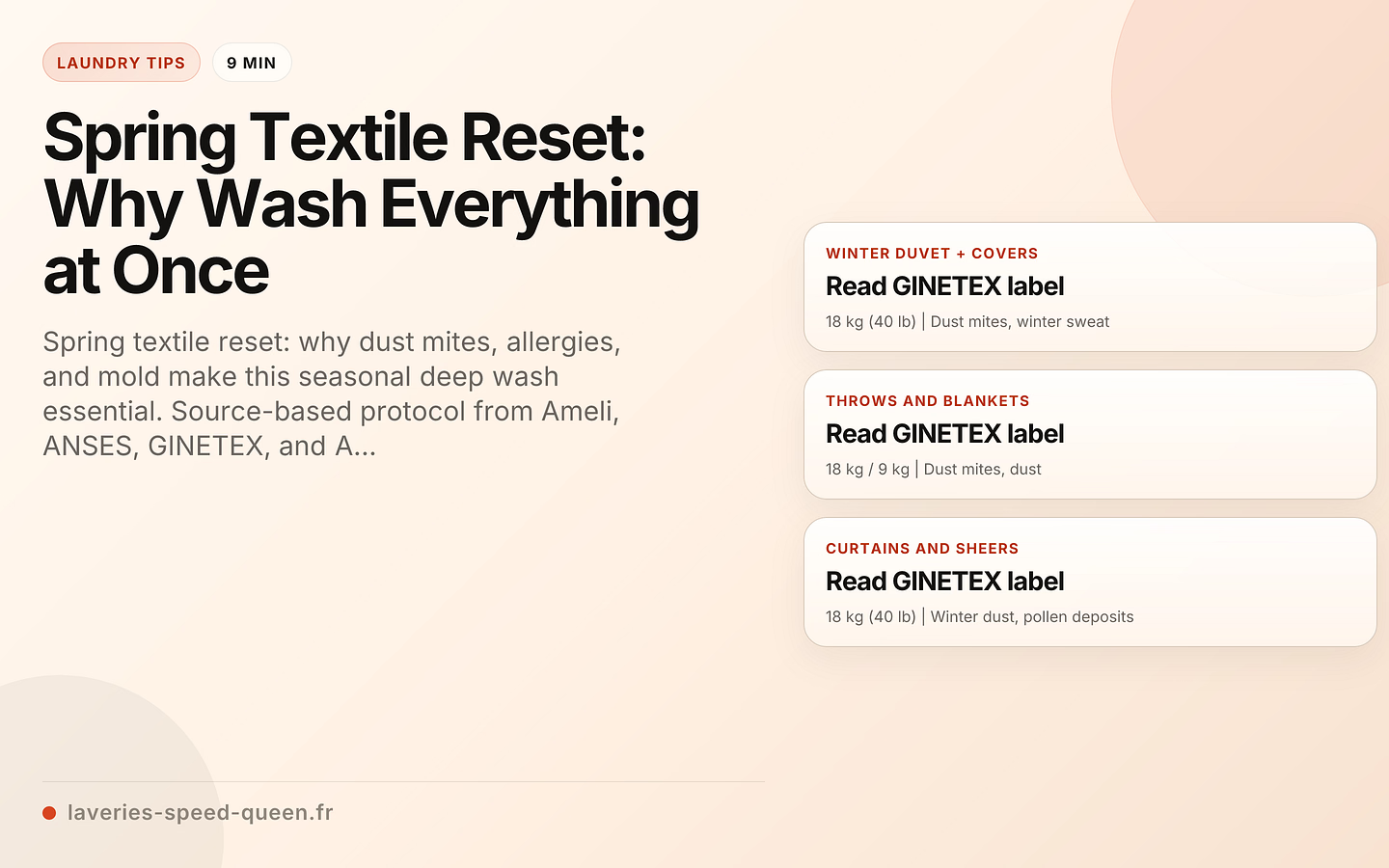
| Winter duvet + duvet covers | Read the number in the GINETEX washtub on the label | 18 kg (40 lb) | Built-up dust mites, winter sweat |
| Throws and sofa blankets | Read the number in the GINETEX washtub | 18 kg (40 lb) if weighted, 9 kg (20 lb) otherwise | Dust mites, dust, allergens |
| Curtains and sheers | Read the number in the GINETEX washtub | 18 kg (40 lb) for full-height curtains | Winter dust, pollen deposited on fabric |
| Puffer jacket and bulky winter clothes to store | Read the number in the GINETEX washtub | 18 kg (40 lb) | Clean, dry storage for summer |
| Washable bedroom / bathroom rugs | Read the number in the GINETEX washtub | 18 kg (40 lb) | Dust mites, foot moisture |
| Bed linen (sheets, pillowcases, anti-dust-mite covers) | 60 °C (140 °F) — Ameli recommendation to reduce dust mites | 9 kg (20 lb) | Weekly dust-mite routine |
Step-by-step method
Four steps, in order. The most common mistake is mixing everything together “because it is spring cleaning mode”: that is exactly what reduces cycle effectiveness.
1. Prepare: sort and read labels
Take out everything that needs doing: duvet, throws, curtains, puffer jacket, washable rugs, winter clothes to store. Shake bulky items outside to remove dust and debris before washing. Empty coat and puffer-jacket pockets (tissues, forgotten papers).
Then read every label. GINETEX care symbols define the rules for washing, bleaching, drying, ironing, and professional cleaning under ISO 3758: the number in the washtub indicates the maximum washing temperature, and a crossed-out symbol means the manufacturer forbids that action. Set aside anything marked “dry clean only” (circle or “P”) and any fragile item (cashmere, silk, some down puffer jackets) that needs separate care.
2. Sort into coherent loads
Make three physical piles before leaving:
- 18 kg “bulky items” load: duvet + covers, or combined throws, or full-height curtains, or puffer jacket + winter coats, or rugs. One category per cycle so you do not overload.
- 9 kg “weekly bedding” load: sheets, pillowcases, duvet cover, anti-dust-mite covers.
- Separate: dry-clean-only, hand wash, fragile children’s stuffed toys.
A large laundromat transport bag
↗makes the trip easier when you move several loads at once.
3. Wash at the laundromat: 18 kg + 9 kg in parallel
On site, start the 18 kg machine with the day’s bulky item (duvet, throws, or curtains, depending on your priority) and start the 9 kg machine with the weekly bedding in parallel. Washing at 60 °C and 90 °C is available at the laundromat for loads that need it; 60 °C remains the temperature recommended by Assurance Maladie to reduce dust mites in bedding. Detergent and softener are included in the price — no need to bring the bottle from home.
Do not overload the 18 kg machine
The temptation to stuff duvet + throws + curtains together “to run only one cycle” reduces washing and rinsing effectiveness. One textile category per cycle. The time saving is false economy: you end up with a poorly washed textile.
A typical full wash + dry cycle takes about 60 minutes (30 minutes washing + 30 minutes drying). Use the time for a coffee — the laundromat is open every day, generally from 7 a.m. to 10 p.m. depending on the local laundromat.
4. Dry completely, then store dry
This is the step people miss most often. If the item goes into the summer closet while still damp, the mold risk begins — ANSES recommends ventilating and limiting accumulated moisture to prevent mold. Dry fully in the tumble dryer (the dedicated program finishes the job). Check while folding: a thick item (puffer jacket, fleece throw) may feel dry on the surface but keep a damp core. If in doubt, run a short extra cycle.
During pollen season, do not dry laundry outside if you want to avoid pollen deposits, as Assurance Maladie advises. The laundromat tumble dryer closes the loop properly.
As an Amazon Associate, we earn from qualifying purchases through the affiliate links in this article — at no extra cost to you. It helps us maintain this site and publish free guides.
Why the 18 kg machine is the reset tool
The spring textile reset is not a detergent problem. It is a volume problem. A winter duvet, two fleece throws, and full-height curtains are seasonal loads that the laundromat’s 18 kg machines can accept — that capacity is exactly why the trip is worth it.
For more standard loads (weekly bed linen, anti-dust-mite covers, medium clothing), the 9 kg machine does the job. The Speed Queen loyalty card offers up to 20% off washing and drying — useful when you stack several cycles in the same afternoon.
At household level, the question is not just “can my machine handle it?” It is also textile lifespan. ADEME notes that extending textile life reduces the overall carbon footprint, and ADEME also states that washing at low temperature reduces energy use when the maximum temperature is not required. A duvet washed and dried properly in a machine that gives it room is a textile you keep longer.
Edge cases
Not everything belongs in a 60 °C laundromat cycle. The more precise you are about exceptions, the better you protect your textiles.
- Cashmere, fragile wool — hand wash or domestic wool program according to the label. No 60 °C, no hot tumble drying.
- Dry-clean-only — a crossed-out symbol or a “P” inside a circle means the manufacturer forbids the action. Go to the dry cleaner, not the laundromat.
- Children’s stuffed toys with foam — check the label; many are hand-wash only to preserve the inner foam.
- Technical garments with waterproof-breathable membranes — strictly follow the manufacturer’s instructions; these pieces do not follow the same rules as an urban puffer jacket.
- Severe allergy — combine 60 °C bedding washes with airtight anti-dust-mite covers on the mattress, duvet, and pillows as a physical barrier. Assurance Maladie also recommends synthetic bedding accessories, with no feathers or wool, for people with allergies. For the full protocol, see our dust mite allergy guide and our anti-dust-mite cover tutorial.
Mistakes to avoid
Five recurring mistakes reduce the reset’s effectiveness.
- Drying outside during pollen season. Assurance Maladie advises against outdoor line-drying when pollen is present. Laundry becomes an allergen carrier.
- Storing a textile while it is still damp. ANSES notes that persistent moisture encourages mold. The rule is simple: if a fold still feels slightly cold to the touch, it is not dry.
- Mixing vinegar + detergent in a pre-soak without caution. Household product mixes should not be improvised. If you want a boost, run a normal cycle and let the detergent do its job.
- Overloading the 18 kg machine to “do everything in one cycle.” One category per cycle. This machine is precisely what makes a clean reset possible, so use it correctly.
- Skipping the GINETEX check. The number in the label’s washtub is the rule, not a suggestion. Spring cleaning is not a reason to go above what the manufacturer allows.
Spring textile reset in Toulouse or Blagnac? Our laundromats in Blagnac and Croix-Daurade have 9 and 18 kg machines with detergent and softener included, open every day. Duvet, throws, curtains, and puffer jacket in one afternoon. See our prices.
Sources
- Assurance Maladie — Living day to day with an allergy (external link): washing bedding at 60 °C to reduce dust mites, airtight anti-dust-mite covers, no outdoor drying during pollen season.
- ANSES — Mold in housing (external link): mold development with persistent moisture, impact on respiratory health, prevention through ventilation.
- GINETEX — Care symbols (ISO 3758) (external link): reading washing, bleaching, drying, ironing, and professional-cleaning labels.
- ADEME — Limiting the environmental impact of equipment (external link): value of low-temperature washing and textile lifespan.
Useful links
- Spring cleaning: the complete laundry plan — the operational counterpart to this health guide.
- Dust mite allergy: the effective washing protocol — for the dust-mite side in more detail.
- How to wash an anti-dust-mite mattress cover — step by step for the physical barrier.
- How to wash a duvet — the key item in the reset.
- Machine-washing curtains — without damaging rods or fabric.
- Wash a puffer jacket without deforming it — before summer storage.
- Laundry labels: decoding GINETEX symbols — the grammar before the cycle.
- Duvet wash price at the laundromat — to plan the budget.