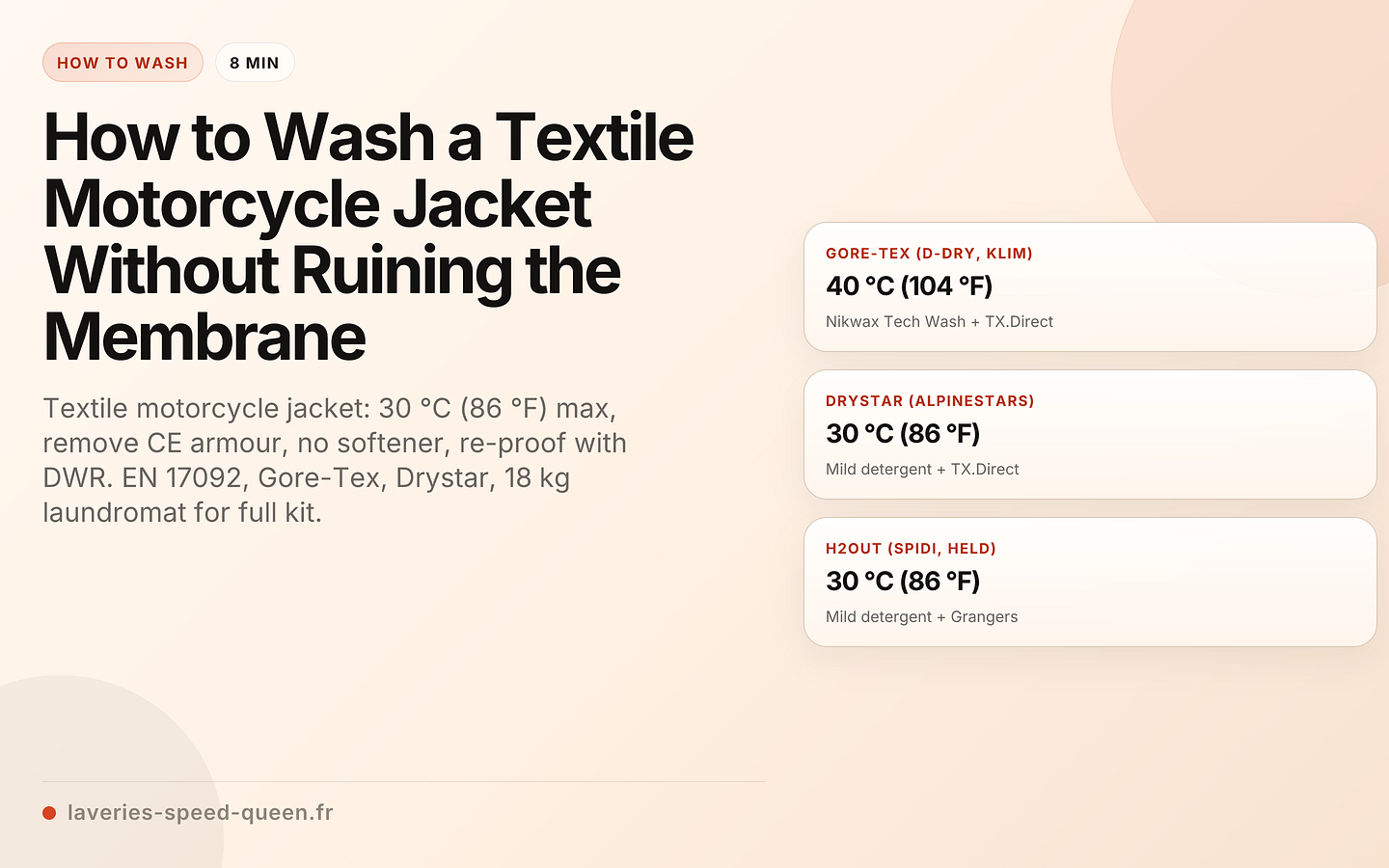
In short: a textile motorcycle jacket should be washed at 30 °C (86 °F) maximum after removing the CE armour, with a technical detergent and no softener or bleach↗. Air dry, then re-proof with a DWR product ( Nikwax↗ TX.Direct, Grangers Performance Repel). For a full motorcycle kit — jacket + trousers + neck warmer — the 18 kg laundromat machine handles everything in one cycle, ideal for the post-winter big clean.
At a glance
Remove the CE armour -- shoulders, elbows, back (and hips on trousers). Clean separately, never in the machine.
30 °C (86 °F) max -- synthetic or delicate cycle, low spin. Follow the label if it says lower.
Technical detergent -- Nikwax Tech Wash, Grangers Performance Wash, or a mild liquid detergent. Never fabric softener or bleach.
Air drying -- on a hanger, in a ventilated room, out of direct sunlight. Low tumble dry if the label allows.
Re-proofing -- if water no longer beads, apply a DWR treatment on the clean jacket.
18 kg laundromat for post-winter -- jacket + trousers + neck warmer in a single cycle.
Before washing: locate and remove the CE armour
Any textile motorcycle jacket compliant with EN 17092 includes rigid or semi-rigid armour at impact zones: shoulders, elbows, back (and sometimes hips on trousers). The armour fits into internal pockets accessed by zips, Velcro, or flaps. Washing with armour in place is risky: it can deform, crack, or even damage the machine drum.
Systematically locate and remove before any wash. On Dainese, Alpinestars, REV’IT models, shoulder armour is often accessed through the inside of the sleeves, the back via an internal dorsal zip. If a pocket seems stuck, check under the liner.
CE armour: clean separately
Wipe each piece with a damp cloth and mild soap, air dry — never machine wash or tumble dry. Inspect visually before reinstalling: no cracks, no deformation, no wear holes.
Armour compromised by a crash or impact must be replaced from the manufacturer
— SAS-TEC or D3O foam does not get cleaned, it gets replaced.
Membrane type → protocol
Modern motorcycle jackets often integrate a waterproof breathable membrane. Each brand has its own name, but the principle is identical: a microporous film that lets water vapour pass (sweat) while blocking rainwater drops. The outer treatment (DWR) makes water bead and slide off before reaching the membrane.
| Membrane / construction | Max temperature | Recommended detergent | Re-proofing |
|---|---|---|---|
| Gore-Tex (Dainese D-Dry, KLIM Pro) | 40 °C (104 °F) per Gore-Tex | Nikwax Tech Wash ↗or mild detergent | TX.Direct or Gore Revivex |
| Drystar (Alpinestars) | 30 °C (86 °F) per Alpinestars | Mild liquid detergent ↗ | TX.Direct or Grangers Performance Repel |
| H2Out (Spidi, Held) | 30 °C (86 °F), follow label | Mild liquid detergent ↗ | TX.Direct or Grangers |
| Cordura no membrane (summer, mesh) | 30 °C (86 °F), synthetic cycle | Standard liquid detergent ↗ | Optional — DWR on textile panels only |
| Leather + textile lining | No machine wash | Separate leather cleaning | Leather nourishing cream, no DWR |
Tech-Air and airbag jackets: be cautious
Jackets with integrated airbags (Dainese D-Air, Alpinestars Tech-Air, and similar systems) have
specific instructions for the electronic system and the internal airbag vest
. Standard washing can damage sensors and pyrotechnic gas cartridges. Follow the manufacturer manual exclusively before any wash. When in doubt, contact after-sales support.
Step-by-step protocol
1. Inspection and pre-treatment
Before machine wash, inspect under direct light:
- Localised stains (squashed insects, oil, road tar) → wipe gently with a damp cloth and mild soap.
- Buttons and zips → close everything to avoid catching the membrane.
- Care label → check the maximum temperature (GINETEX ISO 3758 tub symbol + number).
2. Detergent choice
For a membrane jacket: technical detergent (Nikwax Tech Wash↗, Grangers Performance Wash) that does not inhibit DWR. Otherwise, a mild liquid detergent↗. Never:
- Fabric softener↗ — waxy film that clogs the membrane.
- Bleach↗ — attacks seam tapes and pigments.
- Powder detergent — can leave residue in pockets and seams.
3. Machine settings
- Temperature: 30 °C (86 °F) for Alpinestars/Spidi, 40 °C (104 °F) for Gore-Tex — never above.
- Programme: synthetic or delicate, spin 600-800 rpm max.
- Load: jacket alone, or with other motorcycle gear. No jeans, no towels.
4. Drying
Remove from the machine immediately and hang on a sturdy hanger in a ventilated room, out of direct sunlight. Smooth the liner and reshape the shoulders before the textile fully dries. Allow 8-24 h depending on ventilation.
If the label allows tumble dry: low heat only. Per Gore-Tex, a moderate tumble can even reactivate the DWR. Avoid for jackets with airbag or embedded electronics.
5. Waterproofing test and re-proofing
DWR spray treatment↗ — once dry, test: pour a little water on the outer shell. If water beads and slides → DWR still active, nothing to do. If water spreads or absorbs → DWR is worn, re-proof.
Apply a DWR treatment (Nikwax↗ TX.Direct spray or wash-in, Grangers Performance Repel) on a clean, slightly damp jacket. Follow the manufacturer’s instructions — typically uniform spray at 15-20 cm, air drying or thermal activation (hairdryer at distance).
Wash gesture → membrane impact
| Gesture | Verdict | Why |
|---|---|---|
| 30 °C (86 °F) + mild detergent | ✅ OK | Preserves membrane and DWR. Standard for most jackets. |
| 40 °C (104 °F) per Gore-Tex label | ⚠️ OK occasionally | Acceptable if the label indicates so. Do not exceed. |
| 60 °C (140 °F) or above | ❌ Banned | Melts the membrane and delaminates seam tapes. |
Fabric softener ↗ | ❌ Banned | Waxy film clogging membrane pores and neutralising DWR. |
| Bleach↗ | ❌ Banned | Attacks pigments and weakens seam tapes. |
| Powder detergent | ⚠️ Avoid | Leaves residue in seams and pockets. Prefer liquid. |
| Maximum spin (1400+ rpm) | ⚠️ Avoid | Stress on seams and zips. Stay at 600-800 rpm. |
| High-heat tumble dry | ❌ Banned | Melts the membrane. Low temperature only if allowed. |
| Ironing directly on the membrane | ❌ Banned | Localised excessive heat. If needed, soft iron + damp cloth. |
| Washing with jeans (rivets) or towels | ⚠️ Avoid | Risk of catching the membrane. Wash jackets together. |
End-of-life criteria
A jacket can wash perfectly and still no longer meet its standard. Inspect regularly.
Seams and abrasion
Undone seams, deep tears, abrasion zones (shoulders, back, sleeves). Check the outer shell in direct light. A deep tear means the EN 17092 abrasion class is no longer guaranteed.
Membrane no longer holds
If, after re-proofing, water still soaks through, the inner membrane may be delaminated. Test: indoor shower for 5 min. If water seeps in: membrane is dead, the jacket becomes a summer jacket only.
CE armour compromised
Any armour (shoulder, elbow, back) after a crash or impact must be replaced -- even if it looks intact. SAS-TEC or D3O foam loses absorption after impact.
Age and UV
A jacket stored in direct sunlight, or used daily for 5+ years, sees its pigments degrade and the textile become brittle. Age cannot be cleaned. Assess overall condition each pre-season.
Case study: post-winter laundromat
Per the French ONISR (national road safety observatory), motorcycle usage peaks in warm months (April-September). After winter, the full kit — jacket, trousers, neck warmer, gloves, base layers — has accumulated rain, mud, salt, and squashed bugs. The post-winter big clean is the perfect occasion to handle everything in one pass.
The domestic machine problem
A 7 kg machine takes one motorcycle jacket alone. For a full kit (jacket 2-3 kg + trousers 1-1.5 kg + neck warmer + base layer), expect 2 to 3 successive cycles = 4 to 6 hours of locked machine time. Not counting space for air drying.
The 18 kg laundromat: single pass
The 18 kg laundromat machine absorbs the full motorcycle kit in one 30-minute cycle: jacket + trousers + neck warmer + 1-2 technical base layers. Bring your own technical detergent (Tech Wash↗), or use the included detergent on a synthetic 30 °C (86 °F) programme.
Post-winter routine in 1 hour
A yearly visit of 30-45 minutes to the laundromat (30 min cycle + travel) covers a rider’s full gear. Indicative cost: EUR 5-7 for the 18 kg machine. Output: spin-damp gear, ready to air dry in 12-24 h. Re-proof at home afterwards. The only reasonable annual investment to preserve gear worth EUR 500-1,500.
When the laundromat is not the right tool
- Airbag jackets (Tech-Air, D-Air, etc.): follow the manufacturer’s manual exclusively. No self-service.
- Leather jackets: no machine, separate leather specialist treatment.
- Weekly washing of a single jacket: domestic 30 °C is enough.
Common mistakes
- Washing with CE armour still in place -- risk of armour deformation and drum damage. Systematically remove.
- Adding softener to 'freshen the smell' -- waxy film that ruins the membrane and DWR. Wash more often at 30 °C (86 °F) for freshness.
- Hot tumble dry because it's faster -- melts the membrane, delaminates seams. Air dry or low heat only.
- Ironing the jacket -- iron's localised heat melts the membrane. Smooth on a hanger during drying.
- Reusing after a crash without checking the armour -- safety doesn't get cleaned. Inspect each piece and replace if deformed or cracked.
Read also: washing hi-vis workwear, removing tar and grease stains, bleach laundry: when to use.
As an Amazon Associate, we earn from qualifying purchases through the affiliate links in this article — at no extra cost to you. This helps us maintain this site and produce free guides.