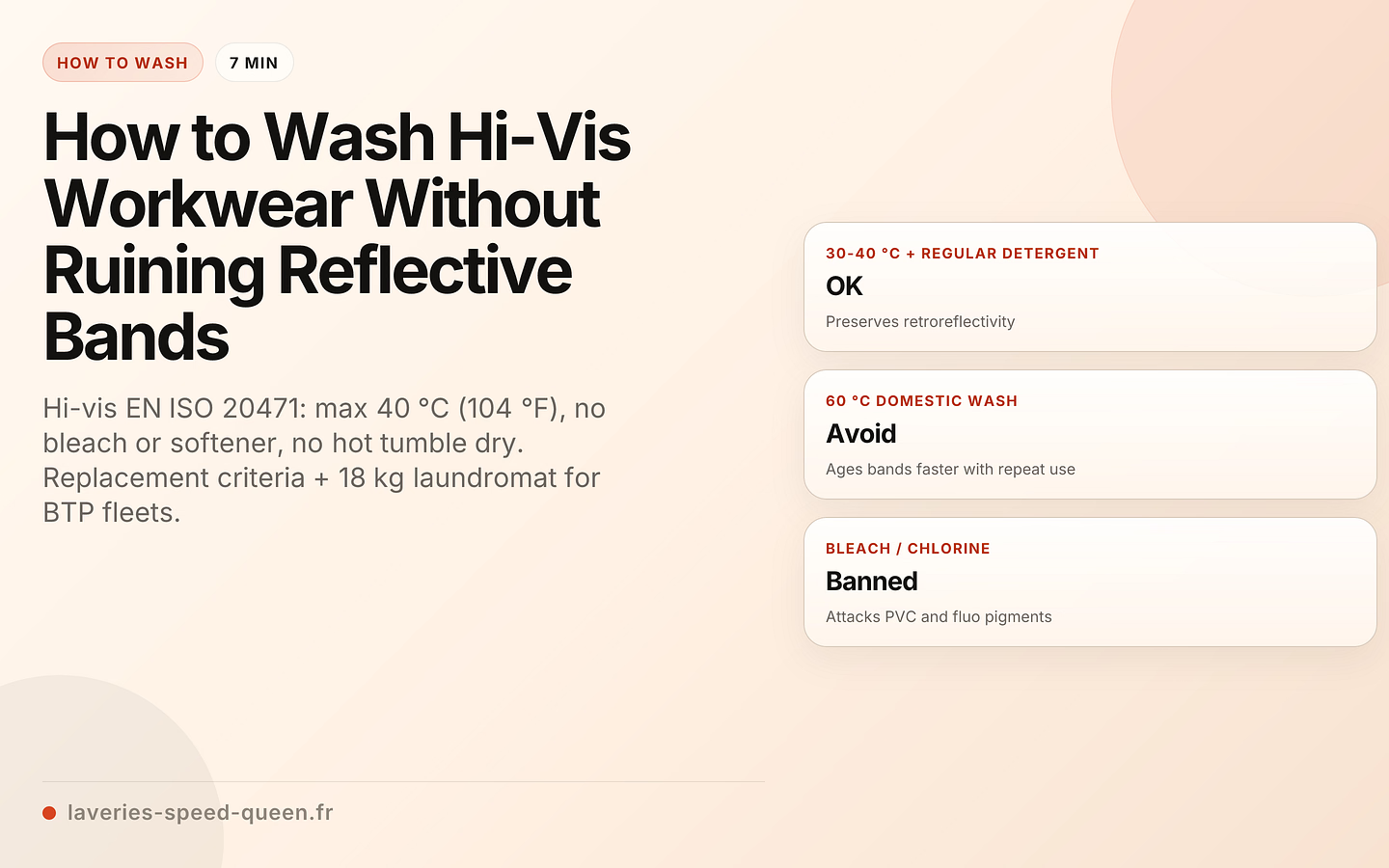
In short: hi-vis garments compliant with EN ISO 20471 need a precise routine to preserve the reflective bands: 40 °C (104 °F) max per the label,
no
fabric softener
↗, no bleach↗
, no high-heat tumble dry. When bands are dulled, cracked or peeling: replace the garment — worker safety depends on functional retroreflectivity.
At a glance
Follow the label -- the GINETEX ISO 3758 symbol shows the max tolerated temperature. Usually 40 °C (104 °F) for hi-vis in domestic washing.
Detergent only -- no fabric softener (waxy film that masks retroreflectivity), no bleach (attacks the PVC bands).
Air drying -- or low tumble dry. Heat deforms the prisms and lifts the heat-bonded edges.
End-of-life criterion -- cracked, dull or peeling bands = replace, no matter the wash count.
BTP company 5+ workers -- 18 kg laundromat handles 5-10 vests in one 30-minute cycle, vs 4-5 cycles on a domestic 7 kg.
EN ISO 20471: what it requires from washing
The European standard EN ISO 20471 defines requirements for high-visibility garments for professional use (construction, road maintenance, rescue services, rail staff, etc.). It classifies garments into 3 classes by visible surface area of fluorescent and retroreflective material:
- Class 1 — minimal surfaces (light trouser covers)
- Class 2 — vests, T-shirts; urban, low-speed use
- Class 3 — long jackets, full kits; mandatory on motorways or high-speed sites
Beyond visible surfaces, the standard imposes wash resistance: minimum retroreflectivity must be maintained after a number of cycles defined by the manufacturer — tested per EN ISO 6330. When you read “25 cycles certified” or “50 cycles” on a product sheet, that is the test referenced.
Certified cycles ≠ real cycles
Certified cycle counts are measured under standardised conditions (temperature, detergent, duration). In real life, an aggressive cycle (60 °C (140 °F) + softener + high-heat dry) counts as several standardised cycles. Conversely, a gentle 30 °C (86 °F) wash air-dried may exceed the rated lifespan. Visual inspection is the final arbiter.
Table: wash step → impact on the bands
Not every gesture is equal. Here is what each parameter does to the lifespan of the reflective bands.
| Gesture | Verdict | Why |
|---|---|---|
| 30-40 °C (104 °F) wash with regular detergent | ✅ OK | Preserves retroreflectivity, fluo colour and heat-bonded bands. |
| 60 °C (140 °F) domestic wash | ⚠️ Avoid | OK occasionally if the label allows; accelerates band ageing with repeat use. |
| 90 °C (194 °F) wash | ❌ Banned | Softens the PVC, deforms the prisms; rapid loss of retroreflectivity. |
Bleach↗ / chlorine | ❌ Banned | Attacks fluo pigments and PVC. Irreversibly fades and weakens. |
Fabric softener ↗/ conditioner | ❌ Banned | Leaves an invisible waxy film masking the retroreflective microstructure. The band looks normal but no longer returns light. |
Highly alkaline detergent / soda crystals↗ | ⚠️ Avoid | May attack the heat-bond adhesive. Stick to a standard textile detergent. |
| Low-heat tumble dry (40 °C (104 °F) max) | ⚠️ Avoid | OK if the label allows, but air drying is safer. |
| High-heat tumble dry | ❌ Banned | Deforms the prisms, melts the heat-bond, lifts the band edges. |
| Ironing directly on the bands | ❌ Banned | The iron’s heat deforms the prisms instantly. Iron the fabric avoiding the bands, or turn the garment inside out. |
| Washing with terry towels or jeans | ⚠️ Avoid | Abrasion accelerates band wear. Wash hi-vis together or with other smooth synthetics. |
Step-by-step protocol
1. Pre-treat stains
Treat stains before the 40 °C (104 °F) wash — a short cycle will not lift dried concrete, paint or grease. Rub stained zones with a suitable stain remover (soap for grease, vinegar for mineral marks) and let act 15-30 minutes. On the bands themselves: dab gently, never rub. Bands are abrasion-sensitive.
2. Sort the load
Wash hi-vis together or with other smooth professional garments (polyester, polycotton). Avoid in the same drum: jeans, terry towels, garments with rivets or exposed zips (risk of catching the bands).
3. Machine settings
- Temperature: 40 °C (104 °F) max (follow the label if lower)
- Programme: synthetic or mixed wash, never maximum spin on band garments
- Detergent: standard dose of regular textile detergent; no additives
- Overload: do not pack the drum — creased bands in a tight load deform
4. Drying
Air dry, flat or on a hanger, avoiding prolonged direct sunlight (UV can dull the fluo over time). If using a tumble dryer, low heat only and remove still slightly damp.
5. Ironing and storage
Iron the fabric if needed (at the label-authorised temperature) — never directly on the bands. For storage, hang or fold without creasing the band. A band folded for months marks white at the fold.
Concrete end-of-life criteria
A hi-vis vest still passing the wash cycle can be out of spec. Here are signs that require replacement, regardless of the wash counter.
Visual band inspection
Visible cracks, missing patches, edges lifted from the fabric, permanent dullness (not from soil). Compare with a new vest if possible.
Torchlight test
In a dark room, frontal lighting at 1-2 m. Bands should return a bright, uniform glow. Dull, granular, or unresponsive zones: degraded bands.
Fluo colour
Yellow or orange must stay saturated. Fluo turning beige or pale pink indicates pigment degradation from UV or bleach. Lost colour reduces daytime visibility.
Preventive replacement
For night construction or motorway road work (Class 3), replace every year if washed weekly, without waiting for visible flaws. Safety is not negotiable.
BTP fleet case study
A construction company with 6 workers typically circulates 12 to 18 hi-vis garments (1-2 vests + 1 jacket per worker). In peak season or on muddy sites, the linen accumulates fast: weekly washing is mandatory.
The domestic machine problem
A 7 kg machine takes 4-5 vests + 1 jacket per cycle. Processing 12-18 garments means 3 to 4 successive cycles = 6 to 8 hours of machine time on a weekend or evening. Unworkable for a foreman or family schedule.
The 18 kg laundromat: single pass
The 18 kg laundromat machine absorbs 5-10 vests/jackets in one 30-minute cycle. For hi-vis specifically, skip the tumble dryer — take out spun-damp linen that air-dries in 4-6 hours in a ventilated room.
Practical site routine
A 30-45 minute weekly visit to the laundromat (30 min wash + ventilation + return) covers a full fleet for a 5-8 person team. Indicative cost: GBP 13-19 per week for one 18 kg machine. Compared with the labour cost of 4 domestic cycles, payback is immediate. No tumble dryer on hi-vis — air-dry on hangers in the storage room.
When the laundromat is not the right tool
- Individual with one vest (cyclist, occasional steward): domestic 40 °C (104 °F) is enough, washed 1-2 times a month.
- Chemically contaminated garment (hydrocarbons, industrial paint, solvents): do not wash in a public laundromat. Specialist industrial laundry or direct replacement.
- Biologically contaminated garment (blood, medical fluids): hospital laundry circuit, never public laundromat or domestic.
Common mistakes
- Putting hi-vis in a hot tumble dryer with the rest of the workwear -- natural reflex but destructive. Take hi-vis out before drying.
- Adding a touch of softener to 'freshen the smell' -- smell returns but retroreflectivity drops. For a fresh scent without risk, wash more often at 40 °C (104 °F) with a lightly scented detergent.
- Ironing to 'straighten the bands' -- iron heat melts the microstructure instantly. A creased band is finished -- by your iron, not the crease.
- Reusing a vest with dull bands at night -- the major safety mistake. If bands no longer return headlight at 50 m, you are invisible. Replace.
- Storing folded on the bands -- over months, the fold permanently marks the band. Hang or fold avoiding the bands.
As an Amazon Associate, we earn from qualifying purchases through the affiliate links in this article — at no extra cost to you. This helps us maintain this site and produce free guides.
BTP company or professional fleet near Toulouse or Blagnac? Our laundromats in Blagnac and Croix-Daurade are open 7 days a week, 7am-10pm. 18 kg machine for 5-10 vests at once, 30-minute cycle, detergent included. Pro receipt on request for PPE accounting. See our professional offer.
Read also: washing a blue work overall and professional garments, washing at 30 or 40 °C (104 °F): how to choose, washing temperatures by textile.