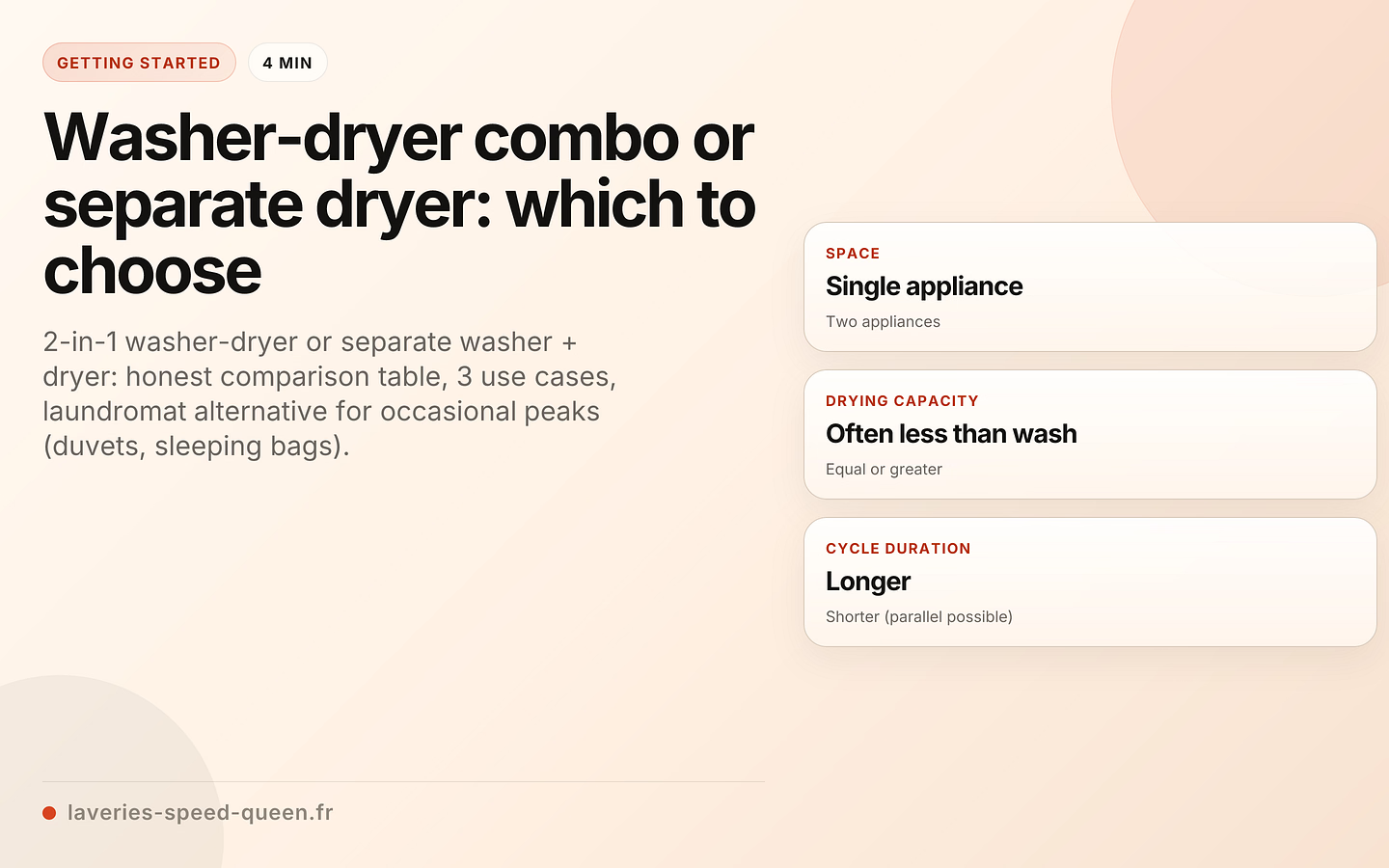
Bottom line: a 2-in-1 washer-dryer combo saves space (studio, small apartment) but dries less than its washing capacity, often lasts shorter than a dedicated appliance, and runs longer cycles. Separate units remain more capable for families and heavy use. The often-overlooked fourth option: keep your current washer and head to a laundromat 1–2 times a month for the peaks (duvet, sleeping bag, winter sheets) — cheaper over 5–7 years.
In brief
Studio under 30 m² or tight space → a 2-in-1 combo is the right compromise.
Family of 4+ → separate units are more capable and durable.
Check the EU 2021 energy label — kWh/cycle for BOTH washing and drying.
2-in-1 drying capacity = usually lower than washing capacity.
Heat pump = most efficient dryer type (ADEME).
Fourth option: keep your washer + use a laundromat 1–2×/month for big loads.
What is a washer-dryer combo?
A washer-dryer combo (also called a 2-in-1) is a single appliance that combines washing and drying in the same drum. It takes the footprint of a single unit — that’s its main advantage, especially in studios, small apartments and homes without a laundry room.
Since March 2021, the new EU energy label requires manufacturers to display the energy class (A–G) and kWh per cycle consumption separately for washing and for drying. It’s the most reliable comparison tool before you buy.
Comparison table: 2-in-1 vs separates
| Criterion | 2-in-1 combo | Separates (washer + dryer) |
|---|---|---|
| Floor space | One appliance | Two appliances (side by side or stacked) |
| Drying vs washing capacity | Often lower than washing capacity | Identical or higher when well-matched |
| Full cycle duration | Longer (one drum for two functions) | Shorter (drying starts as soon as washer empties) |
| Versatility (parallel loads) | Not possible (single drum) | Possible (wash and dry in parallel) |
| Typical lifespan | Shorter per independent tests (Que Choisir) | Longer for separate models |
| Purchase price | Cheaper than buying two appliances | Higher but amortized over a longer life |
| Energy consumption | Check the EU energy label | Heat pump = most efficient (ADEME) |
| Maintenance | Complex mechanics (internal condensation) | Simpler per dedicated appliance |
3 typical use cases
Studio under 30 m²
The 2-in-1 is the right call: a single appliance, decisive space savings. Accept the reduced drying capacity — you probably aren't drying large duvets in here.
Apartment, 2 people
Depends on available space: 2-in-1 if there's no laundry nook, separates if you have a dedicated alcove. Check the EU energy label to compare consumption.
Family home, 4+ people
Separates strongly recommended: real drying capacity, versatility (wash + dry in parallel), better durability. A 2-in-1 will be saturated fast.
The often-overlooked fourth option: laundromat for the peaks
drying rack↗ — before buying a mediocre combo or expensive separates, look at your actual usage:
- How many times a month do you actually use a tumble dryer?
- The rest of the time, you air-dry, right?
- What’s your real need: the duvet in winter, sheets that don’t dry well indoors, the weekend camping sleeping bag?
If the answer is “4–6 drying cycles per month at most”, investing in a dedicated dryer or a 2-in-1 doesn’t pencil out. Heading to a laundromat 1–2 times a month for those peaks is cheaper over 5–7 years than a purchased appliance.
The honest 5-year math
A mid-range 2-in-1 combo costs €600–900. A standalone heat-pump dryer, €500–800. Over 5 years that’s €120–180/year amortized. At ~€6 per wash + dry cycle at a laundromat, that buys 20–30 cycles a year. If you dry less than that, the laundromat stays the cheapest option.
Our laundromat machines: 18 kg (~40 lb) for big loads (double duvet, sleeping bag), professional 14 kg (~31 lb) dryers, detergent included. A full cycle (30 min wash + 30 min dry) takes ~60 min — a lunch break.
Common buying mistakes
Confusing wash capacity and dry capacity
An '8 kg' 2-in-1 washes 8 kg (~18 lb) but often dries less (5–6 kg / ~11–13 lb). Read the mandatory EU energy label.
Ignoring the long cycle
A 2-in-1 wash + dry cycle takes longer than two back-to-back cycles on separate appliances.
Underestimating maintenance
Internal condensation in a 2-in-1 requires regular upkeep (filter, gasket, tray). See our washing machine cleaning guide.
Buying for the occasional bulk load
If the reason to buy = duvet once a year, it's not worth it. Use a laundromat occasionally.
Ignoring the energy class
A vs D, over 7 years of use = a difference of several hundred euros in electricity.
As an Amazon Associate, we earn from qualifying purchases through the affiliate links in this article — at no extra cost to you. It helps us maintain this site and publish free guides.
For occasional peaks (duvet, sleeping bag, winter sheets), our laundromats in Blagnac and Croix-Daurade have 18 kg (~40 lb) washers and professional 14 kg (~31 lb) dryers. Detergent included, full cycle ~60 min. Check our pricing.
Read also: how to choose a washing machine, complete drying guide, why laundry comes out damp from the dryer, laundromat vs home washer.