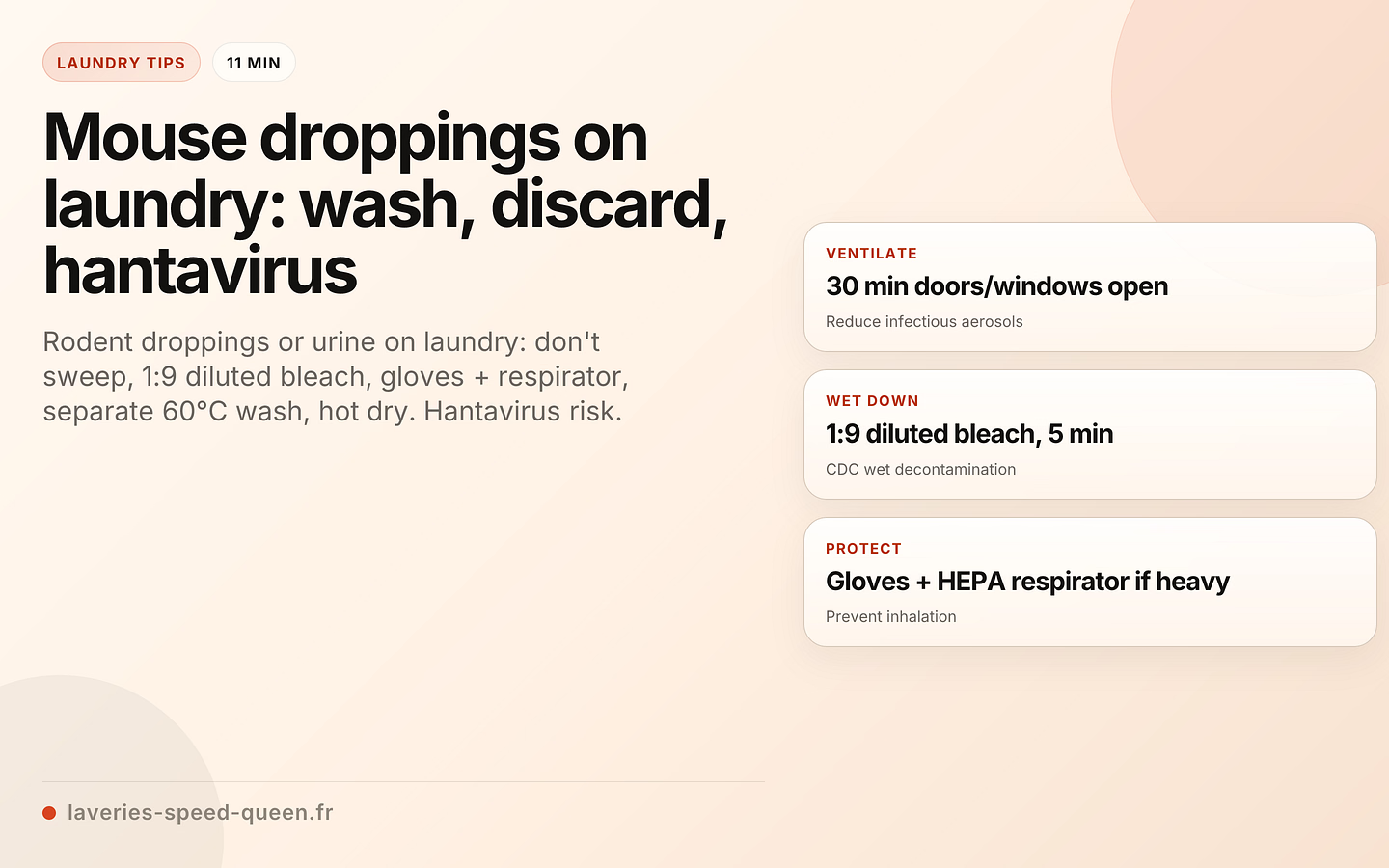
In short: laundry in contact with mouse or rat droppings or urine — don’t sweep, don’t dry-vacuum, wet the area with a 1:9 diluted bleach↗ solution (~10%) for 5 minutes, wear gloves and — in case of heavy infestation — a HEPA respirator (N-100/P-100 or PAPR). Wash at 60°C in a separate load, dry on high heat in the tumble dryer or in full sun, and discard waste in a double bag. The absolute no-go: shaking contaminated laundry.
At a glance
Don't sweep, don't dry-vacuum — these actions disperse infectious aerosols per the CDC.
Wet down with 1:9 diluted bleach and let it sit 5 minutes before any handling.
Disposable gloves in nitrile/latex/vinyl/rubber are mandatory.
HEPA respirator (N-100/P-100 or PAPR) if the infestation is heavy or the room dusty.
Wash at 60°C in a separate load, regular detergent, standard cotton program.
Dry on high heat or in full sun — don't leave wet laundry in the drum.
Waste in a double bag before disposal — that's the CDC protocol.
Why a specific protocol for rodent-contaminated laundry
When laundry has come into contact with droppings, urine or saliva from wild rodents (mice, rats, voles), the main health risk is called hantavirus. According to the CDC, this virus is transmitted to humans mainly by inhalation of aerosols formed from these dried secretions.
The classic mistake — shaking out a sheet, sweeping droppings, running the vacuum — throws these particles into the air. That’s exactly what to avoid. The institutional protocol (CDC, WHO, INRS, Santé publique France) rests on three simple principles:
- Wet before touching: diluted bleach↗ destroys the virus and prevents aerosols
- Protect yourself: gloves systematically, HEPA respirator if infestation is heavy
- Wash and dry hot: the 60°C cotton program with detergent and high-heat drying complete the decontamination
Hantavirus, briefly
In mainland France, Santé publique France reports on average around a hundred annual cases of hantavirus disease. The main endemic zone is the northeastern quarter (Ardennes, Franche-Comté, Picardie, Normandie), with recent expansion toward the south and west. The main reservoir is the bank vole (Myodes / Clethrionomys glareolus), not the house mouse — but the precautionary protocol applies to any contact with wild rodent droppings.
The WHO distinguishes two major clinical pictures:
- HFRS (Hemorrhagic Fever with Renal Syndrome): Europe and Asia. Puumala (France), Dobrava, Seoul, Hantaan viruses. Renal form dominant.
- HPS (Hantavirus Pulmonary Syndrome): the Americas. Sin Nombre (United States), Andes (Argentina, Chile) viruses. Pulmonary form, medical emergency.
For the vast majority of strains, no human-to-human transmission is documented per the WHO. The only identified exception is the Andes virus in Argentina and Chile, for which rare cases of human-to-human transmission have been reported.
Sizing up the situation: stray dropping or full infestation?
Not all contacts are equal. Matching effort to risk prevents both panic and under-reaction.
| Situation | Precaution level | Protocol |
|---|---|---|
| Stray dropping on a garment | Light | Gloves, wet the area with diluted bleach↗, wash at 60°C separately, air the room |
| Laundry stored in attic, cellar or cabin | Marked | Visible contamination (droppings, urine, hair): ventilate 30 min, gloves, HEPA respirator, systematic wetting, double-bag if unsalvageable |
| Closed cabin, heavy infestation | Heavy | Nests, massive urine: extended ventilation, reinforced respiratory protection (PAPR if available), step-by-step cleanup, discard heavily soiled laundry |
Allergies, asthma, pregnancy, immunocompromised
If the person doing the cleanup is asthmatic, allergic, pregnant or immunocompromised, bring in someone else or a professional. The risk of inhaling infectious aerosols is not negligible, and the full protocol chain matters more than any single piece of equipment.
BEFORE touching the laundry: the pre-wash protocol
Before even considering the wash, these pre-protocol steps are the most critical part. This is where safety is decided.
| DO NOT | DO | Why |
|---|---|---|
| Dry-sweep, brush, dust | Ventilate 30 minutes, then wet with diluted bleach↗ | Sweeping throws infectious aerosols per the CDC; wetting prevents this dispersion |
| Dry-vacuum the area | Wet disinfection first; HEPA vacuum only after wetting and decontamination | An unprepared vacuum can lift contaminated dust instead of capturing it |
| Shake or roughly fold soiled laundry | Fold gently onto itself, trap the contaminated surface inside | Shaking throws particles into the breathable air |
| Handle bare-handed | Rubber, latex, vinyl or nitrile gloves↗ per the CDC | Direct contact with infectious secretions |
| Rely on a surgical mask in a heavy infestation | Half-mask HEPA respirator (N-100 / P-100 filters) or PAPR for heavy contamination | The CDC recommends these protection levels for heavily infested or dusty areas |
The bleach solution: preparation and use
The CDC recommends about 1 part household bleach↗ to 9 parts water (around 10%). If bleach↗ is unavailable, the CDC accepts a general household surface disinfectant.
- Prepare the solution in a bucket or spray bottle, just before use
- Spray or pour onto droppings, urine, and any contaminated textile
- Let it sit at least 5 minutes — that’s the minimum recommended contact time
- Handle only after that resting time
For precise bleach↗ dosing and its textile uses, see our guide on bleach for laundry: when to use it.
Triaging the laundry: wash, disinfect, discard or hand off
Not all contaminated laundry is salvageable. Honest triage avoids both waste and false security.
| Textile type | If limited contamination | If heavily soiled |
|---|---|---|
| Cotton, linen, sturdy polyester (sheets, towels, t-shirts) | 60°C cotton program in a separate load | Discard in a double bag without hesitation |
| Wool, silk, valuable cashmere | Specialist dry cleaning, informing the professional | Discard in a double bag — risk too high |
| Fragile synthetics (technical membranes, elastane) | 40°C + textile disinfectant (sodium percarbonate↗, Sanytol↗), accepting a reduced safety margin | Discard in a double bag |
| Mattresses, pillows, sentimental plush toys | Wet the visible area with diluted bleach↗, 60°C machine in a mesh bag if washable | Discard in a double bag, no recovery attempt |
| Old underwear, socks, valueless t-shirts | Discard in a double bag | Discard in a double bag |
Sodium percarbonate for textiles that can't take 60°C
Sodium percarbonate releases active oxygen from 40°C and adds an extra disinfecting layer. It’s the ally of colored or delicate textiles that can’t handle 60°C. Accept though that the safety margin is smaller than a real 60°C cycle.
Machine washing: 60°C, separate, standard detergent
For rodent-contaminated laundry, the CDC recommends hot water + detergent. In practice, the regular 60°C cotton program matches this heat level. INRS further confirms that the Puumala virus (the European hantavirus) is heat-sensitive.
Settings:
- Program: regular cotton (pick a non-eco program to guarantee actual heat; see also our guide on washing at 30 or 40 degrees to understand programs by use)
- Temperature: 60°C
- Detergent: your usual detergent, normal dose
- Load: not packed, for good agitation
- Mixing: absolutely not — wash contaminated laundry on its own, never with clean household laundry
Never mix with the family's clean laundry
Cross-contamination risk is real. Run a dedicated cycle, even if the machine looks barely full: safety before water or energy savings. This is the one non-negotiable rule of post-rodent textile washing.
Drying: high heat or full sun
Per the CDC, dry in a tumble dryer on high heat or in full sun. Both options add an extra disinfection layer (sustained heat, solar UV).
- Tumble dryer (preferred): hot cotton program, don’t shorten the duration
- Full sun: hang outside in direct exposure — UV radiation contributes to disinfection
- Avoid: air-drying cold indoors, especially in the room that was contaminated. Don’t leave wet laundry in the drum.
The machine after the cycle: hygiene best practices
The CDC does not prescribe a specific protocol for the washing machine after a contaminated cycle. Apply your usual hygiene best practices:
- Wipe the door gasket, visible drum and detergent drawer with a cloth soaked in diluted bleach↗ or white vinegar↗
- Leave the door open a few hours to ventilate the drum
- Discard gloves and disposable rags in a closed plastic bag, itself placed in a second bag (double-bagging per the CDC)
For details on textile disinfection methods by product and temperature, see our complete guide to disinfecting laundry.
When to use the laundromat: large volumes, bulky loads
Some situations exceed the capacity of a household washer:
- Complete bedding from a cabin (sheets, blanket, duvet, pillows)
- Sleeping bag (see how to wash a sleeping bag)
- Vacation-home duvet found in storage (see how to wash a duvet)
- Bulky workwear like coveralls or a parka
Our Speed Queen laundromats have 18 kg machines suited to these loads, with high-temperature wash available (60°C, 90°C) and hot professional tumble dryers. Detergent and softener are included.
Hygiene responsibility at the laundromat
Carry contaminated laundry in a closed double-bag (not in an open basket). Don’t put soiled laundry on folding tables. Run the cycle at 60°C and use the hot tumble dryer. Wash your hands before leaving the laundromat. You’re at home, but also in other people’s space.
Special cases
Sleeping bag found in an infested cabin
If massive urine, dozens of droppings, a nest inside: discard in a double bag. The value isn’t worth the health risk.
If salvageable:
- Air out the room and the sleeping bag for 30 minutes
- Wet the visible areas with diluted bleach↗, let sit 5 minutes
- Carry in a sealed double bag to a laundromat
- Wash at 60°C in a large-capacity machine (18 kg)
- Tumble dry on high heat
Duvet or comforter from a vacation home
Check the label first: most synthetic duvets handle 60°C. For details (machine capacity, dosage, frequency) see how to wash a duvet.
Child’s plush toy
If contamination is limited (a few droppings, plush in good shape): wet the visible area with diluted bleach↗, 60°C machine in a mesh bag, sodium percarbonate↗, hot tumble dryer. See also our guide on washing a plush toy.
If heavily soiled (urine, several days of exposure, soaked foam inside): discard. The child’s safety comes first.
Wool, silk, cashmere garments
Head to specialist dry cleaning, clearly informing the professional about the nature of the risk (wild rodent contamination). For wool sweaters specifically, see washing a wool sweater without felting.
Laundry stored a long time without visible contamination but suspect
Cabin closed after a long absence, rural garage, old attic: if you haven’t seen droppings but the room smells of rodents or shows signs of activity, treat the laundry as contaminated as a precaution — that’s cheaper than exposure.
The hantavirus context by major geographic zone
France and Europe: Puumala virus (HFRS)
In France, hantavirus disease is monitored by Santé publique France and the CNR Hantavirus at the Institut Pasteur. The main endemic zone is the northeastern quarter; average incidence is around a hundred annual cases. The main reservoir is the bank vole. The usual clinical form is hemorrhagic fever with renal syndrome, generally milder than the American forms.
North America: Sin Nombre virus (HPS)
In the United States, the Sin Nombre virus is monitored by the CDC. It causes hantavirus pulmonary syndrome (HPS), whose pulmonary phase is an absolute medical emergency. The main reservoir is the deer mouse (Peromyscus maniculatus).
South America: Andes virus
The Andes virus mainly affects Argentina and Chile per the WHO. It is the only strain for which rare cases of human-to-human transmission have been reported — these remain exceptional. All other hantaviruses are transmitted only via contact with rodent secretions.
Brazil
In Brazil, hantavirus disease is monitored by the Ministério da Saúde, with cases reported in several regions of the country.
When to seek emergency care?
Incubation generally ranges from 1 to 8 weeks per CDC and ECDC, with a median often reported around 2 to 4 weeks. The first signs resemble severe flu: sudden fever, intense muscle aches, headaches, fatigue.
- HPS (the Americas): the pulmonary phase sets in within days with shortness of breath. ABSOLUTE MEDICAL EMERGENCY.
- HFRS (Europe/Asia, Puumala in France): renal signs dominate (lower back pain, reduced urine output). Prompt consultation.
- Any unexplained fever in the weeks following exposure to rodents warrants a consultation and explicit mention of the contact to care providers.
Mistakes to avoid
Dry-sweeping or dry-vacuuming
This is the action that creates infectious aerosols. Always wet first with diluted bleach and let it sit 5 minutes.
Shaking soiled laundry
Same: shaking throws particles into the air. Fold gently, trap the contaminated surface inside.
Mixing with the family's laundry
Dedicated cycle, never a shared basket, never a machine shared with other clean garments.
Cold wash
Insufficient. The 60°C cotton program is the practical threshold for the heat level the CDC recommends for this type of contamination.
Relying on a surgical mask in a major outbreak
For a heavy infestation or a dusty room, the CDC recommends a HEPA respirator (N-100/P-100) or PAPR.
Reusing a wet or contaminated respirator
A saturated mask or respirator no longer protects. Discard after use in a double bag.
What NOT to conclude from all this
Hantavirus risk exists in mainland France but remains rare and localized (mainly the Northeast). The point of this protocol isn’t to scare — it’s to equip: applying these simple steps lets you handle contaminated laundry without unnecessary risk. Most contacts with rodent droppings in domestic settings happen without health consequences, but they pass without consequences because the protocol is followed, not despite it.
Related articles
For more depth, see also:
As an Amazon Associate, we earn from qualifying purchases through the affiliate links in this article — at no extra cost to you. This helps us keep this site running and produce free guides.
For large volumes of contaminated laundry (cabin bedding, sleeping bag, vacation-home duvet), our laundromats in Blagnac and Croix-Daurade have 18 kg machines with 60°C and 90°C programs, detergent included and hot professional tumble dryers. Payment contactless card or cash. Check our pricing.
Read also: flu, gastro, Covid — washing a sick person’s laundry (case of a contagious human, different protocol), how to disinfect your laundry (general methods by product and temperature), bleach for laundry.