In short: chlorine bleach↗ discolors fabric through irreversible oxidation — the pale mark cannot be “removed”. Three honest options: (1) neutralize with thiosulfate if you act within the first seconds, (2) machine-dye the entire garment ( Dylon↗, Idéal, Rit), or (3) accept the loss and upcycle (embroidery, intentional tie-dye, rag). Cotton and linen dye well; polyester and elastane poorly; silk and wool need dry cleaning.
Key takeaways
Bleach oxidation is irreversible — you do not recover the original color, you recolor.
Fresh stain → rinse with cold water and apply sodium thiosulfate to neutralize residual chlorine.
Whole-garment dyeing → Dylon / Idéal / Rit machine dye following the manufacturer's instructions.
Check the care label before any dyeing — composition plus maximum temperature (ISO 3758).
Polyester / elastane dye poorly — results are often disappointing.
Creative upcycling is the honest answer when dyeing is not possible.
Why bleach discolors permanently
household gloves↗ — chlorine bleach↗ (sodium hypochlorite, NaClO) destroys textile dyes through chemical oxidation. It is an irreversible reaction: the pigments that gave your garment its color have been broken down. No household product can “bring back” the original color — it is physically impossible.
Anses (the French food, environment and occupational safety agency) classifies chlorine bleach↗ as a corrosive product to be handled with gloves and ventilation. Never mix it with an acid (vinegar, descaler) or an ammonia↗-based product — the reaction releases toxic chlorine gas.
To understand when bleach↗ should be used deliberately (and to avoid accidents), see our guide on chlorine bleach for laundry.
Path 1 — Neutralize within the first seconds
If you have only just spilled the bleach↗, you have a short window to limit the spread and neutralize the residual chlorine.
- Rinse immediately with cold water on the affected area (never hot water).
- Apply sodium thiosulfate diluted as instructed by the manufacturer (“anti-chlorine”, sold at hardware stores or by textile dye brands such as Idéal).
- Rinse generously again with cold water.
- Let it air-dry without rubbing.
What neutralization does NOT do
Sodium thiosulfate stops the ongoing oxidation reaction and limits how far it spreads on the rest of the fabric — but it does not bring back the color that has already been destroyed. It is a “bandage”, not a miracle cure.
Path 2 — Dye the entire garment
This is the most effective option when the discoloration is sharp and localized. The idea: recolor the whole garment in a darker shade than the original color to camouflage the bleached area.
What to expect by fiber type
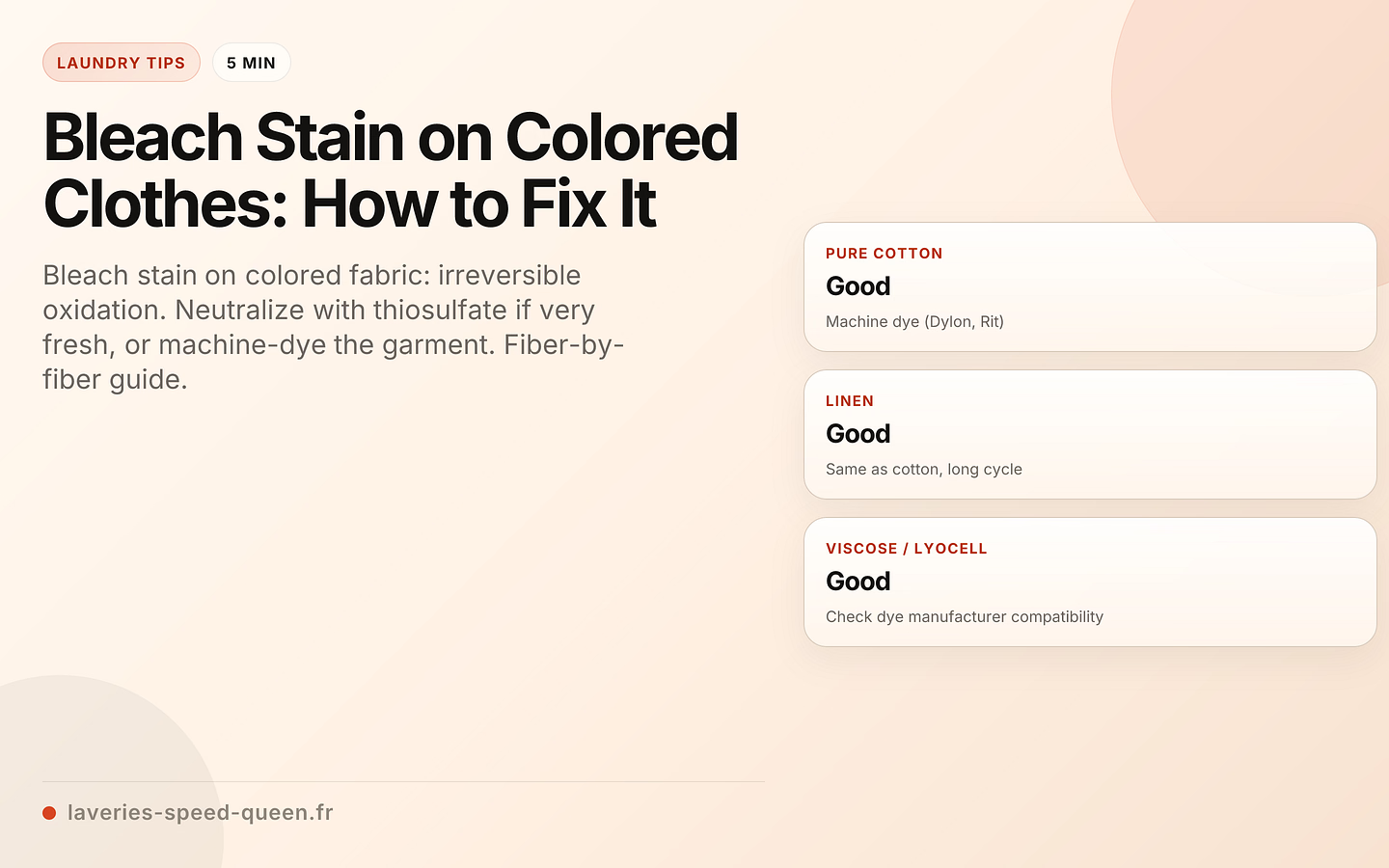
| Fiber | Dye recoverability | Tip |
|---|---|---|
| Pure cotton | Good | Machine-dye works, pick a darker shade |
| Linen | Good | Same as cotton, plan a long cycle |
| Viscose / lyocell | Good | Check dye-maker compatibility |
| Polyester | Difficult | Disappointing results, specialty dyes required |
| Elastane / Lycra | Difficult | Does not take standard dye |
| Silk / wool / cashmere | Risky at home | Specialist dry cleaning or upcycling |
Machine-dye protocol
Dylon↗, Idéal and Rit are the French and international reference brands. Always follow the manufacturer’s instructions (dose, temperature, added salt).
- Check the label (GINETEX / ISO 3758): textile composition and maximum temperature.
- Pre-wash the garment to remove fabric softener↗ and residues.
- Prepare the machine: the dye is added as instructed (often into the drum with the supplied salt).
- Run the cycle at the indicated temperature (often 40-60 °C / 104-140 °F).
- Rinse: an extra cycle to flush out residual dye.
- Clean the machine: an empty hot cycle with detergent so the next load is not tinted.
Dyeing at a laundromat?
If you have several garments to dye in the same shade (3-4 T-shirts, a matching set), our 18 kg (40 lb) washer can dye a full load in one pass — handy for guaranteeing an even tone. For a single isolated garment, hand-dyeing in a basin is more economical. Important: clean the machine thoroughly after use.
Path 3 — Accept it and upcycle
If dyeing is not an option (synthetic fibers, precious garment), accept the loss and get creative:
Bleach tie-dye
Add more symmetrical bleach marks to turn it into an intentional pattern.
Embroidery cover-up
Sew a motif (flower, letter) over the bleached area. Elegant and personalized.
Appliqué patch
A sewn or iron-on fabric patch. Great for kidswear, jeans, sweatshirts.
Repurpose as a rag
If nothing else works, kitchen, household or garage rag. Better than the bin.
Special cases
- Silk, wool, cashmere: head to specialist dry cleaning (tell the cleaner) or accept the loss.
- Cotton kidswear: machine-dyeing works well — pick a dark color.
- Jeans: discoloration on denim can be passed off as deliberate fading (acid wash).
- Polyester sportswear: home dye will not stick. Recycle it as a workout rag.
Mistakes to avoid
Scrubbing with hot water
Hot water accelerates the discoloration. Always start with cold water.
Drying before treatment
Heat sets the discoloration. Test cold first, air-dry before any dyeing.
Mixing bleach with another product
Anses: never mix bleach with acid or ammonia. It releases toxic chlorine gas.
Overdosing the dye
More is not better. Sticking to Dylon / Idéal / Rit gives the most predictable result.
Hoping to erase the stain
Oxidation is irreversible. The honest promise: camouflage or upcycle, not make it disappear.
Related articles
For more depth, see also:
As an Amazon Associate, we earn from qualifying purchases through the affiliate links in this article — at no extra cost to you.
To dye several garments in a single homogeneous load, our laundromats in Blagnac and Croix-Daurade offer 18 kg (40 lb) machines for full-load dyeing, followed by an empty hot cycle. See our prices.
Also read: chlorine bleach for laundry — when to use it, whiten yellowed laundry, color-bled laundry — prevent and rescue.