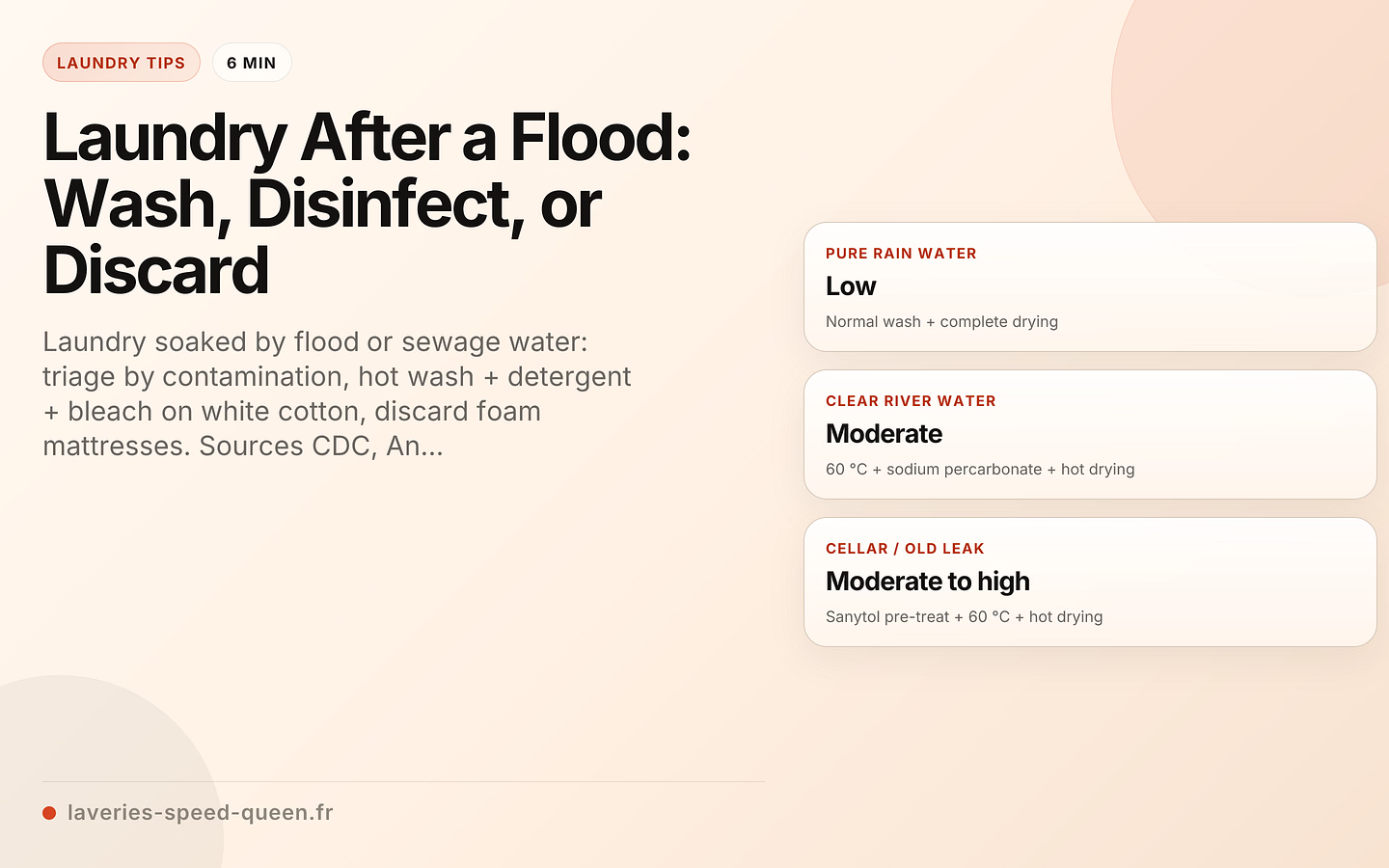
In short: laundry soaked by a flood (river flood, leak, sewer overflow)? First: insurance claim + photos BEFORE sorting. Identify the nature of the water (clear rain, river, urban sewer) to scale your response. 4-level triage: simple recoverable / hot wash + disinfectant / specialized dry cleaning / discard.
Hot wash 60-90 °C (140-194 °F) + bleach↗
on white cotton per CDC. Discard soaked foam mattresses, pillows, and plush toys — the contaminated water stays trapped. Drive-up laundromat 18 kg (40 lb) + pro dryer for large volumes.
At a glance
Photos BEFORE sorting for the insurance claim (gouvernement.fr).
PPE required: nitrile gloves, FFP2 mask, boots (possible sewage water).
Identify the nature of the water: clean rain vs. river vs. urban sewer.
Hot wash 60-90 °C (140-194 °F) per care label + diluted bleach on white cotton (CDC).
Complete immediate drying in a high-temperature tumble dryer (anti-mold per Anses).
Soaked foam mattresses, pillows, plush toys = discard, deep disinfection is impossible.
First: insurance claim + safety
Flood = disaster. Priority order:
- Safety: cut the electricity in flooded zones, do not walk barefoot, do not enter a room with deep water without PPE.
- Photos BEFORE sorting: document the entire state of the home and belongings for the insurance. The French government explicitly recommends this.
- Disaster declaration within the deadlines of your contract (typically 5 days for the flood/natural disaster coverage).
- PPE for handling: nitrile gloves↗, FFP2 mask (minimum), waterproof boots. Flood water can contain pathogens — see below.
- Do not turn on the washing machine if the outlet or electrical circuit was touched by water — electrocution risk.
- Do not mix bleach with any other household product (acid, ammonia) — toxic gas per Anses.
- Pregnant women, children, immunocompromised people: have a third party handle the contaminated laundry.
Identify the nature of the water
Not all flood water is equivalent. Contamination determines the protocol:
| Nature of the water | Health risk | Approach |
|---|---|---|
| Pure rainwater (roof, cold water leak) | Low | Normal wash + complete immediate drying |
| Clear river water (rural flood) | Moderate | 60 °C (140 °F) wash + percarbonate, hot drying |
| Basement water / old leak | Moderate to high (likely mold) | Sanytol↗ pre-treatment + 60 °C wash + hot drying |
| Urban flood water / sewer overflow | High (possible pathogens) | Hot wash 60-90 °C + bleach↗ on white cotton, or discard |
According to Santé publique France and the CDC, urban flood waters can contain pathogens (bacteria such as E. coli or salmonella, viruses, parasites) from sewer overflow or household wastewater. The risk is invisible but real.
Sorting the laundry
Before any washing, sort:
| Textile type | Clean / river water | Sewage / contaminated water |
|---|---|---|
| Cotton/linen/sturdy polyester (sheets, towels, t-shirts) | 60 °C wash + percarbonate | Hot wash 60-90 °C + diluted bleach↗ on white cotton |
| Wool, silk, cashmere | Specialized dry cleaning, inform them of the disaster | Dry cleaner or discard (depending on value) |
| Soaked foam mattresses, pillows, plush toys | Discard (trapped water, unavoidable mold) | Discard without hesitation |
| Valuable garments / one-of-a-kind pieces | Professional dry cleaner | Premium dry cleaner or disposal depending on contamination |
| Baby / immunocompromised laundry | 60-90 °C + textile disinfectant | Discard as a precaution if heavily soiled |
Washing protocol (CDC)
sodium percarbonate↗ — for recoverable laundry:
- Pre-rinse in cold water outside or in a dedicated tub (not directly in the machine — mud + sewer residue)
- Wash: cotton program 60 °C (140 °F) minimum per GINETEX care label (ISO 3758). 90 °C (194 °F) on durable white cotton if heavily contaminated.
- Detergent: your regular laundry detergent, normal dose
- Diluted bleach↗ per the manufacturer’s instructions for white cotton only — discolors colored items and degrades synthetics per Anses
- Sodium percarbonate↗: alternative for colored textiles (2 tbsp in the drum, active from 40 °C / 104 °F)
- IMMEDIATE drying: high-temperature tumble dryer (recommended) or hang in a well-ventilated room outside the damp zone. No wet laundry sitting in a basket.
Special cases
Complete bedding
Sheets, duvet covers, duvets flooded as a batch. Too bulky for the home machine. Head to the 18 kg (40 lb) laundromat: a single cycle at 60 °C + professional high-temperature dryer. Transport in closed garbage bags↗ to avoid contaminating your route or trunk.
Children’s plush toys
If the stuffing is foam OR if the plush toy is heavily soiled with urban flood water: discard without hesitation. Child safety. If washable fiber stuffing and clean water: 60 °C machine wash in a mesh bag + hot tumble dryer + inspect the seams afterward.
Rugs and carpets
Outside the laundromat’s scope — specialized professional disaster cleaning OR disposal if the carpet is soaked with sewage water.
Branded clothing / one-of-a-kind pieces
Head to a premium dry cleaner, clearly informing them of the disaster. If the value doesn’t justify the cleaning cost (€300-500 for heavily contaminated pieces), accept the loss (home insurance often covers it).
The post-flood mold risk
According to Anses, mold develops in damp, confined conditions — exactly the post-flood context. Any poorly dried textile will mold within a few days. Consequences: persistent odor, stains, triggered allergies/asthma.
Anti-mold measures:
- Complete immediate drying after washing (tumble dryer or ventilated room)
- Ventilate the home for several days after the flood
- Dehumidifier if possible in affected rooms
- Monitor the textiles for 2-3 weeks: if the musty smell appears, take them out and rewash at 60 °C + percarbonate
When to use the laundromat
heavy-duty trash bags↗ — this is typically when the laundromat becomes indispensable:
- Large volume: complete bedding + a family’s clothes in one batch
- Home machine unusable (water in the basement where it sits)
- Reliable hot wash 60-90 °C needed: our machines guarantee the actual temperature (no eco mode cheating)
- Professional high-temperature dryer: essential to neutralize residual mold
- Detergent and softener included: nothing to bring
Transport in a double sealed bag (sewage water). Wash your hands thoroughly after loading the machine.
Mistakes to avoid
Sorting before photos
Insurance requires proof of the initial state. Photograph EVERYTHING before handling.
Handling with bare hands
Sewage water = possible pathogens. Nitrile gloves + FFP2 mask + boots required.
Loading the machine without pre-rinsing
Mud + sewer residue straight into the drum = contamination of the machine and the next load.
Trying to save soaked foam mattresses/plush toys
Contaminated water stays trapped in the core of the stuffing. Deep disinfection is impossible. Discard.
Air drying in a damp room
Immediate recontamination by environmental mold. Tumble dryer or ventilated room outside the affected area.
Mixing bleach + another product
Anses: risk of toxic chlorine gas. Bleach alone on white cotton, never mixed.
As an Amazon Associate, we earn from qualifying purchases through the affiliate links in this article — at no extra cost to you.
For a bulky machine-washable load that has been declared recoverable, our Blagnac and Croix-Daurade laundromats have 9 kg (20 lb) and 18 kg (40 lb) washers; the 11 kg (24 lb) washer is only at Croix-Daurade. Detergent and softener are included, a standard wash takes about 30 minutes, and drying is separate and variable in roughly 10-minute increments. For sewage exposure or mould, confirm the protocol with an authority or professional first. See our pricing.
Read also: how to disinfect your laundry, how to remove a mold stain, bleach for laundry: when to use it, laundry contaminated by rodents, how to wash a duvet.