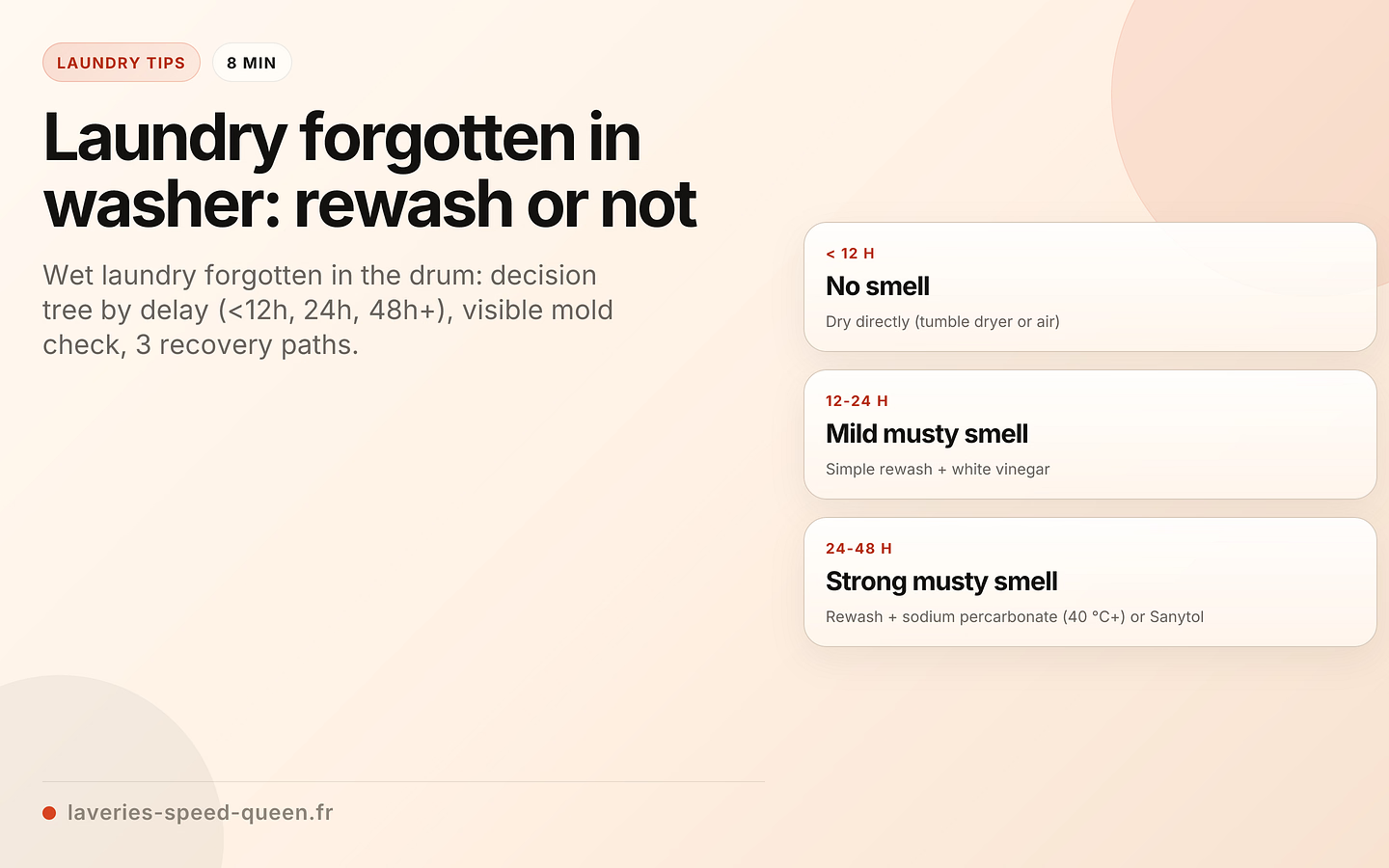
In short: wet laundry forgotten in the drum? The rule is “it depends on the delay”. Under 12 h with no smell → dry directly. 12-24 h, light smell → simple rewash. 24-48 h, noticeable smell → rewash + sodium percarbonate↗ or Sanytol textile↗. Over 48 h or visible mold stains → high-temperature wash (60 °C / 140 °F+) with bleach↗ boost on white cotton, or discard depending on condition. The wet drum is an ideal breeding ground for bacteria and mold according to Anses — hence the decision tree.
At a glance
Under 12 h, no smell → take out and dry directly, no need to rewash.
12-24 h, light smell → simple rewash + white vinegar in the softener compartment.
24-48 h, noticeable smell → rewash + sodium percarbonate (40 °C / 104 °F+) or Sanytol textile.
Over 48 h or visible stains → 60 °C (140 °F) + bleach boost on white cotton, or discard.
Dry immediately in the dryer or in ventilated open air.
Clean the machine afterwards: hot empty cycle + sodium percarbonate + wipe gasket.
Why wet laundry becomes a problem
According to Anses, mold develops in damp, confined conditions — a closed washer drum holding wet laundry is exactly that context. INRS confirms that damp textile in a closed environment promotes microbial growth (bacteria, yeasts, mold).
There’s no universal threshold: it depends on ambient temperature, fabric type, load size and residual humidity. In practice, after a few hours in a warm closed drum, skin and environmental bacteria start multiplying; beyond a day, the stale smell becomes noticeable; beyond 48 h, mold can appear.
The goal isn’t to panic at every short oversight, but to match the response to the actual delay.
Decision tree by delay
| Delay | Sign | Recommended action |
|---|---|---|
| < 12 h | No smell, fresh laundry | Dry directly (dryer or ventilated air) |
| 12-24 h | Light stale smell | Simple rewash + white vinegar↗ in the softener compartment |
| 24-48 h | Noticeable smell, sometimes flat | Rewash + sodium percarbonate↗ (40 °C / 104 °F+ cycle) or Sanytol↗ textile |
| > 48 h or visible mold | Strong musty smell, green/black stains | Wash at minimum 60 °C (140 °F) + diluted bleach↗ on white cotton, or discard |
Visual and olfactory check before deciding
white vinegar↗ — before any treatment, take the laundry out and inspect:
- Smell: a simple light “stale” = OK with a rewash. Strong, persistent musty smell = reinforced treatment or disposal.
- Stains: greenish, brownish or blackish patches = visible mold. For valuable items: bleach↗ on white cotton, professional dry cleaning for delicate fabrics. For low-value items: discard.
- Feel: sticky, dull, degraded fibers = move to disposal rather than forcing a rewash.
Path 1 — Dry directly (< 12 h, no smell)
If you open the door and the laundry simply smells fresh or neutral, no need to rewash. Take it out and dry immediately:
- Dryer (preferred): the heat (60-80 °C / 140-176 °F depending on program) neutralizes residual bacteria and speeds up complete drying.
- Drying rack↗ in open air: well-ventilated, ideally outdoors or in a ventilated room away from damp areas.
Path 2 — Simple rewash (12-24 h, light smell)
For a stale smell without mold:
- Usual program at 30-40 °C (86-104 °F) (depending on care label)
- White vinegar↗ in the softener compartment (half a glass / ~125 ml / ~4 fl oz) — neutralizes odors without damaging the fabric
- Reduce the softener or skip it this cycle: too much softener can trap bacteria
- Dry immediately in the dryer or ventilated air
See our guide on white vinegar for laundry: uses and limits.
Path 3 — Rewash + disinfectant (24-48 h, noticeable smell)
Sanytol textile disinfectant↗ — smell won’t go away with vinegar alone? Move to ** sodium percarbonate↗** (sodium carbonate peroxyhydrate):
- 2 tablespoons of sodium percarbonate↗ in the drum with your usual detergent
- 40 °C (104 °F) minimum cycle (sodium percarbonate↗ releases its active oxygen from 40 °C / 104 °F)
- For synthetic or delicate textiles that can’t take 40 °C, use a Sanytol↗ textile disinfectant active from 20 °C / 68 °F (pour in the softener compartment)
Full details on percarbonate: see sodium percarbonate for laundry.
Path 4 — Hot + bleach or discard (> 48 h or mold)
When the musty smell is strong and persistent, or you see greenish or blackish stains:
For robust white cotton
Minimum 60 °C (140 °F) wash (per care label) with diluted bleach↗ added per manufacturer instructions. Anses notes that bleach↗ can reinforce the wash but bleaches colored fabrics and can degrade synthetics — so strictly limited to robust white cotton.
For colored or synthetic items
60 °C (140 °F) wash + two doses of sodium percarbonate↗ + high-temperature dryer. If the smell or stains remain after that cycle, discard (or repurpose as cleaning rags). Pushing further won’t recover a seriously contaminated textile.
For delicate items (silk, wool, cashmere)
Head to a specialized dry cleaner, telling them about the damage. Otherwise, throw it out — a cashmere sweater moldy for 4 days won’t be saved at home.
When to go to the laundromat
Forgotten laundry is often a large volume: the machine was started Saturday morning with full bedding + towels + sheets, and you found it Monday evening. Rewashing everything at home is 2 successive cycles that overwhelm your domestic washer.
The Speed Queen laundromat solves this in one cycle:
- 18 kg (40 lb) machine to handle bedding + sheets + towels in one go
- 60 °C and 90 °C (140 °F and 194 °F) cycles available per care label
- Commercial 14 kg (31 lb) dryer at high temperature to neutralize residual bacteria
- Detergent and softener included
- Full cycle (30 min wash + ~30 min drying) ≈ 60 min during a lunch break
For a single forgotten T-shirt, your domestic machine is more than enough.
Clean the machine after forgotten laundry
The wet drum after an oversight is itself a microbial reservoir to neutralize. After treating the laundry:
- Empty cycle at high temperature (60-90 °C / 140-194 °F depending on the machine) with 2 tablespoons of sodium percarbonate↗ or a commercial machine cleaner
- Wipe the door gasket with a cloth soaked in white vinegar↗ (where residue builds up)
- Leave the door open for several hours to ventilate the drum
- Check the detergent drawer and clean any deposits
Full details: how to clean the washing machine and how to clean the washer door seal.
Mistakes to avoid
Drying a stinking load directly
The dryer's heat will lock the smell into the fibers instead of removing it. Always rewash first when the smell is noticeable.
Maxing out softener to mask the smell
Softener doesn't kill bacteria, it just masks them temporarily. The problem comes back next time you wear it. A textile disinfectant is mandatory.
Forgetting to clean the machine
The drum stays contaminated after moldy laundry. Hot empty cycle + sodium percarbonate or the machine becomes a re-contamination source.
Bleach on colored fabric
Irreversible bleaching (see our article on bleach on colored clothes). Reserved for robust white cotton.
Pushing on clearly contaminated laundry
Beyond a week or with massive stains, throw it out. No shame in recognizing the limit.
Related articles
For more depth, see also:
As an Amazon Associate, we earn from qualifying purchases through the affiliate links in this article — at no extra cost to you.
A large forgotten load (full bedding, duvet, sheets)? Our laundromats in Blagnac and Croix-Daurade offer 18 kg (40 lb) machines with 60-90 °C (140-194 °F) programs and commercial high-temperature dryers. One cycle to make up for the oversight. Check our pricing.
Also read: laundry smells bad after washing, how to disinfect your laundry, sodium percarbonate for laundry, white vinegar for laundry, bleach for laundry.