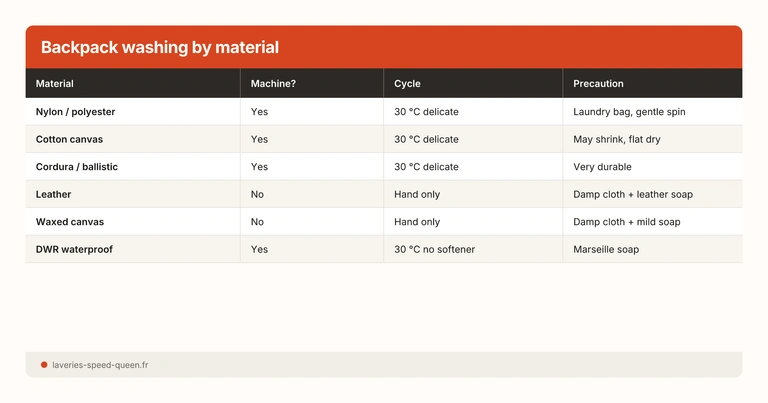
In short: most backpacks made of nylon or polyester can go in the washing machine at 30 °C on a delicate cycle, turned inside out in a laundry bag. Never use a tumble dryer. Heat damages coatings and zippers. Leather, waxed canvas, and non-removable frame backpacks should be cleaned by hand only.
At a Glance
Empty and turn inside out — all pockets, hidden compartments, crumbs, and debris.
30 °C delicate — use a laundry bag or pillowcase, with all zippers closed.
No tumble dryer — air dry with pockets open, hung upside down.
Leather and waxed canvas = hand wash only — no machine wash.
Which Backpacks Can Go in the Washing Machine?
For technical hiking packs, also see our ski gear washing guide, which covers similar DWR water-repellent treatments.
| Material | Machine Wash? | Cycle | Precaution |
|---|---|---|---|
| Nylon / polyester | Yes | 30 °C delicate | Laundry bag, low spin |
| Cotton canvas (Herschel type) | Yes with caution | 30 °C delicate | May shrink slightly, dry flat |
| Cordura / ballistic nylon | Yes | 30 °C delicate | Very durable, handles washing well |
| Leather | No | — | Damp cloth + leather soap only |
| Waxed / coated canvas | No | — | Coating can peel off with agitation |
| Backpack with non-removable frame | Not recommended | — | Risk of deforming both frame and drum |
Protocol by Material: Each Fabric Has Its Own Rules
Not all backpacks should be washed the same way. The method depends directly on the main fabric. Here are the exact steps for each material.
Polyester (most school and city backpacks)
Polyester is the most common material and the easiest to maintain. It handles machine washing well, dries quickly, and does not shrink much. Wash at 30 °C on delicate, with a gentle liquid detergent (avoid powder, which can leave residue in seams). Spin should stay below 600 rpm. Above that, heat-bonded seams can gradually weaken. Polyester usually air-dries within 12-24 hours.
Nylon (gym bags and technical-brand backpacks)
Nylon is more abrasion-resistant than polyester but slightly more UV-sensitive. Use the same wash method: 30 °C delicate, laundry bag, low spin. The key difference is that many nylon backpacks have an internal polyurethane (PU) coating for water resistance. This coating is sensitive to heat and solvents. Never use fabric softener, bleach, or aggressive stain removers on coated nylon. See our fabric softener guide for details.
Canvas (heavy cotton, Herschel/Fjallraven style)
Canvas is durable but can shrink 3-5% on first wash if not prewashed at the factory. Wash at 30 °C max, use very low spin (400 rpm), and dry flat on a towel rather than hanging. The water weight can stretch shoulder straps. For Fjallraven bags treated with Greenland Wax, skip machine washing. Wipe with a damp cloth and reapply wax if needed.
Leather: Hand Wash Only
Real leather cannot handle prolonged soaking or drum agitation. Water swells collagen fibers, and drying shrinks them unevenly. Result: cracking, warping, and permanent loss of flexibility.
Leather protocol:
- Dust off with a dry cloth or soft brush.
- Clean dirty areas with a slightly damp cloth and leather soap (saddle soap type). Never use Marseille soap↗ on leather, as it is too alkaline.
- Let it dry naturally in the shade, away from heat.
- Condition with a leather balm or beeswax to restore suppleness.
- For stubborn stains (ink, grease), use a leather-care professional.
The Full Machine-Wash Method
Check the care label
If the backpack has a care label, follow it. If not, a 30 °C delicate cycle is the safest default for nylon and polyester.
Pre-treat dirty zones
The bottom panel, shoulder straps, and top handle collect most grime (sweat, skin oils, sunscreen). Scrub with damp Marseille soap and a soft toothbrush. Focus on the back panel (direct contact with your back) and hip belt.
Turn inside out and protect
Turn the backpack inside out, close every zipper (to protect the drum), and place it in a large laundry bag or closed pillowcase. Remove detachable straps and wash them separately.
Dry correctly
Hang upside down with all pockets and compartments open in a shaded, ventilated spot. Full drying may take 24-48 hours depending on fabric thickness. Never tumble dry.
School, Hiking, or Commuter Backpack: Different Care Needs
Backpacks are used in different contexts, so care should adapt accordingly.
School Backpack (JanSport, Herschel, Eastpak)
School backpacks mostly collect crumbs, food residue, pen marks, and dust. They are usually polyester or canvas, so machine washing is generally possible. The top risk is a pen forgotten in a pocket, so always check every compartment first. For set-in ink stains, see our ink stain removal guide.
Recommended frequency: 1 to 2 times per year, or as soon as odors persist. Between washes, shake the bag upside down over a trash can to remove crumbs.
Hiking Backpack (Osprey, Deuter, Gregory)
Hiking packs are more complex: frame system, ventilated mesh back, multiple straps, hydration compartment, DWR treatment. Machine washing is often not recommended by manufacturers. If machine washing is unavoidable, remove the frame, hydration system, and detachable straps first. Use Marseille soap rather than standard detergent, because detergent surfactants can weaken DWR treatment.
Recommended frequency: after every multi-day trek, or 1 to 2 times per season with frequent use. Between trips, air the bag open in a ventilated space.
Urban / Commuter Backpack (work, bike, transit)
Urban backpacks often include laptop sleeves, RFID pockets, and water-repellent coatings. The laptop compartment must be emptied and checked. Wash on 30 °C delicate. If the back panel has non-removable foam padding, hand cleaning is safer so the foam does not stay wet too long (mold risk).
Recommended frequency: 2 to 3 times per year for daily use. Clean shoulder straps more often with a damp cloth, as this is where sweat builds up first.
Hand Washing (Recommended by Most Manufacturers)
Eastpak, Osprey, and Deuter officially recommend hand washing. It is the safest method for all backpack types.
- Fill a bathtub or large basin with lukewarm water (25-30 °C) and one tablespoon of gentle detergent or liquid Marseille soap.
- Submerge the inside-out backpack and soak for 15-20 minutes.
- Scrub dirty areas with a soft brush or sponge. The bottom panel, shoulder straps, and back panel are usually the dirtiest.
- Rinse thoroughly with clean water. Detergent residue attracts dirt faster.
- Press out water without twisting between two towels.
- Dry upside down, pockets open, in a shaded and ventilated place.
Benefit: no risk of deforming frame parts, zippers, or coatings. It is the only safe option for non-removable frame packs and bags with integrated hydration compartments.
Specific Stains: Mud, Food, Ink
Each stain needs a different approach. Always treat stains before machine washing. A 30 °C cycle alone is usually not enough for set-in stains.
Mud Stains
Mud is the most common stain on hiking and school backpacks. Golden rule: never scrub wet mud because it pushes dirt deeper into fibers. Let mud dry fully, then brush off dry deposits with a stiff brush. Remaining residue usually comes out in the wash. For clay-rich mud that leaves yellow marks, apply damp Marseille soap to the area and leave it for 15 minutes before washing.
Food Stains
The backpack bottom is where food stains happen most: sauce, crushed fruit, yogurt. Scrape excess material dry, then dab with a cloth soaked in lukewarm water and a few drops of dish soap. Dish soap is a light degreaser that works well on nylon and polyester. Rinse before machine washing. For chocolate stains, see our dedicated guide.
Ink Stains (forgotten pen)
Classic school-backpack disaster. If a pen leaked, dab immediately with 70% rubbing alcohol on a white cloth (test on a hidden area first). Do not scrub. Dab repeatedly to dissolve ink gradually. Ballpoint ink responds well to alcohol. Permanent markers are tougher, and results depend on backpack fabric. Our full ink stain guide covers methods by ink type.
Grease Stains (bike chain, sunscreen)
Dust the stain with talc or Fuller’s earth↗, leave for 2-4 hours, then brush off. Next, apply a little dish soap directly to the area, rub gently, and leave for 10 minutes before washing. For heavier grease marks, see our grease stain removal guide.
Zone by Zone: Where Dirt Builds Up Most
Back panel + shoulder straps
Daily sweat and skin oil. This is the dirtiest area on regularly used backpacks. Pre-treat with Marseille soap before each wash. For sleeping gear, see our [sleeping bag washing guide](/en/blog/wash-sleeping-bag-guide/).
Bottom panel
Crumbs, food residue, sand, dust. Always turn the backpack upside down and shake it before washing. For stuck food stains, scrape dry first, then scrub with soap.
Zippers
Zips collect grime and eventually start sticking. Brush zipper teeth with a dry toothbrush. After washing, lubricate with a graphite pencil or beeswax for smoother movement.
Hydration compartment
If your pack has a hydration sleeve (CamelBak, Osprey), rinse it separately with baking soda (1 tsp in 500 ml water) to neutralize odors and limit mold growth. Dry it fully open.
Drying: Why You Should Never Use a Tumble Dryer
A tumble dryer is the number-one enemy of backpacks. Here is what happens when you dry one with heat:
- PU (polyurethane) coating: interior waterproof layer can melt or crack starting around 60 °C. The bag loses water resistance permanently.
- Zippers: plastic teeth warp under heat. The zip no longer closes correctly.
- Heat-bonded seams: welded seams used on technical packs can detach in a dryer.
- Structure and back foam: back-panel foam deforms and may not recover.
- Straps and plastic buckles: POM clips (polyoxymethylene) handle prolonged heat poorly.
Correct drying method:
- Hang the backpack upside down, opening downward, so water drains naturally.
- Open all pockets and compartments to improve airflow.
- Place it in a shaded, ventilated spot. Direct sun fades colors and weakens nylon.
- Allow 24 to 48 hours depending on fabric thickness and ambient humidity.
- Before storing, confirm the inside is fully dry. A damp stored backpack develops mold.
Washing Frequency and Routine Care
You do not need to wash a backpack after every use. Routine maintenance between washes extends its life and reduces machine-wash frequency.
Between washes
- Weekly brushing: use a soft brush on the outside to remove dust and debris, especially bottom panel and seams.
- Airing out: after heavy use (hiking, hot day commute), leave the backpack open in a ventilated area for a few hours. Never store it zipped up while damp from sweat.
- Quick strap clean: once per month, wipe shoulder straps and back panel with a damp cloth and a little Marseille soap. This is where sweat and skin oil build up most.
- Zipper maintenance: brush zipper teeth dry with an old toothbrush every 2-3 months. If a zip sticks, rub a graphite pencil along the teeth. Graphite lubricates without greasy residue.
- Hydration compartment check: rinse the water bladder after each use with lukewarm water and baking soda. Let it dry fully open with tube disconnected.
When should you wash it?
Wash only when needed. Even delicate machine cycles gradually wear coatings and seams. Signs that justify a full wash:
- Persistent odor that does not go away after airing out.
- Visible stains that resist spot cleaning.
- After a long hiking trip (several days of sweat and dust buildup).
- Liquid spill exposure (drink, sauce) that soaked into the fabric.
Technical hiking backpacks
Backpacks with DWR water-repellent treatment should not be washed with fabric softener. It blocks the water-repellent layer. Use a technical detergent without softener or pure Marseille soap. After washing, DWR can be reactivated in a tumble dryer (low heat, 10 minutes) or with a reproofing spray. Follow your manufacturer’s instructions.
Mistakes to Avoid
- Using a tumble dryer — heat melts PU coatings, deforms zippers, and can detach heat-bonded seams.
- Machine washing a leather backpack — leather cannot handle immersion. It warps and cracks irreversibly.
- Forgetting to empty pockets — one forgotten pen can stain the drum and every item in the cycle. Ink stain guide.
- Spinning too fast — 400-600 rpm max. A 1200 rpm spin can deform backpack structure.
- Using fabric softener on a waterproof backpack — the oily film neutralizes water-repellent treatment.
- Storing while still damp — poor drying leads to mold, especially in closed compartments and inner pockets.
- Washing too often — each wash slightly wears coatings. Routine care (brushing, airing, spot cleaning) is enough between full washes.
As an Amazon Associate, we earn a small commission from purchases made through affiliate links in this article, at no extra cost to you. This helps us maintain this site and publish free guides.
Is your hiking backpack too bulky for a home washer? Our laundromats in Blagnac, Croix-Daurade and Montaudran have 9 and 18 kg machines with enough room for the backpack to move freely without being compressed. Detergent included, fully washed and dried in approx. 1h. Payment contactless card or cash.
Sources and References
- Eastpak, product care FAQ, accessed March 16, 2026
- Osprey, care instructions, accessed March 16, 2026
- Deuter, backpack care advice, accessed March 23, 2026
- Removing an ink stain (pen left in a pocket)
- Washing temperatures guide
- How to wash ski and hiking gear
- Remove a chocolate stain
- Remove a grease stain
- Baking soda and laundry
- How to wash a handbag
- Fabric softener: useful or not?