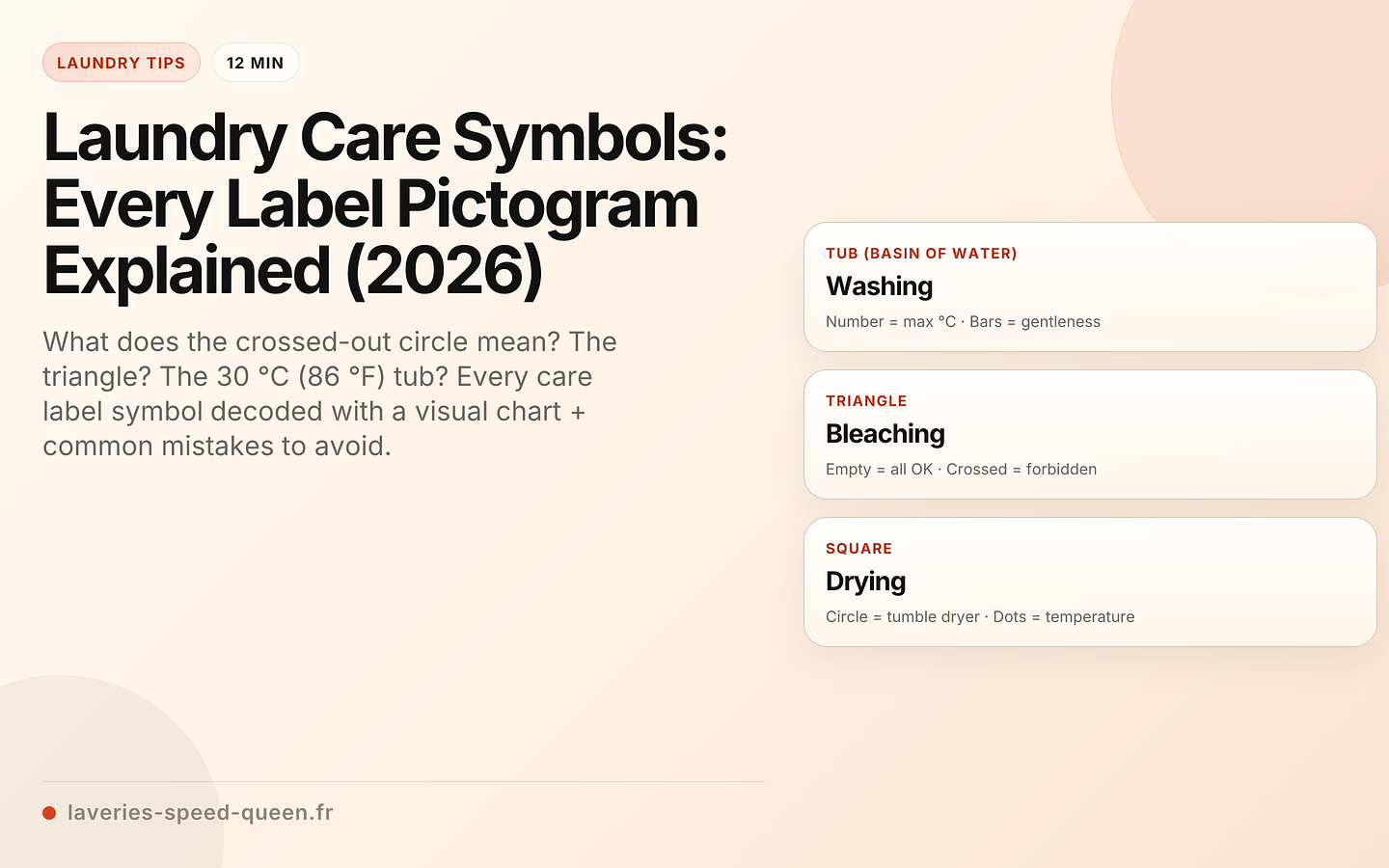
In a nutshell: Laundry care labels follow ISO 3758 (GINETEX) with 5 universal symbols: tub (washing), triangle (bleaching), square (drying), iron (ironing), circle (professional cleaning). The number inside the tub indicates the maximum temperature. One bar under the tub means “delicate cycle”, two bars mean “very delicate cycle”. A cross means “prohibited”.
At a glance
5 basic symbols — tub (washing), triangle (bleaching), square (drying), iron (ironing), circle (dry cleaning).
Dots = temperature — 1 dot = low, 2 = medium, 3 = high. Universal across all symbols.
Cross = prohibited — an X on any symbol means the operation is not allowed.
Bars under the tub = gentleness — 1 bar = delicate cycle, 2 bars = very delicate.
What do laundry care label symbols mean
Quick answer: care labels use 5 base symbols (ISO 3758 standard): the tub for washing (number = max temperature, hand inside = hand wash, cross = no machine), the triangle for bleaching, the square for drying (circle inside = tumble dryer allowed; dots = temperature), the iron for ironing (dots = max temperature), the circle for professional cleaning (letter = solvent type). A cross over any symbol = operation prohibited.
The 5 families to remember:
- Tub (washing) — number = max machine temperature ; hand in tub = hand wash 30-40 °C ; cross = no machine wash.
- Triangle (bleaching) — empty = bleach↗ allowed ; two diagonal stripes = oxygen bleach↗ only (no chlorine) ; cross = no bleach↗.
- Square (drying) — empty = air dry ; circle inside = tumble dryer OK ; dots = temperature (1 = low, 2 = high) ; cross = no tumble dryer.
- Iron (ironing) — dots = max temperature (1 = 110 °C, 2 = 150 °C, 3 = 200 °C) ; cross = no ironing.
- Circle (professional) — letter inside = approved solvent (P = perchloroethylene, F = hydrocarbon, W = wetcleaning) ; cross = no dry cleaning.
When a garment is not safe in a domestic machine but the label allows wetcleaning (W in circle), our laundromats don’t run that specific process, but our 9 to 18 kg machines with delicate programs handle many “hand-wash” labelled items safely when the label permits it (tub with a hand symbol).
Everything is here
This page covers the 5 symbol families, the visual lookalikes and the washing machine buttons. Use the table of contents to jump to the section you need.
Printable cheat sheet
Download our
laundry symbol cheat sheet(SVG, A4 printable). The 20 most common symbols on a single page, with the 3 universal rules (cross = prohibited, dots = heat, bars = gentleness). Hang it near your machine.
The 5 symbol families
To read a care label correctly, always check these 5 pictograms in order: tub, triangle, square, iron, and circle — each one blocks or allows a specific action. When the label calls for a delicate programme or reduced spin, protect your fragile textiles with a fine-mesh laundry bag↗ that limits friction inside the drum.
| Shape | Meaning | What to look for |
|---|---|---|
| Washing | Number = max temperature. Bars underneath = gentleness. Hand = hand wash. |
 Triangle | Bleaching | Empty = all OK. Lines = oxygen only. Crossed out = prohibited. |
| Drying | Circle inside = tumble dryer. Dots = temperature. Lines = natural drying. |
| Ironing | Dots = heat: 1 = low, 2 = medium, 3 = high. |
 Circle | Professional cleaning | Letter = solvent type. P = perchloroethylene. F = petroleum solvents. |
 Tub (water
basin)
Tub (water
basin) Square
 Iron
IronA fine-mesh bag answers the “delicate” and “very delicate” symbols directly: it reduces friction inside the drum, helping lingerie, knits, and fragile synthetics survive machine cycles. Two limits worth knowing: an overfilled bag washes poorly (leave room for the laundry to move), and it doesn’t change the label’s rule — a garment marked 30 °C is still a 30 °C garment, bag or no bag.
Washing symbols (the tub)
The number in the tub is a maximum limit: 30 °C (86 °F) for delicates, 40 °C (104 °F) for everyday use, and 60 °C (140 °F) for white cotton — never exceed the stated value.
This is the most frequently checked symbol. The tub represents a basin filled with water. For garments marked 30 °C or “very delicate”, a mild liquid detergent↗ rinses out better than powder and leaves fewer residues on sensitive fibres.
The number in the tub
It indicates the maximum wash temperature. The lower the number, the gentler the programme should be. At our laundromats, our machines offer programmes suited to every fabric. See our symbol guide .
The bars under the tub
No bar = normal programme (full spin). 1 bar = synthetic/delicate programme (reduced spin). 2 bars = very delicate/wool programme (minimal or no spin).
The hand symbol in the tub
A hand dipped into the tub means hand wash only, without wringing. For precious items, follow the symbol.
Unsure about the temperature numbers?
This page teaches you how to read the tub. If you already have a more specific need, go straight to
30 or 40 °C (86-104 °F): how to choose
or
which garments to wash at 60 °C (140 °F)
.
Tub crossed out
Machine washing prohibited, hand washing prohibited. The garment must not come into contact with water. Dry cleaning (at a dry cleaner) is required. This is rare, mainly found on certain silks, leathers, and structured garments.
Washing summary
| Symbol | Meaning |
|---|---|
| Wash at 30 °C maximum |
| Wash at 40 °C maximum |
| Wash at 60 °C maximum |
| Wash at 95 °C (boiling, disinfection) |
| Delicate cycle (reduced spin) |
 Tub + 2 bars | Very delicate cycle (minimal spin) |
| Hand wash only |
| Do not machine wash or hand wash |
 Tub + 30
 Tub + 40
 Tub + 60
 Tub + 95
 Tub + hand
 Tub crossed out
(X)
Tub crossed out
(X)Drying symbols (the square)
If the square contains a crossed-out circle, tumble drying is prohibited; with 1 dot, stick to low heat; with 2 dots, you can dry at normal temperature.
Need a closer look at the no-tumble-dry pictogram?
We covered this sub-topic in a dedicated article:
no tumble dry symbol: meaning and alternatives
. It explains what to do next: flat, on a line, in the shade, or with moderate spin.
Square + circle = tumble dryer
A square containing a circle represents the tumble dryer. 1 dot inside the circle = low heat. 2 dots = normal heat. No dot = any heat. Crossed out = tumble drying prohibited.
Square + line = natural drying
Vertical line = hang to dry (on a hanger). Horizontal line = dry flat. 2 diagonal lines in the corner = dry in the shade. These symbols are essential for wool and knits that lose shape when hung.
| Drying symbol | Meaning | Example textiles |
|---|---|---|
 Square + circle, 2 dots | Tumble dry at normal temperature | Cotton, polyester, sheets, towels |
 Square + circle, 1 dot | Tumble dry at low temperature | Delicate synthetics, acrylic |
| Tumble drying prohibited | Wool, silk, elastane, certain knits |
| Hang to dry (hanger) | Shirts, jackets, dresses |
| Dry flat | Wool sweaters, knits, cashmere |
 Square + vertical
line
Square + vertical
line Square + horizontal
line
Square + horizontal
lineAt our laundromats in Toulouse and Blagnac, programmes are calibrated to respect these symbols: normal programme for cotton, delicate for synthetics, wool for knits. If your label says 40 °C maximum, our machines respect it automatically. See the programmes available per machine and our prices.
Ironing symbols (the iron)
Ironing follows a simple grid: 1 dot = 110 °C, 2 dots = 150 °C, 3 dots = 200 °C, and a crossed-out iron means no ironing at all.
The 3 heat levels
1 dot = low heat (synthetics, silk, nylon). 2 dots = medium heat (wool, polyester, blends). 3 dots = high heat (cotton, linen). Crossed-out iron = ironing prohibited. Most technical and sportswear falls into the “no ironing” or 1-dot category.
Looking for the shirt ironing method?
The iron symbol gives the temperature, but not the order of steps. For the full step-by-step (collar, cuffs, sleeves, shoulders, front, back), see how to iron a shirt properly.
A crossed-out iron on the label doesn’t sentence you to wrinkled clothes: for the technical and synthetic garments in that category, a wrinkle-release spray does most of the work without heat — spray, smooth by hand, hang. Don’t expect the finish of a real iron, though: on thick cotton or heavily creased linen (the 3-dot category), the effect stays limited, and the garment needs to air-dry before you put it on.
Ironing summary
| Symbol | Meaning |
|---|---|
| Low-temperature ironing — synthetics, silk, nylon |
| Medium-temperature ironing — wool, polyester, blends |
| High-temperature ironing — cotton, linen |
| Ironing prohibited |
 Iron + 1 dot (110
°C)
Iron + 1 dot (110
°C) Iron + 3 dots
(200 °C)
Iron + 3 dots
(200 °C)Bleaching symbols (the triangle)
An empty triangle allows bleach↗ and oxygen agents, while a triangle with 2 lines restricts treatment to oxygen-based agents only.
3 simple variants
Empty triangle = all bleaching agents are allowed (chlorine bleach↗, oxygen bleach↗). Triangle with 2 diagonal lines = oxygen bleach↗ only (no chlorine bleach↗). Triangle crossed out = bleaching prohibited (no bleaching agents at all). To whiten yellowed laundry, always check this symbol before using any product.
Bleaching summary
| Symbol | Meaning |
|---|---|
| All bleaching allowed (chlorine and oxygen) |
 Triangle + 2 diagonal lines | Oxygen bleach↗ only (no chlorine bleach↗) |
| Bleaching prohibited — no bleaching agents |
 Triangle
crossed out (X)
Triangle
crossed out (X)Professional cleaning symbols (the circle)
The circle relates exclusively to dry cleaning: P and F indicate solvents, while a crossed-out circle means the garment must be washed with water — no dry cleaning.
The circle relates to dry cleaning and professional cleaning. It tells the professional which solvent to use.
Letters inside the circle
P = perchloroethylene (the standard dry-cleaning solvent). F = petroleum solvents (hydrocarbons). W = professional wet cleaning. These letters are intended for dry cleaners, not for home use.
Crossed-out circle
Dry cleaning prohibited. The garment must be washed with water (machine or hand). This applies to the majority of everyday clothing. To find out when to choose a laundromat vs. a dry cleaner, see our dry cleaning guide .
Professional cleaning summary
| Symbol | Meaning |
|---|---|
| Perchloroethylene cleaning (standard dry cleaning) |
| Petroleum solvent cleaning (hydrocarbons) |
 Circle + W | Professional wet cleaning |
| Dry cleaning prohibited — wash with water |
 Circle +
P
Circle +
P Circle +
F
Circle +
F Circle
crossed out (X)
Circle
crossed out (X)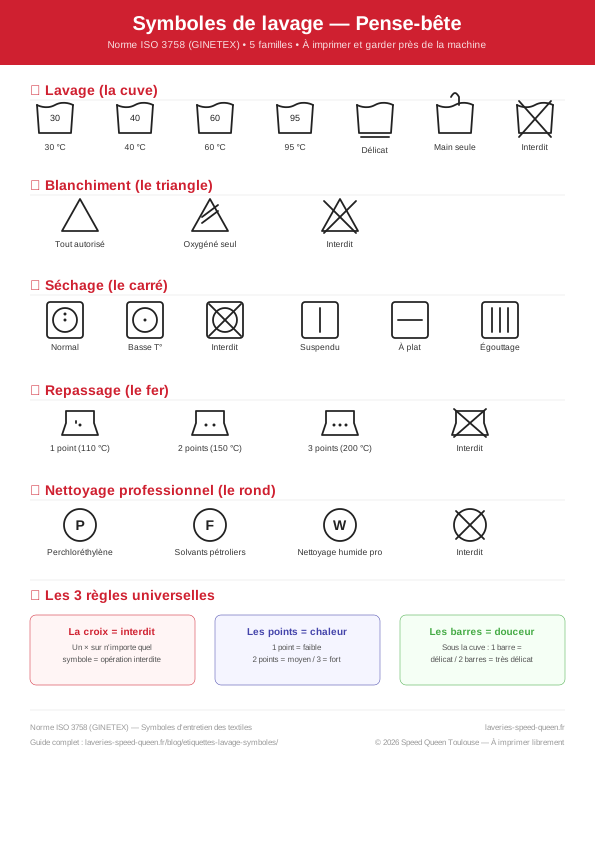
The most common combinations
A classic cotton t-shirt typically carries 40 °C (104 °F) wash, tumble dry allowed, and 3-dot ironing, while a silk dress requires hand wash and no tumble drying.
| Garment | Washing | Drying | Ironing |
|---|---|---|---|
| Cotton t-shirt |
| OK |
|
| Jeans |
| OK |
|
| Polyester-cotton shirt |  Delicate |
|
|
| Wool sweater | Very delicate |
|
|
| Silk dress |
|  Prohibited |
|
| Cotton sheets |
| OK |
|
| Synthetic puffer jacket | Delicate |
|  Prohibited |
Visual lookalikes
Some pictograms look similar but have completely different meanings. Here are the most common mix-ups.
- Circle alone vs square with circle — the circle alone refers to dry cleaning; the square containing a circle refers to the tumble dryer.
- Crossed-out tub vs crossed-out triangle — the tub prohibits water washing; the triangle prohibits bleaching agents only.
- Dry flat vs hang to dry — horizontal line in the square = flat; vertical line = on a line or hanger.
- 1 bar vs 2 bars under the tub — a tiny visual difference, but two very different cycle gentleness levels.
Washing machine buttons and icons
GINETEX pictograms are standardised, but the icons on your machine’s control panel vary by manufacturer. Here are the most common reference points.
Spiral = spin
On many washing machines, the spiral designates the spin-only cycle or the spin speed setting. It's often the button you lower for delicate fabrics.
Clock = delayed start
The clock or timer symbol is generally used to start the cycle later or to programme a delayed finish.
Shower head or drops = rinse
Manufacturers sometimes use a shower head, drops, or a filled tub for the rinse or extra-rinse functions.
Feather / flower = delicate
The exact design varies by brand, but the idea remains the same: gentler treatment for fragile fibres.
Translating the label to the right machine button
| What the label says | What to look for on the machine |
|---|---|
| Tub 30 °C | 30 °C programme, cold or delicate depending on the fabric |
| Tub with 1 bar | Delicate / synthetic / easy care |
| Tub with 2 bars | Very delicate / wool / hand-wash |
| Square + circle crossed out | No tumble dryer — dry flat or on a line |
| Circle + P / F / W | No home-machine equivalent — dry cleaner instruction |
Practical tips
Photograph the label
If a label itches and you want to cut it off, take a photo first. Keep it in a dedicated album on your phone. It takes 3 seconds and prevents laundry mishaps.
Where to find the label
Left side seam (most common), back of the collar (t-shirts, shirts), inner waistband (trousers). Some brands print the symbols directly onto the inner fabric.
When in doubt
No label or illegible symbols? Wash on a delicate cycle, no tumble dryer. It's the safest setting to avoid damage. For valuable items, test on an inconspicuous area first.
Quick reference checklist
Five rules are all you need to decode any label — print this summary or photograph it so you always have it on hand.
Tub = washing. Number = max temperature. Bar = gentle programme.
Triangle = bleaching. Empty = all allowed. Lines = oxygen only. Crossed out = none.
Square = drying. Circle inside = tumble dryer. Dots = heat. Crossed out = prohibited.
Iron = ironing. Dots = heat (1 = 110 °C, 2 = 150 °C, 3 = 200 °C). Crossed out = prohibited.
Circle = dry cleaning. Letter = solvent type. Crossed out = water wash only.
For the detail of each symbol and its variants, scroll back up to the family-by-family tables above.
Mistakes to avoid
- Ignoring the tumble dryer symbol — this is the riskiest symbol to overlook, because shrinkage is often irreversible. See our guide to preventing shrinkage
- Confusing the bars under the tub — 1 bar = delicate, 2 bars = very delicate, not the other way around
- Cutting the label without reading it — photograph it first
- Using the same programme for everything — too aggressive a cycle on wool and it shrinks permanently
Label missing or faded: first things to check
Once a garment is home, the care label often disappears: cut off because it itched, faded after repeated washes, torn away, or simply absent from the start on vintage, thrift, or handcrafted pieces. Worth noting: in the European Union, only the fibre composition is a mandatory marking; the care label (the symbols) is optional, and second-hand garments are even exempt from the composition label. A garment can therefore legally carry no care instructions at all.
Three careful pointers when the information is missing:
- Composition is a clue, not an identification. Touch and appearance can point you in a direction, but they cannot confirm a fibre — even in a laboratory, identifying a fibre requires a microscope and specialised tests.
- The most fragile part governs. GINETEX notes that the care instruction reflects the most fragile element of the whole garment (lining, dye, finish, trims), not just the main fibre.
- Washing and drying are two separate decisions. Many textiles machine-wash safely yet cannot go in the tumble dryer. Without a drying instruction, favour air drying; professional cleaning (dry cleaning or wet cleaning) remains the right option for valuable, structured, coated, or technical pieces.
The full method has its own guide
To decide step by step — a table by fabric and construction, a decision tree, and separate outcomes for the washer then the tumble dryer — follow our dedicated guide:
faded care label: washing, temperature, and tumble drying
.
At the laundromat: choosing the right programme using the label
When you arrive at the laundromat with a bag of laundry, labels become your best sorting tool. Before loading the machine, quickly check the tub symbols on your garments and group them by maximum allowed temperature.
In practice, three piles are enough: textiles that can handle 60 °C (sheets, towels, tea towels — tub symbol with “60”), everyday textiles at 40 °C (cotton, jeans — tub symbol with “40”), and delicate textiles at 30 °C (synthetics, wool, lingerie — tub symbol with “30” or a bar under the tub). Each pile goes into a different machine.
If a garment carries the hand-wash symbol (tub with a hand), do not put it in a standard machine. At Speed Queen laundromats, the delicate programme at 30 °C with reduced spin suits most of these textiles, but check on a case-by-case basis. A tub crossed out means “do not machine wash” — those items need the dry cleaner.
If the care label permits machine washing, bring this item to our two open laundromats: Blagnac Andromède and Toulouse Croix-Daurade. Both sites have 9 kg (20 lb) and 18 kg (40 lb) washers; the 11 kg (24 lb) washer is available only at Croix-Daurade. Detergent and softener are included. Check the care label before choosing a compatible programme on site. See our prices.
As an Amazon Associate, we earn from qualifying purchases through the affiliate links in this article — at no extra cost to you. This helps us maintain this site and produce free guides.