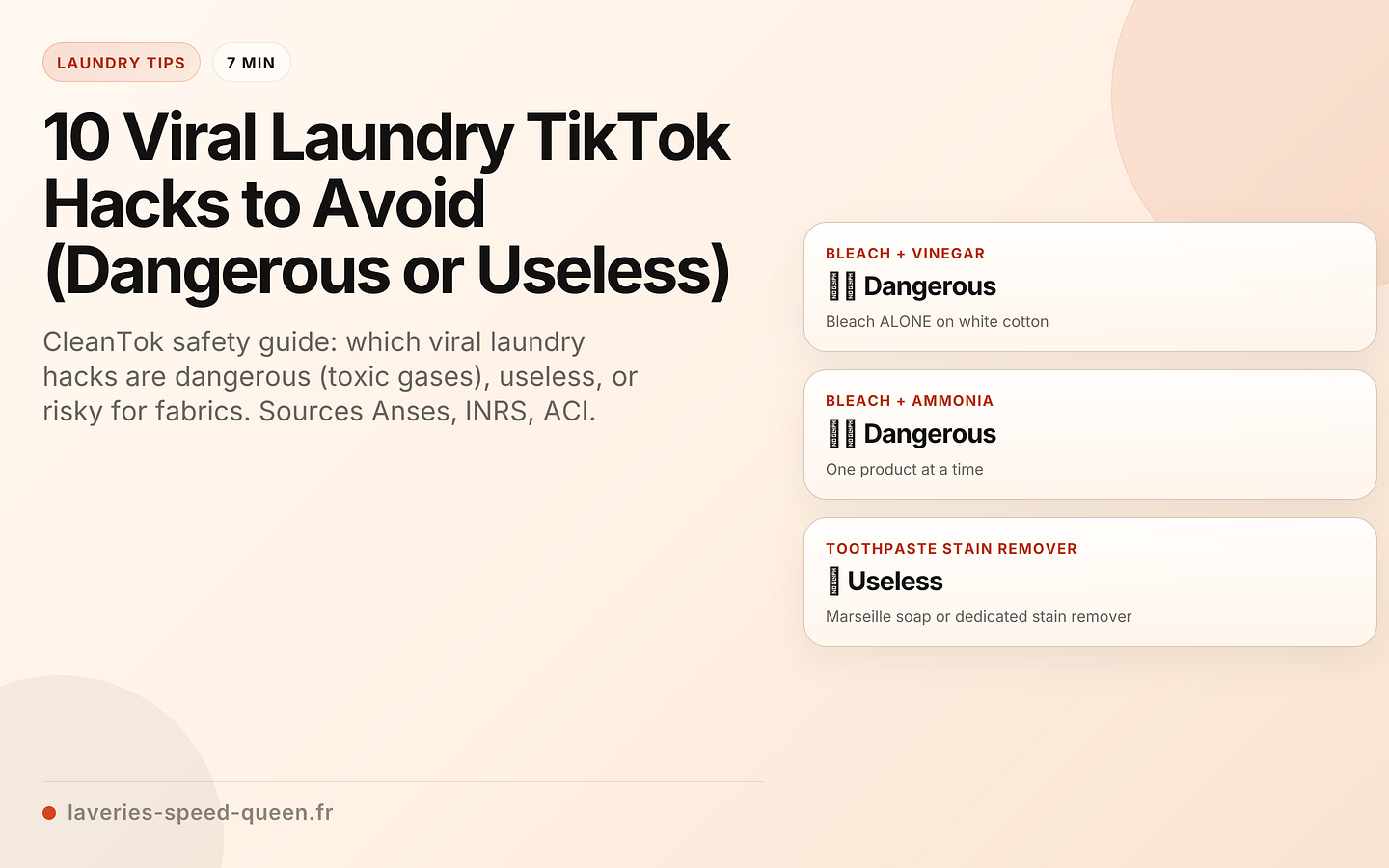
In short: #CleanTok and #LaundryHacks hashtags rack up hundreds of billions of views, but not all hacks are equal. 3 are DANGEROUS (chemical mixes producing toxic gases per Anses and INRS), 4 are USELESS (waste of time/money, myths busted by Consumer Reports and ACI), 3 are AMBIGUOUS (fabric damage risk). Honest inventory with official sources.
At a glance
DANGEROUS (absolutely avoid) -- Bleach + vinegar, bleach + ammonia, bleach + percarbonate. Toxic gases per INRS and Anses.
USELESS (myths) -- Toothpaste stain remover, baking soda + vinegar, dishwasher tablets for laundry, ice cubes in tumble dryer for wrinkles.
AMBIGUOUS (fabric risk) -- Repeated laundry stripping, mixing detergent brands, washing at very high temperature without checking the label.
Reflexes -- One product at a time, check official sources before trying, scepticism with 'miracle' results.
Category 1: DANGEROUS (toxic gases)
Anses and INRS officially warn about mixing household products. These 3 viral hacks can cause serious respiratory poisoning.
1. Bleach + white vinegar “to disinfect laundry”
sodium percarbonate↗ — reaction produces chlorine gas (Cl₂), toxic by inhalation. Per INRS, exposure can cause coughing, airway irritation, lung burns in prolonged inhalation. Particularly dangerous in confined laundry rooms.
Safe alternative: bleach↗ alone on robust white cotton (1/4 cup in pre-wash compartment, never in the drum with laundry). Or sodium percarbonate↗ (no chlorine).
2. Bleach + ammonia “to whiten and deodorise”
Reaction produces chloramines, irritant gases. Symptoms: cough, tears, breathing difficulty per INRS.
Safe alternative: choose one product. To whiten: bleach↗ OR percarbonate. To deodorise: baking soda↗ or vinegar (separately, never with bleach↗).
3. Bleach + percarbonate “for power stripping”
Reaction unpredictable with oxygen + chlorine release depending on concentration. Similar respiratory irritation risk as bleach↗ + acid.
Safe alternative: stripping with percarbonate alone + washing soda↗ + detergent, no bleach↗. Same result on residues, no chemical risk.
General Anses rule
Anses reminds us never to mix household products. Use one product at a time, rinse thoroughly, and air the room after use. This rule eliminates 90 % of accidental chemical risks in laundry.
Category 2: USELESS (myths)
These hacks aren’t dangerous, but don’t work better than a classic method.
4. Toothpaste against stains
Marseille soap↗ — sodium lauryl sulfate from toothpaste has no greater effectiveness than standard detergent per Consumer Reports and ACI. Whitening toothpastes contain agents that can fade coloured fabric.
5. Baking soda + vinegar in the machine
Immediate acid-base reaction neutralises both into water + salt + CO₂. No residual cleaning power. Use either baking soda↗ (basic, deodorising) or vinegar (acid, anti-limescale) — never both together in the same cycle.
6. Dishwasher tablets for laundry
Dishwasher tablets contain food enzymes + tensioactives + high-dose anti-limescale agents. Not formulated for textile. Risk of irritating alkaline residues on fibres.
7. Ice cubes in tumble dryer “anti-wrinkle”
The vapour released by ice cubes is too minimal to effectively de-wrinkle. Consumer Reports and several independent test blogs confirm the effect is negligible compared to a dedicated steam cycle.
Alternative that works: dryer steam programme if available, or simply remove laundry slightly damp and hang.
Category 3: AMBIGUOUS (fabric damage risk)
8. Monthly laundry stripping
Stripping is effective 1-2 times/year, but repeated too often, it weakens fibres (percarbonate + washing soda↗ = hot alkali). Long term, laundry loses strength and softness. Max 1-2 times/year.
9. Mixing several detergents
Massive overdosing. Residues in fibres, itching for sensitive skin, poor rinsing requiring a second cycle. Cationic (softener) + anionic (detergent) surfactants can neutralise mutually.
10. Systematic 90 °C (194 °F) “to disinfect”
Most modern textiles (synthetics, polycotton, elastane) don’t tolerate 90 °C (194 °F). Shrinkage, deformation, seam tears, fading. And 60 °C (140 °F) is sufficient for most common pathogens per WHO recommendations.
Alternative: 90 °C only on robust white cotton + actual need (CDC-contaminated laundry, e.g.). Otherwise, 60 °C (140 °F) is the hygiene/preservation optimum.
Recap: hack → risk → alternative
| Viral hack | Category | Risk | Safe alternative |
|---|---|---|---|
Bleach↗ + vinegar | ☠️ Dangerous | Chlorine gas (toxic) | Bleach↗ ALONE on white cotton |
| ☠️ Dangerous | Chloramines (irritants) | One product at a time | |
Bleach↗ + percarbonate | ☠️ Dangerous | Unpredictable reactions | Percarbonate ALONE + washing soda↗ |
| Toothpaste stain remover | ❌ Useless | Fades colour fabric | Marseille soap ↗or dedicated remover |
Baking soda↗
| ❌ Useless | Neutralise (no effect) | One OR the other |
| Dishwasher tablets | ❌ Useless | Alkaline residues on textile | Textile detergent + percarbonate booster |
| Ice cubes anti-wrinkle | ❌ Useless | Negligible effect | Steam programme or hang damp |
| Monthly stripping | ⚠️ Ambiguous | Long-term fibre weakening | Max 1-2 times/year |
| Mixing several detergents | ⚠️ Ambiguous | Overdose + residues | 1 detergent + 1 booster (percarbonate) |
| Systematic 90 °C / 194 °F | ⚠️ Ambiguous | Destroys modern textiles | 60 °C / 140 °F optimal |
3 anti-CleanTok reflexes
One product at a time
If the hack mixes more than one household product (other than adding detergent), immediate suspicion. This is the #1 Anses rule against domestic accidents.
Check sources
Before trying a hack that promises a 'miracle' result, search Anses, INRS, or Consumer Reports. If no institutional source validates, it's probably false.
Mistrust spectacular results
Viral videos are often staged (laundry already clean, edited, lit). The 'brown water' of stripping, the miraculous 'before/after': systematic caution.
Poison Control
In case of accidental exposure to a household product mix (gas, splash, ingestion): contact your local Poison Control Center. US: 1-800-222-1222. France: 01 40 05 48 48 (24/7). For severe respiratory symptoms (shortness of breath, burns): emergency services.
Common mistakes
- Testing a TikTok hack 'just to see' before checking safety -- some mixtures produce toxic gas in seconds. Verification required before trial.
- Ignoring acrid smell during a mix -- it's the alarm signal of chlorine or chloramines. Air immediately, leave the room.
- Trusting 'natural = safe' -- vinegar and baking soda are natural but cancel each other. Natural ≠ effective.
- Replicating an influencer hack without context -- the viral video doesn't show exact conditions or risks. Always check with an official source.
- Leaving laundry pods accessible to children -- Tide Pods and equivalents: bright colours attract, soluble packaging = real risk. Store high or locked.
Read also: bleach for laundry: when to use, laundry stripping truth.
As an Amazon Associate, we earn from qualifying purchases through the affiliate links in this article — at no extra cost to you. This helps us maintain this site and produce free guides.