A swimsuit is made of elastane (lycra/spandex) blended with polyamide or polyester. Elastane provides the stretch and support, but it’s a fragile fibre: chlorine, salt, heat and UV degrade it rapidly. The care protocol is simple — rinse after every swim, wash in cold water with a mild detergent, dry flat in the shade — but every shortcut measurably shortens the swimsuit’s lifespan.
At a Glance
Rinse immediately — chlorine and salt are elastane's number-one enemies. Rinse in cold water as soon as you leave the water.
Cold water only — heat destroys the polyurethane bonds in elastane. Never use hot water, never tumble-dry.
Mild detergent, no fabric softener — optical brighteners strip colour; softener coats the fibres and reduces elasticity.
Never wring — press between two towels instead. Wringing breaks elastic fibres irreversibly.
Dry flat, in the shade — UV accelerates fabric degradation, especially after contact with chlorine.
Why Swimsuits Are Unlike Any Other Garment
A swimsuit isn’t an ordinary piece of clothing. Its composition and the conditions it faces make it one of the most heavily stressed textiles in your wardrobe. Understanding its structure helps explain why every care step matters.
Typical composition
The vast majority of leisure swimsuits are made of 78-82 % polyamide (nylon) and 18-22 % elastane (marketed as Lycra, Spandex or Dorlastan). The polyamide provides mechanical strength and colour fastness. The elastane delivers extensibility (it can stretch to 600 % of its resting length) and the elastic recovery that gives the swimsuit its fit.
Some budget swimsuits use polyester instead of polyamide. Polyester resists chlorine better but feels less soft. Competition swimsuits (Speedo Endurance+, Arena MaxLife) are made of 100 % PBT polyester, with no elastane at all — they sacrifice comfort for durability.
The three enemies of elastane
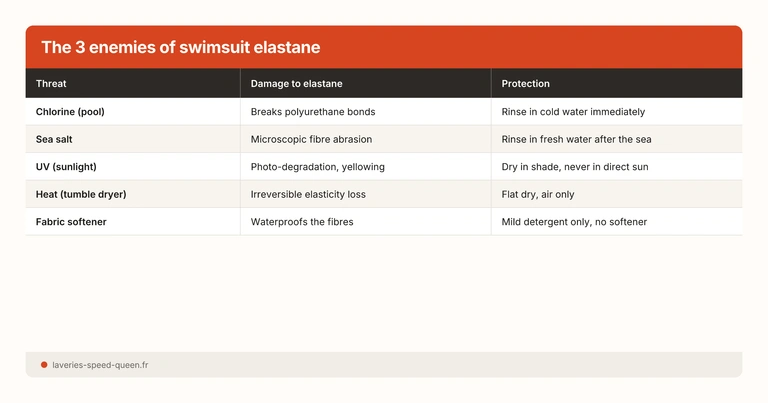
Chlorine is the most damaging agent. Sodium hypochlorite, used in swimming pools, is a powerful oxidiser that directly attacks the polyurethane bonds in elastane fibres. The effect is cumulative: each unrinsed exposure progressively weakens the molecular structure. After 50 to 80 cumulative hours of contact with chlorinated water (without rinsing), a standard swimsuit loses roughly 50 % of its original elasticity.
Sea salt works differently. Salt crystals, as they dry inside the fibres, exert a microscopic mechanical abrasion. They grind against the elastane threads from the inside. Seawater also contains micro-organisms and mineral particles that contribute to wear.
UV rays complete the trio. Elastane is particularly vulnerable to photo-degradation. UV breaks the polymer chains, causing yellowing in white fibres and fading in bright colours. The effect is dramatically amplified in the presence of residual chlorine — chlorine + UV creates an oxidising cocktail that doubles the rate of degradation.
Chlorine and UV degradation: a synergistic effect
A study by the Hohenstein Institute (Germany) showed that elastane exposed to chlorine and then UV degrades 2.3 times faster than elastane exposed to only one of the two factors. This is why a swimsuit worn in an outdoor pool ages much faster than one used indoors, and why immediate rinsing is so critical.
Rinsing: The Single Most Important Step
If you remember only one rule, make it this: rinse your swimsuit in cold, clear water immediately after every swim. It takes 30 seconds and extends the swimsuit’s life by months.
After the pool
Chlorine continues to act on the fibres as long as it remains. Even a swimsuit that feels “dry” still contains active chlorine residue if you didn’t rinse it. Run it under the pool shower or a cold tap, squeezing and releasing several times to flush water through the fibres. Don’t use soap at this stage — the only goal is to evacuate the chlorine.
After the sea
Sea salt requires the same treatment. In addition to rinsing, gently press the swimsuit under water to dislodge sand grains that embed in the mesh and abrade fibres through friction. If you don’t have access to fresh water immediately (remote beach), wrap the swimsuit in a damp towel rather than letting it dry in the sun with the salt.
The plastic bag mistake
Never store a wet swimsuit in a sealed plastic bag for hours. Confined moisture combined with chlorine or salt residue creates an ideal breeding ground for bacteria and mould. If you need to transport a wet swimsuit, use a ventilated waterproof bag (like a mesh swim bag) and wash it as soon as you get home.
Hand Washing: The Gold Standard
Hand washing is the gentlest and most recommended method for swimsuits, especially high-end models, bikinis with decorative details (embroidery, beads, metal rings) and swimsuits with a silk blend.
Step-by-step protocol
- Fill a basin with cold water (15-20 °C, never lukewarm). Hot water relaxes elastane fibres irreversibly.
- Add a few drops of mild liquid detergent — half a dose is enough for one swimsuit. Ideally, use a detergent formulated for delicates or wool. Avoid detergents with optical brighteners (they strip bright colours) and above all no fabric softener (it deposits a waxy layer that waterproofs the fibres and reduces elasticity).
- Submerge the swimsuit and soak for 10 to 15 minutes. The soak allows the detergent to dissolve sunscreen residue, perspiration, and leftover salt or chlorine.
- Press gently in the soapy water, squeezing and releasing like a sponge. Pay attention to skin-contact areas (crotch, underarms). Never rub the fabric against itself — you stretch and break the elastane threads.
- Rinse thoroughly under cold running water until the soap is completely gone. Detergent residue trapped in the fibres yellows during drying and stiffens the fabric.
Sunscreen: the invisible enemy
The chemical UV filters in sunscreen (avobenzone, octocrylene, oxybenzone) leave greasy yellowish marks on white or pastel swimsuits. These stains are particularly stubborn because UV filters are formulated to resist water.
To remove them, apply a few drops of dish soap directly to the stained areas before soaking. Dish soap is a powerful degreaser that emulsifies UV filters without attacking elastane (unlike alcohol or acetone, which must be strictly avoided).
Machine Washing: The Safe Protocol
Machine washing is perfectly acceptable for everyday swimsuits (no fragile details, no silk), provided you follow a strict protocol.
Essential settings
Mesh laundry bag
Mandatory. Protects from drum friction, prevents straps from tangling, and stops hooks from snagging other items.
Delicate cycle at 30 °C
The only suitable programme. Cotton or synthetic cycles are too mechanically aggressive. Temperature must never exceed 30 °C.
Spin ≤ 600 rpm
A fast spin twists and stretches elastane under centrifugal force. 400-600 rpm is the maximum.
Mild detergent, no softener
Liquid detergent for delicates. Fabric softener destroys elasticity and leaves a greasy film on the fibres.
Don’t wash your swimsuit with just anything
Wash swimsuits with other lightweight, delicate items of similar colour. Absolutely avoid mixing them with jeans (rivets and zips abrade fine fibres), terry towels (the loops catch the swimsuit’s fine mesh) or items with exposed zips or Velcro.
Watch out for white swimsuits
White swimsuits yellow faster than coloured ones due to elastane oxidation. To prevent yellowing, add a tablespoon of baking soda to the detergent dispenser. Sodium percarbonate is too harsh for elastane with regular use — save it for advanced yellowing cases, with a short soak (30 minutes max).
Care by Fabric Type
Not all swimsuits are equal when it comes to washing. Your swimsuit’s exact composition determines its tolerance to different treatments.
| Composition | Recommended Wash | Chlorine Resistance | Drying |
|---|---|---|---|
| Polyamide + elastane (80/20) | Hand or machine 30 °C delicate | Moderate (50-80 h cumulative) | Flat, in the shade |
| Polyester + elastane (80/20) | Hand or machine 30 °C delicate | Good (the polyester portion resists) | Flat, in the shade |
| 100 % PBT polyester (competition) | Machine 30 °C, bag optional | Excellent (300 h+) | Hanger or flat |
| Polyamide + silk blend | Hand only, cold water | Low (silk is very sensitive) | Flat on a towel |
| Neoprene (wetsuits) | Hand, cold water, neoprene-specific wash | Good (rubber material) | Wide hanger, in the shade |
Lycra and elastane: the same fibre
Lycra is a registered trademark of Invista (formerly DuPont) for their elastane. Spandex is the generic term used in the US. Dorlastan is another brand (Asahi Kasei). They all refer to the same fibre: a segmented polyurethane that provides the fabric’s stretch. Care instructions are identical regardless of the name.
The neoprene exception
Wetsuits for surfing, diving or open-water swimming are made of neoprene — a synthetic rubber very different from standard textiles. Neoprene must never be machine-washed. Rinse in cold water, wash by hand with a neoprene-specific shampoo (not regular detergent, which dries out the rubber), and dry on a wide hanger in the shade. Fold as little as possible to avoid permanent creases.
Drying: Where Most Mistakes Happen
Drying is the stage where most errors occur. A well-washed but poorly dried swimsuit will age prematurely.
What you must never do
- Tumble dryer — the heat (60-80 °C) destroys elastane in just a few cycles. The swimsuit loses all support and deforms permanently.
- Radiator or towel rail — same principle as the dryer. Direct heat on wet fibres relaxes the elastane.
- Direct sunlight — UV degrades the polymer and fades pigments. A swimsuit dried in the sun ages twice as fast as one dried in the shade.
- Hanging by the straps — the weight of wet fabric permanently stretches the straps. After a few drying sessions, they no longer hold.
- Wringing to remove water — you break the elastane fibres through mechanical torsion. The swimsuit loses its elastic recovery in the wrung areas.
The right method
Take the swimsuit out of the wash and lay it flat on a clean towel. Roll the towel with the swimsuit inside and press gently to absorb excess water. Unroll, then lay the swimsuit flat on a dry towel (or a flat drying rack) in a ventilated area, in the shade. Drying typically takes 2 to 4 hours depending on ambient humidity.
For a one-piece swimsuit, you can also place it on a wide hanger (jacket-style) through the centre — never by the straps. Make sure the weight is evenly distributed.
Washing Frequency and Routine Care
When to wash your swimsuit
After every use. A swimsuit is in direct contact with skin, chlorinated or salt water, sunscreen, perspiration and sometimes sand. A cold-water rinse is essential after every swim. A full wash (with detergent) is recommended after each day of wear, or every 2-3 swims if you rinse between uses.
The elasticity test
To assess your swimsuit’s condition, try this: gently stretch the fabric between your hands, then release. A swimsuit in good condition snaps back immediately. If the fabric stays stretched, creases, or takes several seconds to recover, the elastane is degraded. The swimsuit has lost its support — it’s time to replace it.
Pool swimsuit vs beach swimsuit
A swimsuit used daily in the pool (regular swimmer) has a lifespan of 3 to 6 months with proper care, and 1 to 2 months without post-swim rinsing. A beach swimsuit used on holiday (2-3 weeks per year) can last 3 to 5 years if you follow the rinsing and drying protocol.
For regular swimmers
If you swim more than 3 times a week in a pool, invest in a 100 % PBT polyester swimsuit (Speedo Endurance+, Arena MaxLife, TYR Durafast). These swimsuits resist chlorine 5 to 10 times longer than polyamide/elastane swimsuits. Keep an elastane suit for the beach, where comfort matters more than chemical resistance.
End-of-Season Storage
September arrives, the pool and beach season is over. How do you store a swimsuit so it’s in good shape next summer?
- Give it one final wash with a mild detergent, even if it looks clean. Invisible residue from sunscreen, chlorine and salt continues to degrade the fibres during storage.
- Dry it completely — a swimsuit stored while still damp develops mould that permanently stains the fabric and produces a persistent odour.
- Lay it flat in a drawer or box, without folding it tightly. Elastane “memorises” prolonged folds, creating visible lines of distortion the next time you wear it.
- Avoid sealed plastic bags — they prevent ventilation and encourage mould growth. A fabric bag (cotton or linen) is preferable.
- Add a lavender sachet or cedar ball to repel moths, which can attack synthetic fibres blended with natural ones.
Did You Know: Microplastics from Swimsuits
Like all synthetic textiles, polyamide and polyester swimsuits release plastic microfibres with every wash. These microplastics end up in wastewater and, ultimately, in the marine environment. Paradoxically, the garment designed for the water contributes to its pollution.
To reduce this impact, you can use a filtering wash bag (such as a Guppyfriend) that captures microfibres during the machine cycle. Hand washing also generates fewer microfibres than machine washing, because the mechanical action is gentler.
As an Amazon Associate, we earn a small commission on purchases made through the affiliate links in this article — at no extra cost to you. This helps us maintain this site and produce free guides.
Your swimsuits deserve a gentle wash. Our laundromats in Blagnac, Croix-Daurade and Montaudran offer 30 °C delicate programmes suited to stretch fabrics, with pre-dosed professional detergent. Ideal for your delicate textiles. Payment contactless card or cash. See our prices.
Sources and References
- Washing lingerie and bras
- Washing temperature guide
- Microplastics and synthetic laundry
- Baking soda and laundry
- Fabric softener: useful or not?
- How to prevent clothes from shrinking
- Hohenstein Institute — studies on elastane fibre resistance to chemical agents (chlorine, UV)
- Ginetex — international care labelling guide (lien externe)